

Kamet. An Indian single malt, told as a story.
A premium Indian single malt built around provenance, with a label drawn from the mountains, villages, birds and folklore of the land that grows its barley.
A category built on molasses. A malt built on provenance.
In India, whisky's dominant style is distilled from molasses rather than malted grain, producing a thick, sweet spirit. Kamet set out to be the opposite: a single malt that celebrates where it comes from.
The name borrows from Mount Kamet in Uttarakhand, one of the country's highest peaks. The grain is indigenous six-row barley grown in the Himalayan foothills, fed by glacial meltwater, and distilled near Kurukshetra.
Signal Indian elegance instantly, before anyone reads a word.
Rule out borrowed Scotch cues
Tartan, crests, stags and highland hunting lodges carry Scotch's story, not India's. The brief ruled them out from the start and pushed the system toward a vocabulary of Indian craft.
Jewel tones, dense ornament
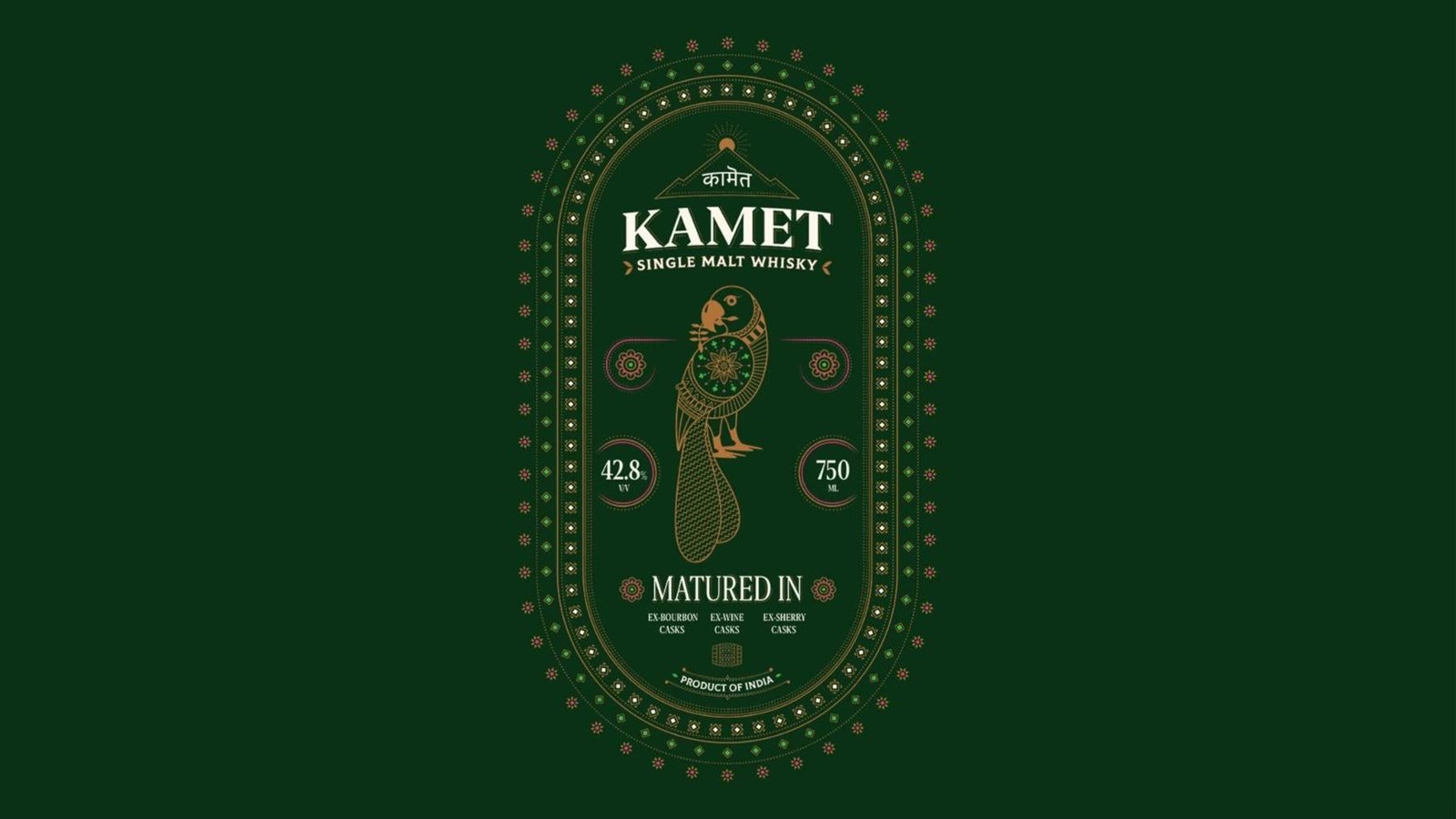
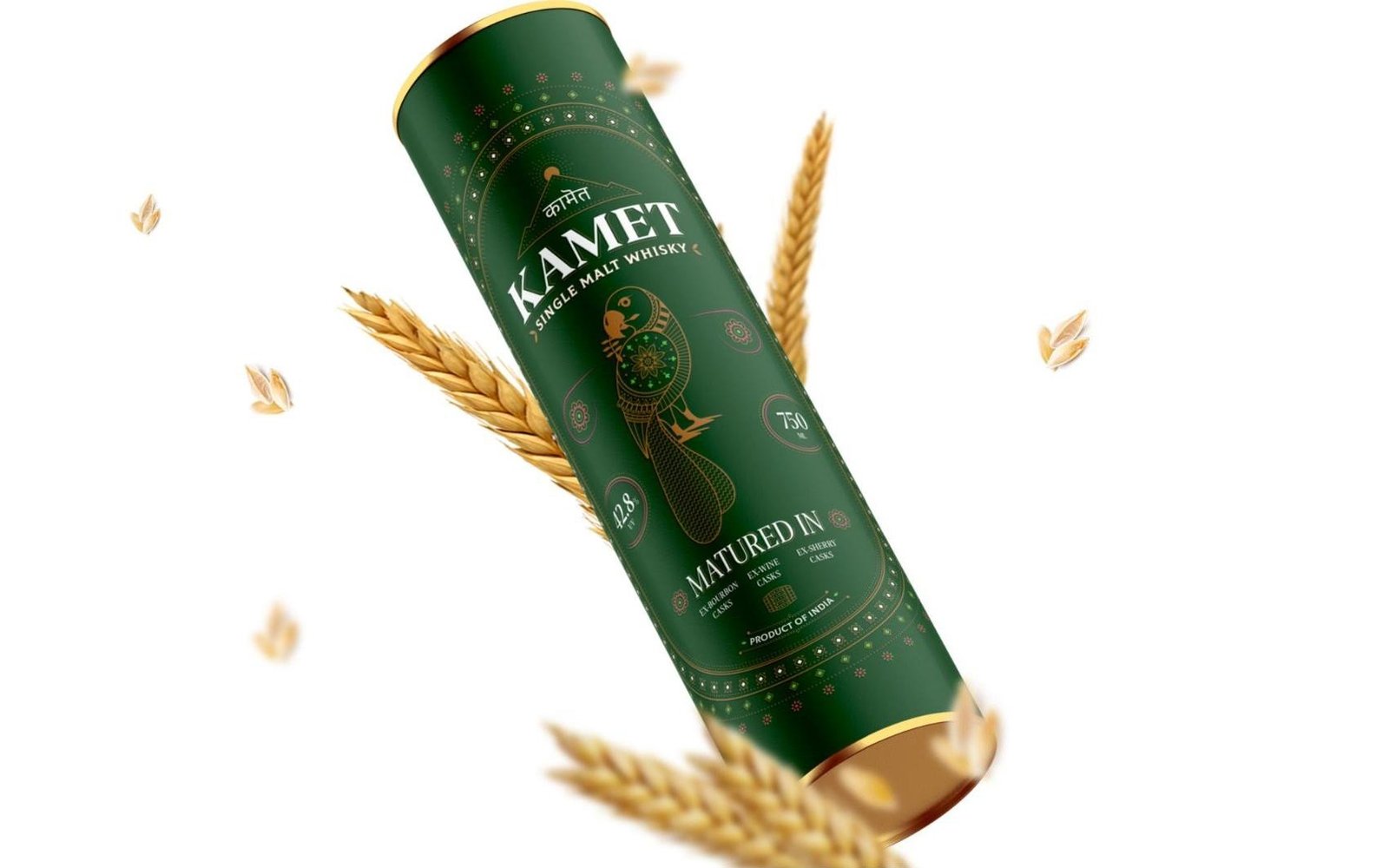
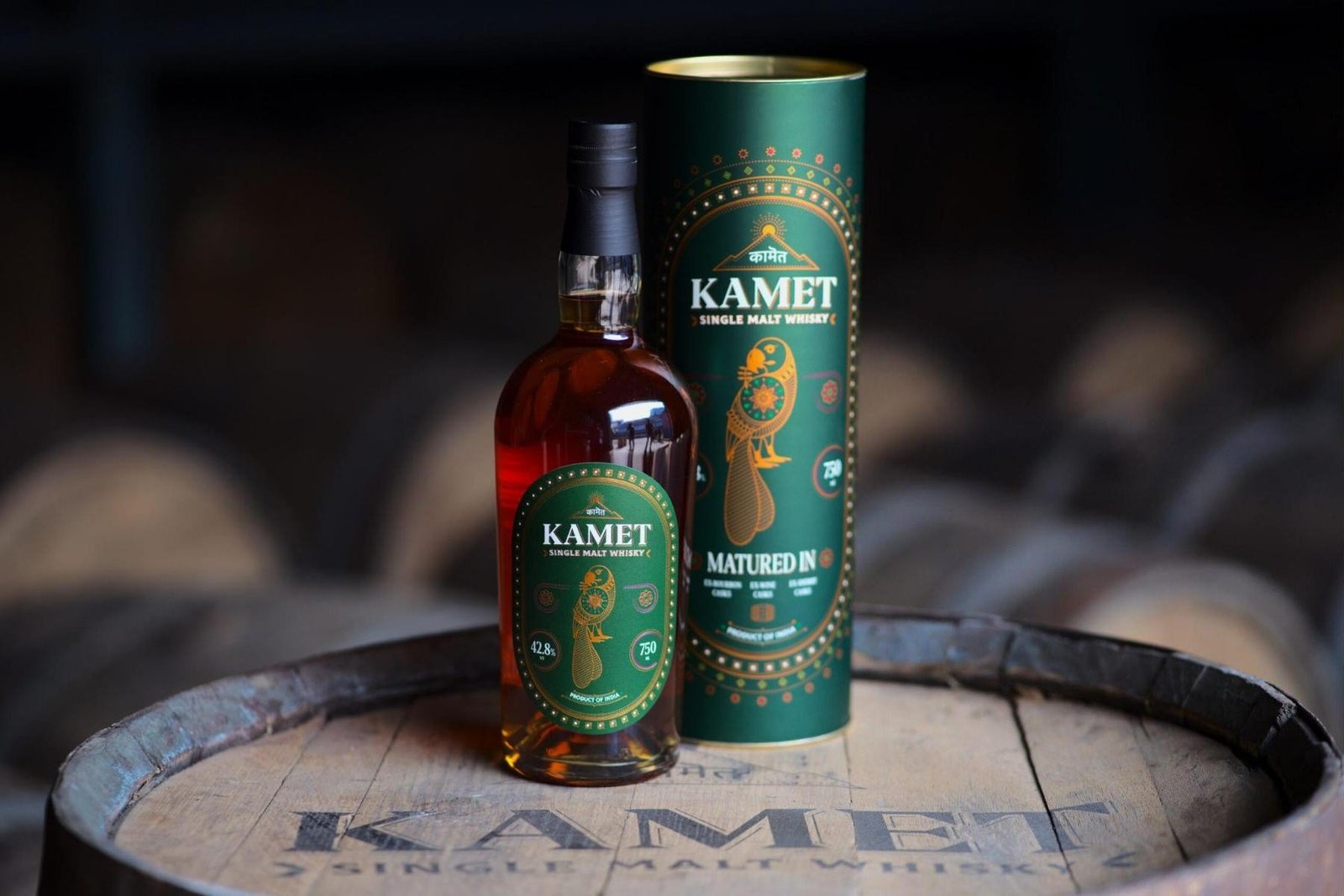
Forest green, burnished copper and temple pink took the place of highland greys and tans. Dense ornamental borders and dotted textile patterning carry the label's framing.
A storytelling character
The Indian parrot takes pride of place: messenger and fortune teller in folklore, part of everyday life around the distillery, and a cultural layer the whisky could carry on every pour.
Two scripts, one identity.
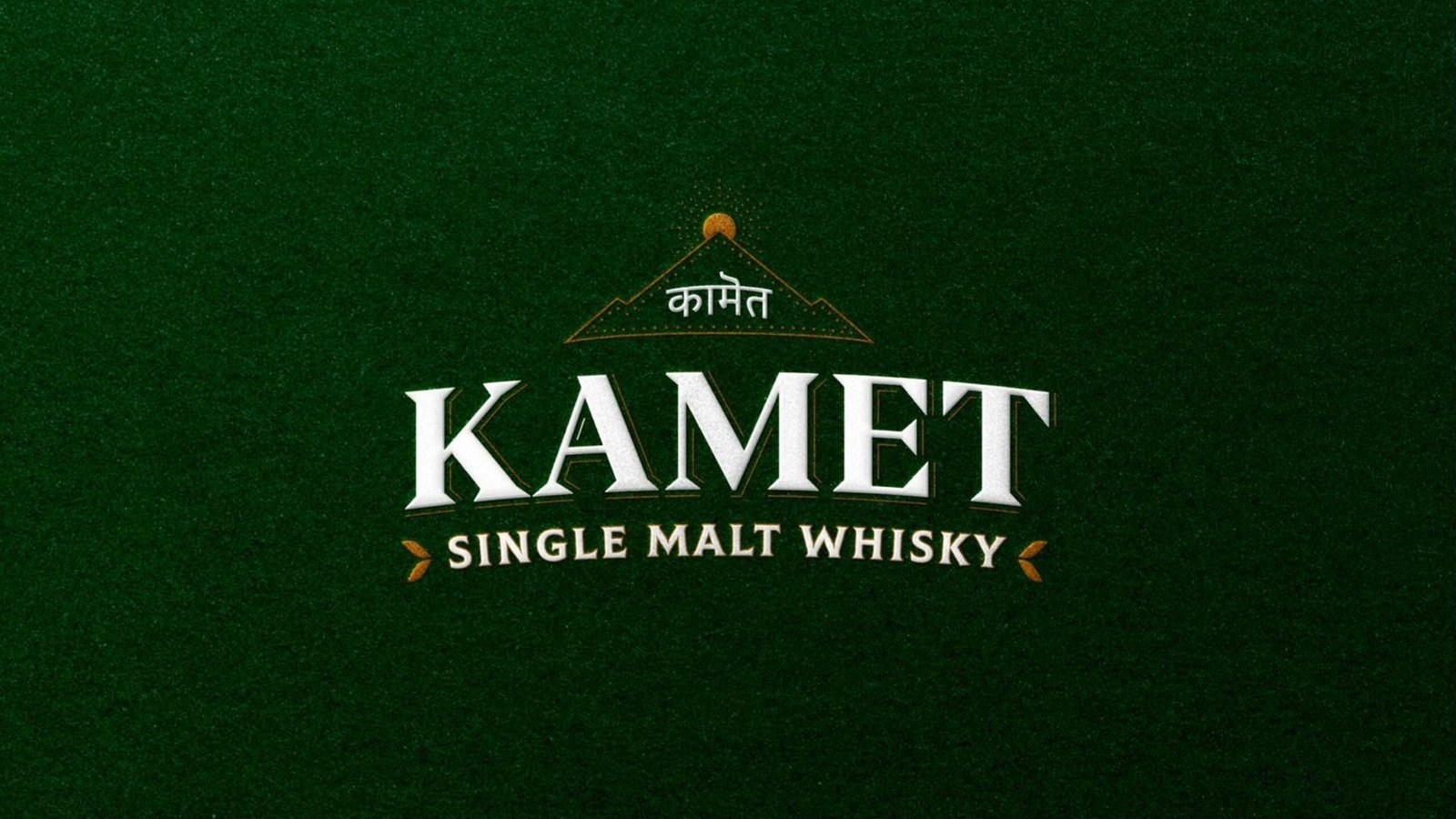
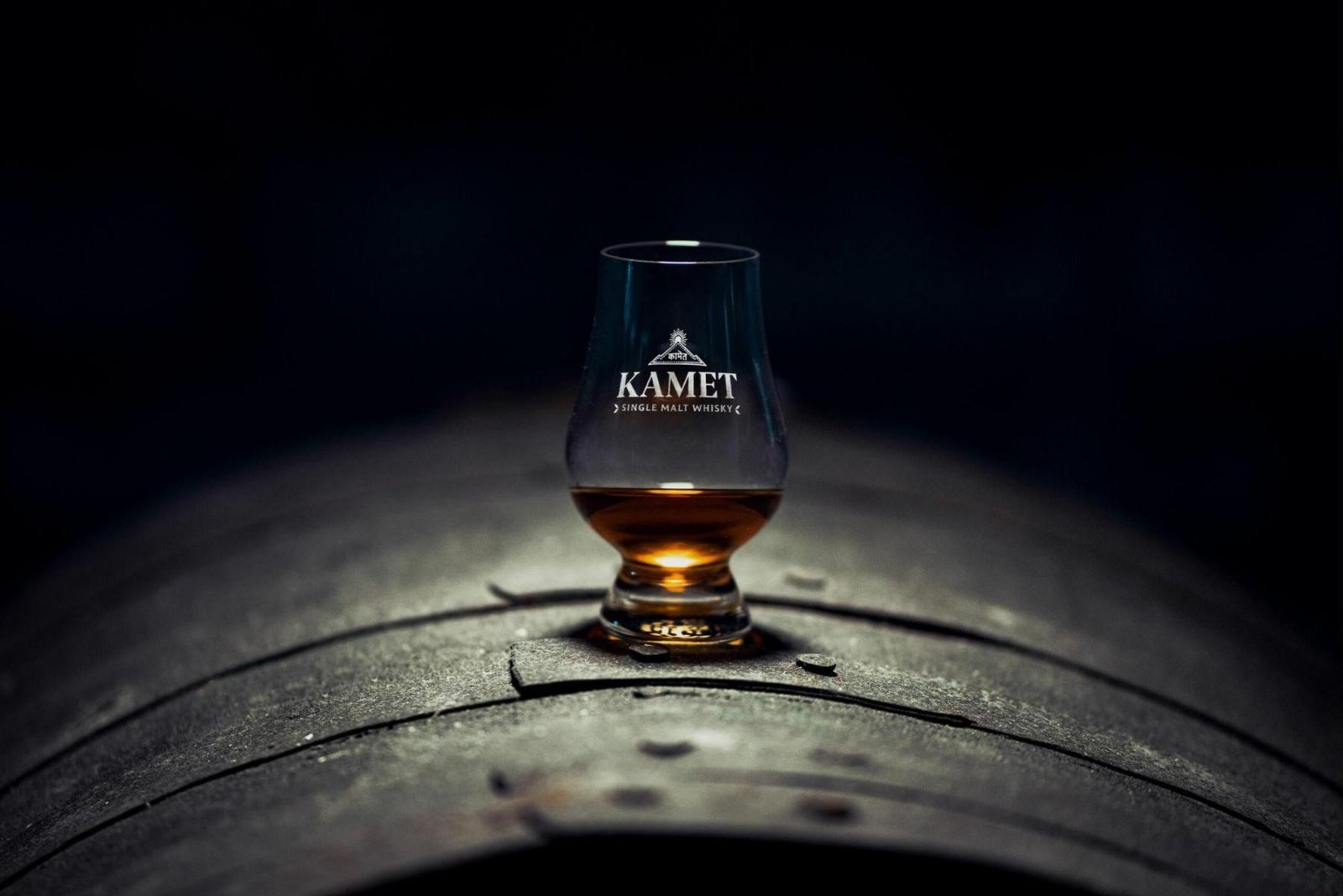
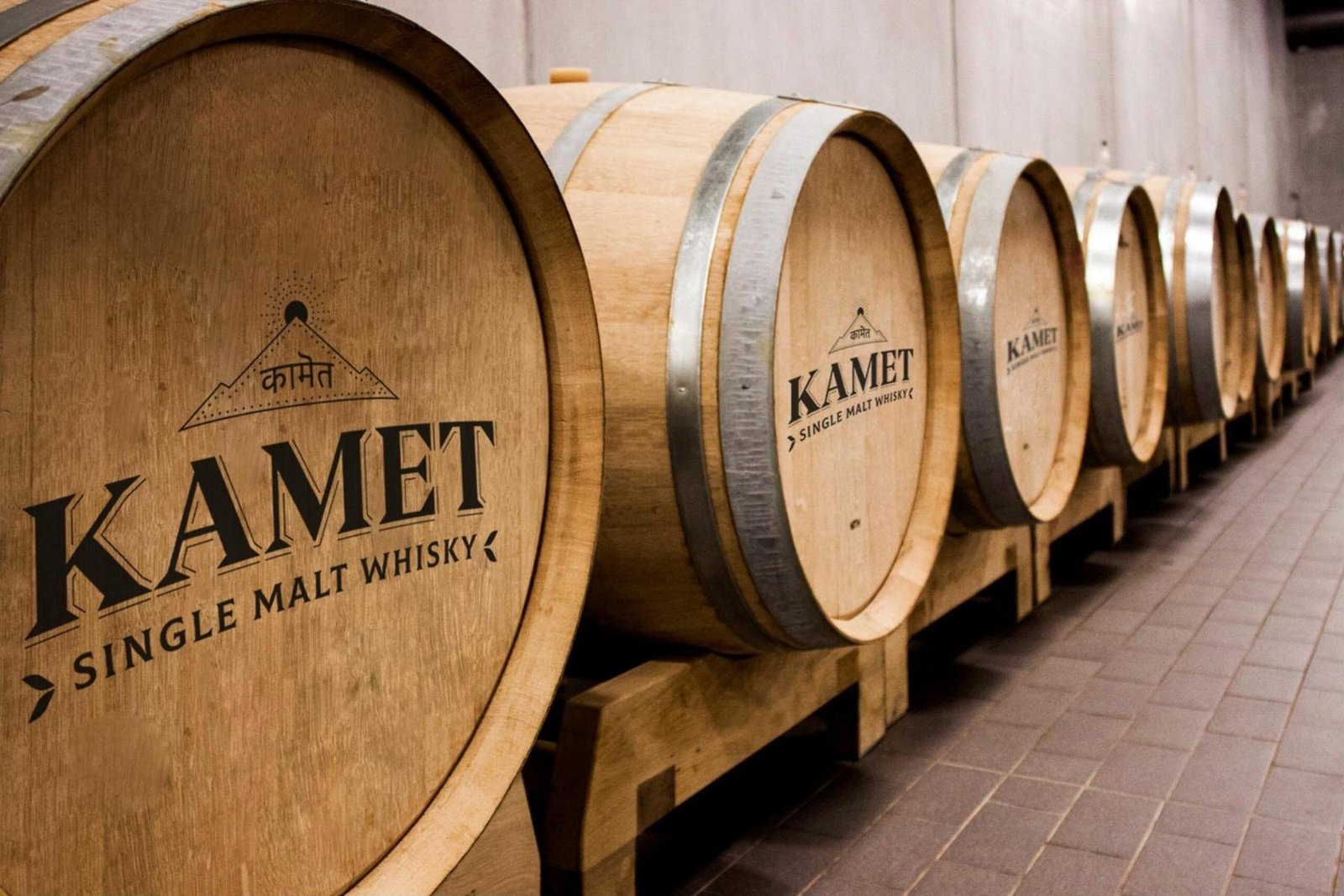
The wordmark pairs Devanagari with Latin. कामेत sits inside a mountain peak crowned by a rising sun, directly above a bold serif KAMET and the SINGLE MALT WHISKY descriptor flanked by barley leaves.
The bilingual lockup roots the brand in India while staying fully legible to international shelves, which is exactly the duality a world-stage Indian malt needs.
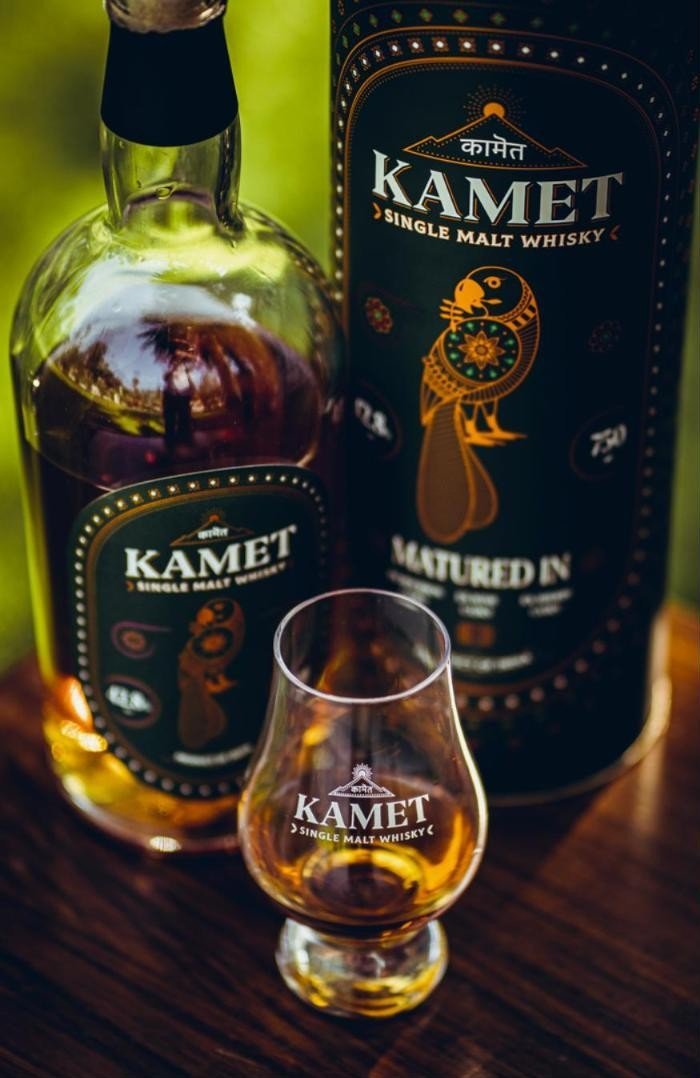
The parrot: messenger, fortune teller, storyteller.
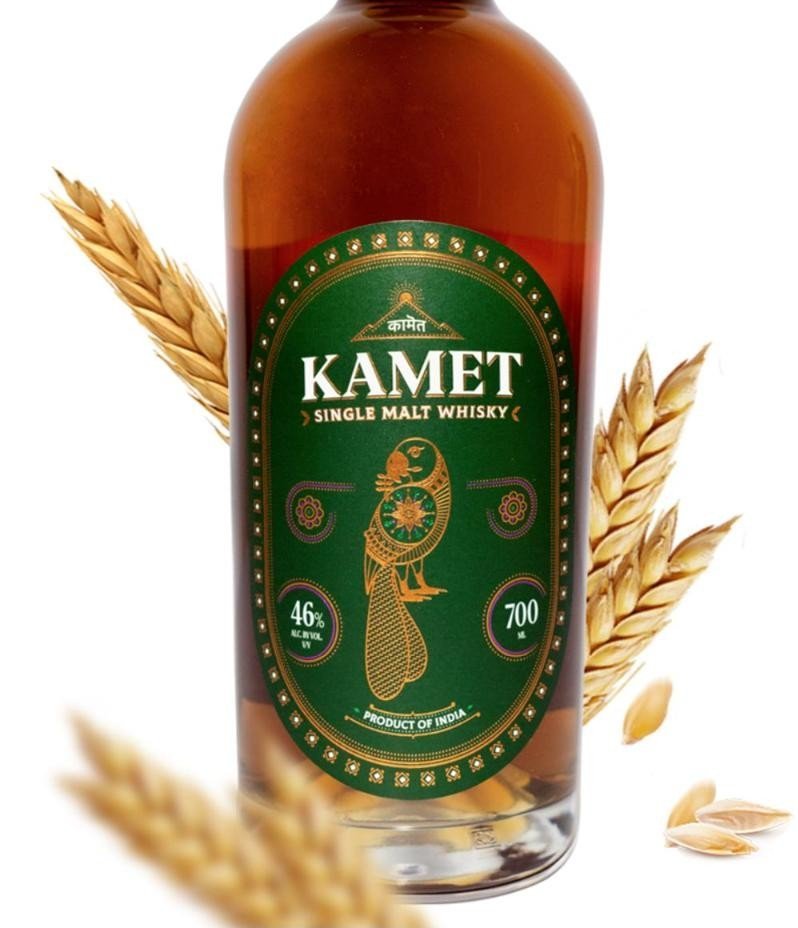
The Indian parrot takes pride of place on the label. In mythology and folk tradition it carries messages and foretells fortunes, and it remains part of everyday life in the villages around the distillery near Kurukshetra.
Making the parrot the hero pushes the product beyond flavour. Every pour arrives with a cultural layer, giving the drinker a narrator and the brand a character it can carry across packaging, glassware and communication.

Copper stills. Three cask types. One Indian barley.
Distilled from local six-row barley
Kamet is distilled from indigenous six-row barley in copper pot stills, grown in the Himalayan foothills and fed by glacial meltwater. The grain, not the import story, becomes the premium cue.
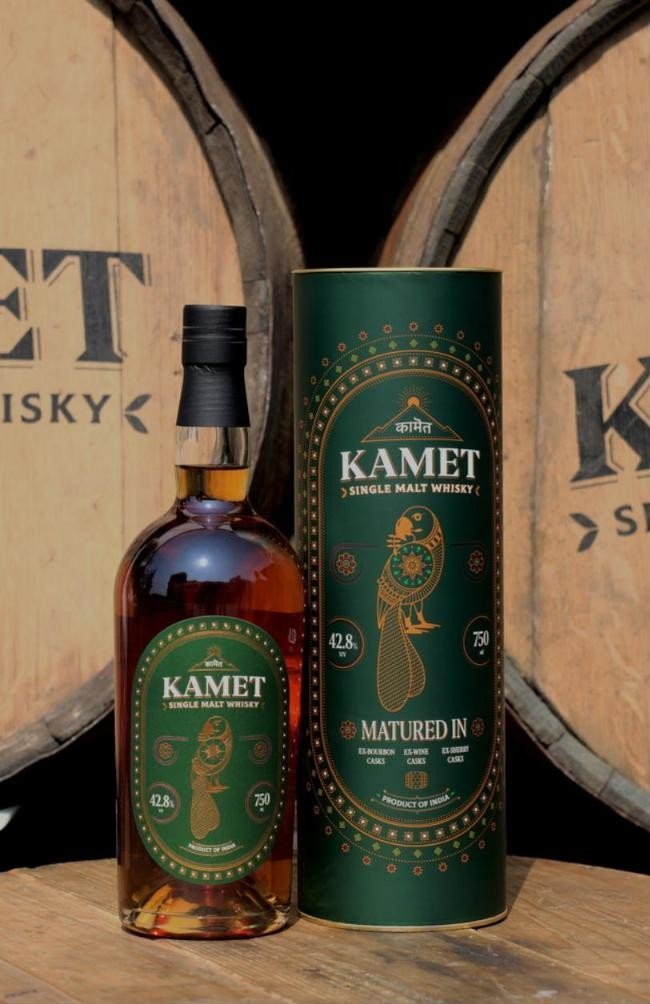
Matured across three cask types
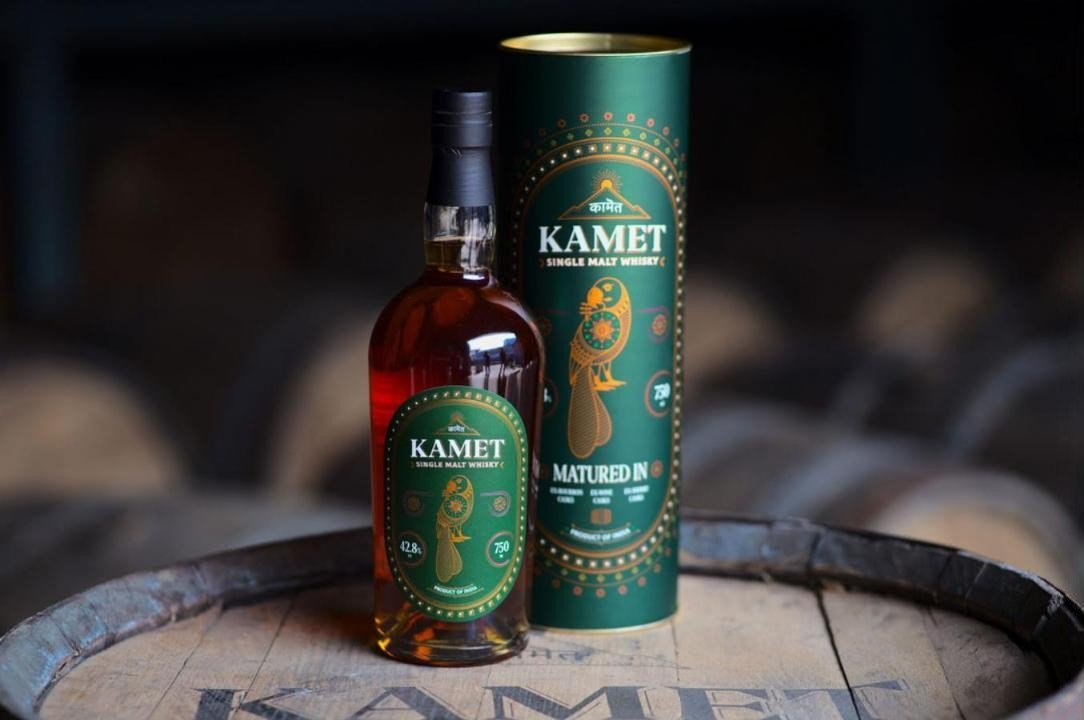
The whisky then matures across ex-bourbon, ex-wine and ex-sherry casks. The back of the label and the canister make that process visible with a bespoke barrel icon built from the same diamond patterning as the borders.
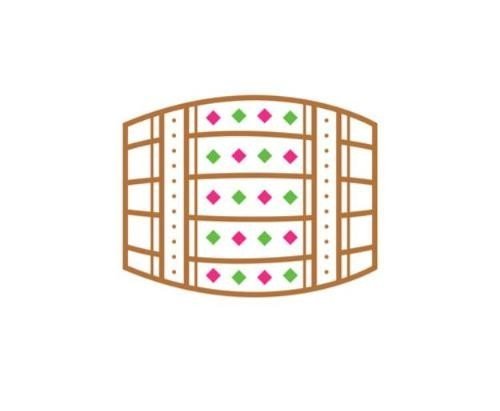
Carried onto glassware and gift
A branded gift box, cask-side imagery and glassware carry the parrot and the mountain mark forward, so opening the bottle feels like stepping into the narrative.
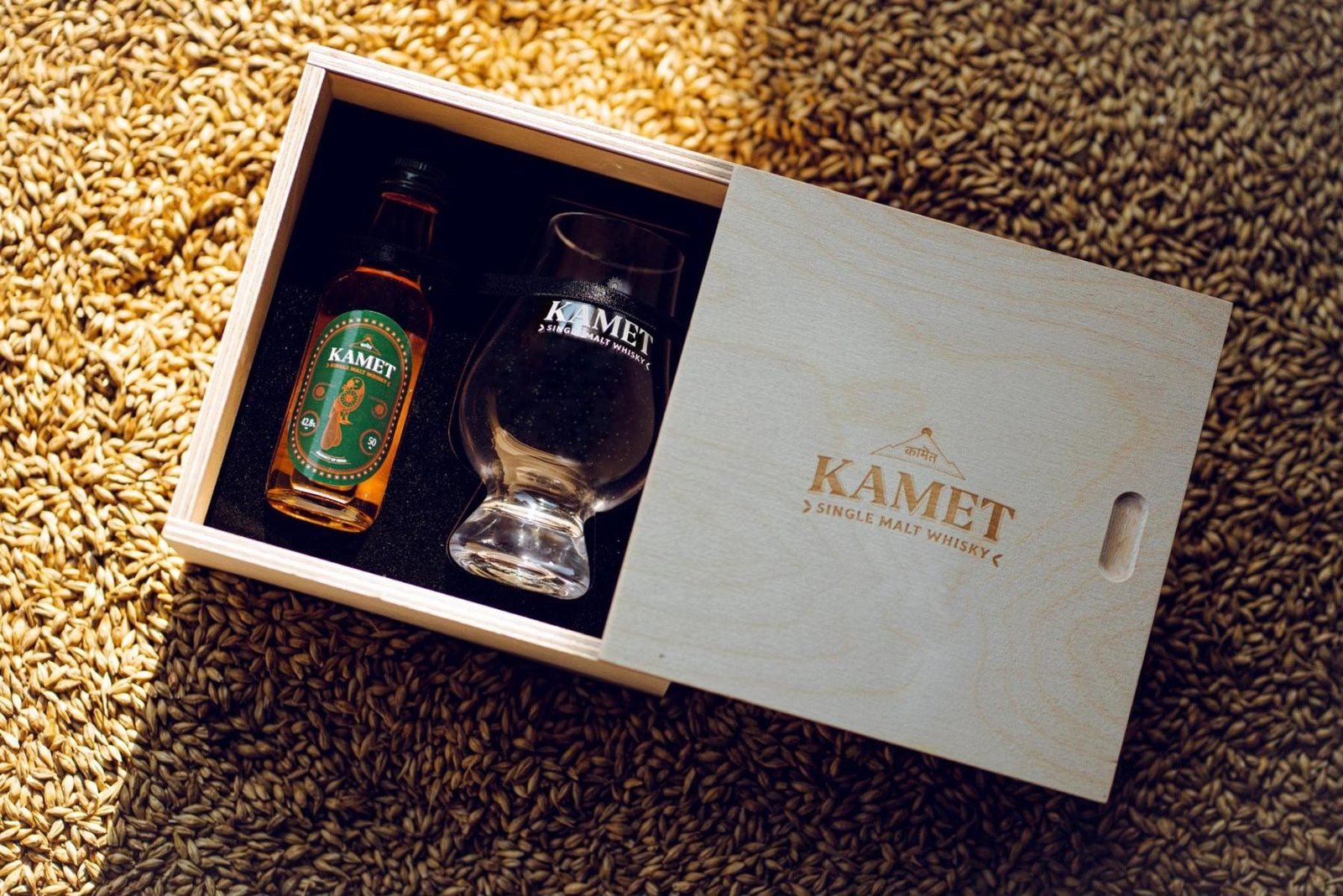
A brand world worth living in
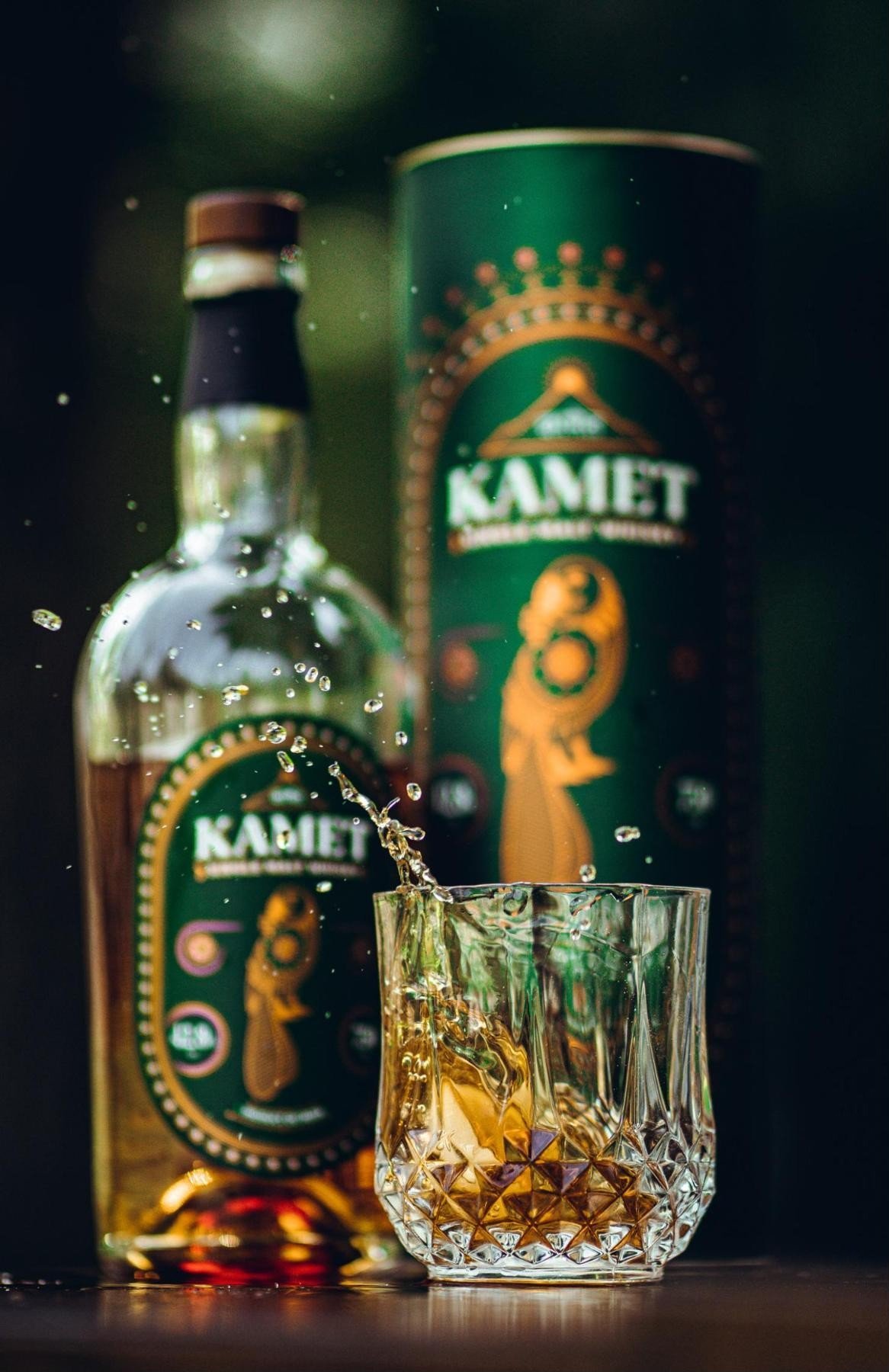
From barrel end-caps in the warehouse to the glencairn tasting glass, the system turns provenance into packaging the drinker can hold.
This is not a label. It is a story.
A forgotten Himalayan peak, a historic battleground, six-row barley and a parrot to tell the tale.