

How to Set Up and Optimize a LinkedIn Company Page: The Ultimate 2025 Guide
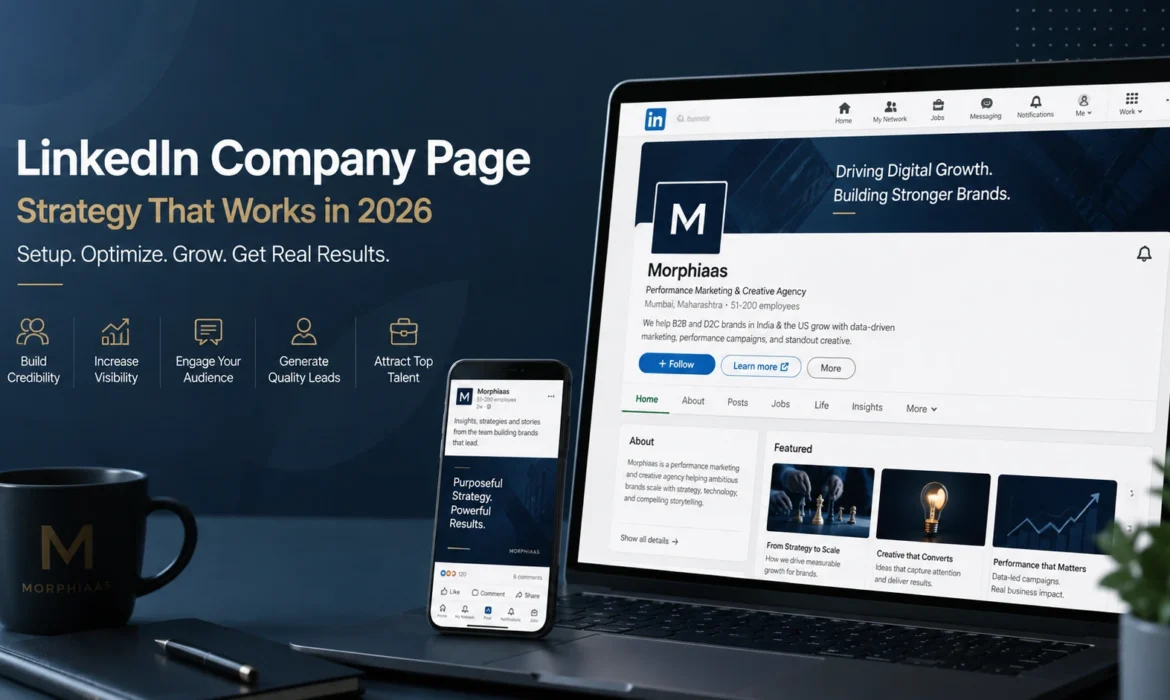
LinkedIn Company Page is now one of the highest-leverage B2B marketing channels Indian brands have available, and one that most companies set up once and quietly ignore. A well-optimized LinkedIn Company Page, combined with consistent content publishing and a genuine employee advocacy rhythm, produces qualified leads, brand credibility, and hiring pipeline without spending a rupee on LinkedIn Ads. This guide covers exactly how to set up, optimize, and grow a LinkedIn Company Page that produces business results in 2026.
Key takeaways
- LinkedIn has 1.1 to 1.2 billion registered members globally in 2026, with 310 million monthly active users, and India is the second-largest LinkedIn market at roughly 130 to 161 million users.
- Personal profiles get roughly 561% (about 8x) more organic reach than Company Pages. Employee advocacy is the single biggest lever for LinkedIn Company Page growth.
- Companies posting 4 times per week see a 2x lift in engagement, per LinkedIn’s official Pages Best Practices. Companies with complete profile information have 11x more followers than incomplete pages.
- Document carousels lead all content formats at roughly 7% engagement rate, followed by multi-image carousels at 6.6%. Text-only and link posts perform lowest.
- 89% of B2B marketers rate LinkedIn as the #1 platform for lead generation, and 46% of all social traffic to B2B websites comes from LinkedIn.
What Is a LinkedIn Company Page and Why Does It Matter for Indian Brands?
A LinkedIn Company Page is your brand’s official presence on the world’s largest professional network, distinct from individual employee profiles. It serves as the credibility anchor decision-makers check before engaging with your business, the hub for your company’s content and thought leadership, and the launchpad for employer branding, recruitment, and B2B lead generation. For Indian brands targeting other businesses (B2B software, professional services, consulting, agencies, D2C brands with B2B extensions), the LinkedIn Company Page is often the single most important digital asset outside your website.
The commercial case is strong. Per DigitalApplied’s 2026 B2B benchmark analysis, 89% of B2B marketers rate LinkedIn as their number one platform for lead generation, and LinkedIn drives 46% of all social traffic to B2B websites. In India specifically, LinkedIn is one of the few platforms where decision-makers in enterprise, mid-market, and startup ecosystems are all reachable through the same channel, which is why a strong Company Page presence produces disproportionate business impact for the effort invested.
How Do You Set Up a LinkedIn Company Page from Scratch?
Setting up a LinkedIn Company Page takes 30 to 60 minutes of focused work, plus another 2 to 3 hours for banner design, initial content, and profile optimization. You must have a personal LinkedIn account, use a verified work email tied to your company domain, and be listed as an admin. Once created, the Company Page is separate from your personal profile.
The step-by-step setup process:
- Step 1: Create the page. From your personal LinkedIn account, click Work in the top menu, scroll to Create a Company Page, choose the type (Company, Showcase Page, Educational Institution), enter your company name, unique URL, and verified work email.
- Step 2: Add core company details. Website URL, industry, company size, company type (Public, Private, Non-profit), year founded, headquarters location, and one to five specialties. Every field affects search visibility.
- Step 3: Upload logo and banner image. Logo: 300×300 pixels, PNG format, clean brand mark. Banner: 1128×191 pixels, high-resolution, visually communicates what your business does or the value you deliver.
- Step 4: Write a compelling About section. 2,000 character limit. Open with what you do and who you serve. Include buyer-relevant keywords naturally. End with a clear call-to-action (Visit our website, Book a demo, Contact us).
- Step 5: Add admin roles. Assign Super Admin, Content Admin, and Analyst roles to relevant team members. Never leave a Company Page with a single admin. If that person leaves, you can lose control of the page.
- Step 6: Publish your first three to five posts. A new empty Company Page looks abandoned. Publish a founding story, a product or service overview, and a team introduction before inviting connections to follow. Empty pages do not get followers.
- Step 7: Invite the founding cohort to follow. Employees, past clients, industry contacts, personal network. Do not buy followers or bulk-invite strangers. The initial follower base sets the tone of every future post’s engagement.
What Are the 7 Proven Ways to Optimize a LinkedIn Company Page in 2026?
Seven optimization tactics consistently separate LinkedIn Company Pages that generate business results from ones that quietly stagnate. In our own work with Indian B2B and D2C brands at Morphiaas, a performance marketing and creative agency serving India and the US, these are the shifts we prioritize for clients building LinkedIn as a serious growth channel.
1. Complete every profile field with buyer-relevant keywords
Companies with complete profile information have roughly 11x more followers than pages with incomplete profiles, per LinkedIn’s own Pages Best Practices data. Fill every field: tagline, About section (all 2,000 characters), industry, size, founded year, specialties (up to 20), headquarters, website URL, phone, and custom Company Page URL. Include the buyer-intent keywords your prospects actually use, naturally woven into the About section rather than stuffed.
2. Design a banner and logo that carry brand consistency
The Company Page banner is prime real estate that most Indian brands underuse. Use it to communicate what your business does, the outcome you deliver, or a current campaign, in a visual style consistent with your website and other brand assets. Refresh the banner quarterly to keep the page feeling active. A well-designed banner and logo signal that the brand invests in its own presence, which shapes how prospects perceive credibility before reading a single word.
3. Publish 3 to 5 posts per week using proven content formats
LinkedIn rewards consistent publishing. Companies posting 4 times per week see a 2x lift in engagement compared to pages posting less than once a week. Use the highest-performing formats: native document carousels (around 7% engagement rate), multi-image carousels (6.6%), and short-form video under 60 seconds. Save link posts and pure text updates for supplementary use. Build a content pillar strategy around three to five recurring themes (product education, industry insight, customer stories, team culture, thought leadership).
4. Build an employee advocacy program (the single biggest LinkedIn Company Page lever)
Personal profiles get roughly 8x more organic reach than Company Pages. This is not a small gap. It reshapes the entire strategy. Every post from your Company Page reaches roughly 2% of your followers organically. The same post shared by employees can reach far more prospects. Start an employee advocacy program: give employees a monthly content calendar, celebrate top sharers publicly, provide easy-to-share visuals and captions, and encourage founder-led personal posting alongside the Company Page schedule. This is the single highest-leverage LinkedIn tactic available in 2026.
5. Use LinkedIn Newsletter for email-like organic reach
LinkedIn Newsletter subscriptions produce email-like reach without the deliverability hassles of running your own email list. Publish a weekly or monthly newsletter on a specific topic your buyers care about. Subscribers receive notifications every time you publish, which cuts through the standard feed algorithm entirely. For most Indian B2B brands, a Company Page Newsletter is one of the fastest ways to build a direct audience of decision-makers who opted in.
6. Leverage LinkedIn Live and Events for community and lead capture
LinkedIn Live streams and Events (both in-person and virtual) capture attendee data as first-party leads and give the Company Page an organic reach boost during and after the event. Host a monthly Live conversation with your CEO or a domain expert, publish product launches as Events, and use LinkedIn Events to promote webinars and industry gatherings. Both formats convert far better than static content when the topic is genuinely valuable to your buyer audience.
7. Optimize the Company Page for LinkedIn Search (SEO for LinkedIn)
LinkedIn has its own internal search engine that decision-makers use to find vendors, partners, and thought leaders. Optimize for LinkedIn Search by including buyer-intent keywords in your Company Page name (where permitted), tagline, About section, specialties, and post captions. Consistent hashtag use (3 to 5 relevant hashtags per post) helps LinkedIn categorize your content for search and recommendation surfaces. LinkedIn SEO is a separate discipline from Google SEO but follows the same underlying principle: content that clearly signals what it is about to both humans and algorithms gets found.
How Do You Measure LinkedIn Company Page Performance?
Measure LinkedIn Company Page performance across four buckets: follower growth (net new followers per month, retention rate), content engagement (impressions, engagement rate, top-performing formats and topics), traffic and conversions (LinkedIn referral traffic to your website, form fills, demo requests, contact submissions), and lead pipeline (LinkedIn-sourced enquiries, meetings booked, opportunities generated). Judge monthly for engagement and traffic, quarterly for lead pipeline given B2B sales cycles.
A practical stack: LinkedIn Company Page Analytics (free, native) for follower and content data, Google Analytics 4 for LinkedIn referral traffic and on-site behavior, your CRM (HubSpot, Zoho, Salesforce, Pipedrive) for lead attribution and pipeline value, and Shield or Inlytics if you want deeper personal-profile analytics for employee advocacy tracking. Compare Company Page metrics against employee-shared post metrics monthly. The delta is usually large enough that it reshapes where you invest content creation time.
Common LinkedIn Company Page Mistakes Indian Brands Make
- Setting up the page and then abandoning it. An abandoned LinkedIn Company Page hurts brand perception more than no page at all. If you cannot commit to posting weekly, do not set it up yet.
- Publishing only company news and promotional content. Feed algorithms punish self-promotional pages. Follow a 70/30 rule: 70% value content (industry insight, education, customer stories), 30% company content (launches, hiring, milestones).
- Ignoring employee advocacy. With personal profiles reaching 8x more people than Company Pages, ignoring employee-led sharing leaves the biggest single lever untouched.
- Buying followers or bulk-inviting strangers. Vanity follower counts do not produce leads and often depress engagement rates that the algorithm uses to gate future reach.
- Never posting videos or document carousels. Documents and carousels deliver the highest engagement rates on LinkedIn in 2026. Text-only posts have the lowest reach.
- Weak or missing About section. The About section is often the first thing a prospect reads. A generic corporate paragraph fails to differentiate. Write it like a landing page, not a legal document.
- No consistent posting rhythm. Posting six times in one week and then going silent for a month hurts follower retention. Consistency (3 to 5 posts per week, every week) beats volume in bursts.
- Ignoring LinkedIn Newsletter and Events. Both features produce disproportionate reach for the effort invested and remain underused by most Indian brands.
Build a LinkedIn Company Page That Actually Generates B2B Leads
If you want your LinkedIn Company Page to work as a real B2B growth channel that generates leads, credibility, and hiring pipeline instead of sitting quietly with 47 followers, that is the kind of program we build at Morphiaas. We combine B2B marketing strategy with brand and creative direction and paid layering through our paid media practice. Book a call and we will map the right LinkedIn content and advocacy strategy for your business stage.
Frequently Asked Questions
How often should a LinkedIn Company Page post in 2026?
Three to five times per week is the sweet spot for most Indian brands. Companies posting 4 times per week see a 2x lift in engagement compared to pages posting less than once a week, per LinkedIn’s own Pages Best Practices. Consistency matters more than volume in bursts.
Is a LinkedIn Company Page worth it for small Indian businesses?
Yes, for any business selling to other businesses, professionals, or hiring skilled talent. LinkedIn is where B2B decision-makers, mid-market buyers, and enterprise stakeholders can be reached in one platform. For pure B2C consumer brands with no B2B extension, LinkedIn has less impact than Instagram or YouTube. For everyone else, it is one of the highest-ROI free-to-start channels available.
Which content formats work best on LinkedIn Company Pages?
Native document carousels lead all formats at roughly 7% engagement rate, followed by multi-image carousels at 6.6%. Short-form video under 60 seconds is growing faster than any other format. Text-only posts and link posts perform lowest. Prioritize documents, carousels, and short videos over links and text updates.
Should Indian brands post on LinkedIn in Hindi or English?
Primarily English for most B2B contexts, since LinkedIn’s Indian audience skews toward professionals comfortable in English. Consider Hindi or bilingual posts if your buyer segment includes Tier-2 or Tier-3 business owners, regional trade audiences, or specific professional communities where the vernacular is a stronger fit.
How long before a LinkedIn Company Page starts producing leads?
Expect 60 to 90 days to see meaningful engagement growth if you post consistently 3 to 5 times per week and build employee advocacy. First qualified leads typically appear within 90 to 120 days. LinkedIn is a slow-compounding B2B channel. Judging results in the first month usually means judging the ramp-up rather than the working system.