


In the fast-paced world of digital marketing, staying ahead means embracing channels that offer both personalization and scalability. One such rising star is programmatic audio—a dynamic, data-driven way to reach highly engaged audiences across streaming platforms. And when it comes to audio engagement, Spotify ads are leading the charge.
As brands explore new avenues for audience connection, digital audio marketing has emerged as a powerful, underutilized tool. But are you ready for the shift? Is your brand voice optimized for targeted voice ads and the future of podcast advertising 2025?
In this blog, we explore how programmatic audio works, why Spotify ads are reshaping the way we advertise, and how your brand can leverage this evolution to drive awareness, recall, and conversions like never before.
What Is Programmatic Audio?
Programmatic audio refers to the automated buying and selling of audio ad inventory through real-time bidding, using audience data to deliver personalized messages to listeners. Just like programmatic display or video, audio ads are served through platforms such as Spotify, Pandora, and Amazon Music—but with a voice-first approach.
Unlike traditional radio, programmatic audio uses algorithms and audience segmentation to deliver targeted voice ads to users based on behavior, interests, location, and even mood.
According to eMarketer, digital audio ad spending will reach $10.4 billion by 2025, with programmatic audio accounting for over 60% of that total.
Why Spotify Ads Are Dominating the Digital Audio Space
With more than 615 million active users globally and over 250 million ad-supported listeners, Spotify ads provide unparalleled access to a highly engaged, mobile-first audience.
Brands can serve targeted voice ads during music breaks, podcasts, or curated playlists. Spotify’s ad platform allows advertisers to target based on:
- Listening behavior
- Genres and playlists
- Time of day
- Device type
- Demographics and location
Spotify’s strength lies in its data—first-party listening data enables hyper-personalized digital audio marketing campaigns that feel contextual, not intrusive.
According to Spotify, audio ads on their platform deliver 24% higher brand recall and 2x greater intent to purchase compared to traditional formats.
The Power of Targeted Voice Ads
Today’s consumers are multitaskers—listening while commuting, working out, cooking, or relaxing. This makes targeted voice ads an ideal way to cut through the noise, literally.
Here’s why targeted voice ads work:
- Non-intrusive: Listeners don’t have to stop what they’re doing.
- Highly personal: Ads are delivered based on interests and behavior.
- Memory recall: Audio stimulates emotional and cognitive processing, boosting brand recall.
A Nielsen study revealed that 75% of audio streaming users took action after hearing an ad, including visiting a website, searching for a brand, or making a purchase.
With programmatic audio, you can create immersive sonic experiences that capture attention without requiring a screen—making them perfect for brand building and performance marketing.
Digital Audio Marketing Is the Next Frontier
As more consumers shift to voice-first experiences—smart speakers, wireless earbuds, and audio platforms—digital audio marketing is becoming essential in every marketer’s playbook.
Whether through Spotify ads, smart speaker placements, or in-app audio banners, brands are now crafting sound-first strategies that align with consumer habits.
Key Trends in Digital Audio Marketing:
- Sonic Branding: Distinct audio logos and brand jingles.
- Voice AI Integration: Conversations with Alexa or Google Assistant.
- Interactive Audio Ads: Choose-your-own-adventure style voice ads.
In 2025, digital audio marketing is projected to become a top-three channel for mobile engagement—especially with the continued rise of podcast advertising 2025 and immersive ad formats.
Podcast Advertising 2025: The Voice Channel of Choice
Podcast advertising 2025 is not just about host-read sponsorships. It’s about programmatic audio buying in podcast networks, dynamic ad insertion, and precision-targeted messaging based on listener data.
Podcasts offer a unique mix of long-form storytelling and focused attention. Unlike social media, where ads can be scrolled past, podcast listeners are highly engaged—often tuning in for 30–60 minutes.
According to IAB, U.S. podcast ad revenue will exceed $4 billion by 2025, driven heavily by programmatic audio systems and automation.
Formats on the rise:
- Pre-roll and mid-roll dynamic ads
- Geotargeted podcast placements
- Voice-to-action (VTA) commands for smart devices
If your brand isn’t exploring podcast advertising 2025, you’re missing out on a rich, loyal, and conversion-ready audience.
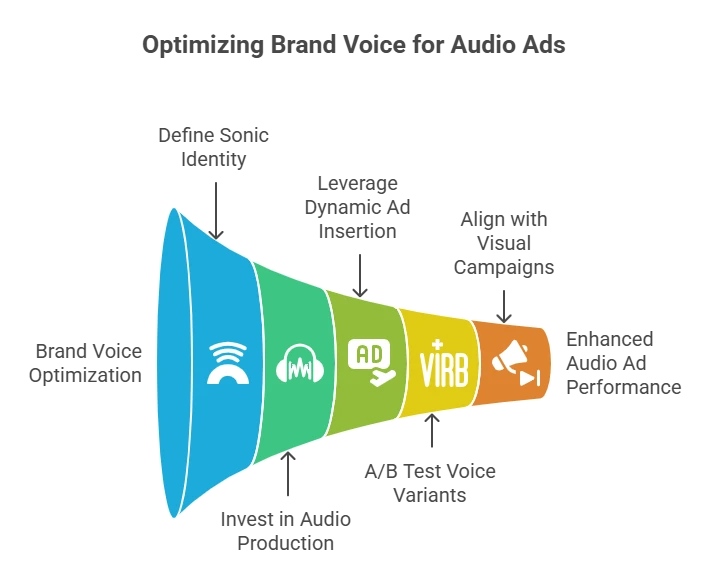
How to Prepare Your Brand Voice for Programmatic Audio
Creating successful Spotify ads or audio campaigns takes more than a voiceover. You need a strategy that considers script tone, context, and delivery.
1. Define Your Sonic Identity
Is your brand serious, playful, edgy, or compassionate? Translate that into vocal tone, background music, and pacing. Your brand voice must be instantly recognizable.
2. Invest in Quality Audio Production
Poor audio kills credibility. Use professional voice actors or high-quality AI-generated voices to ensure clarity and emotional impact.
3. Leverage Dynamic Ad Insertion
Use programmatic audio tools that insert your ads based on listener behavior in real time, especially for podcast advertising 2025 strategies.
4. A/B Test Voice Variants
Test different targeted voice ads—changing the tone, script, or CTA. Spotify Ad Studio allows for real-time performance analysis.
5. Align with Visual Campaigns
Ensure your digital audio marketing complements your other channels. A consistent message across audio, video, and social boosts brand recall.
Real-World Case Study: How a Retail Brand Grew ROI with Spotify Ads
A fashion e-commerce brand launched a Spotify ads campaign targeting Gen Z and millennials. Using Spotify’s demographic and playlist data, they served 15-second targeted voice ads during workout and morning commute playlists.
Strategy Highlights:
- Customized voice tone for each time slot
- A/B tested CTA language
- Retargeted podcast listeners with dynamic ads
Results in 30 Days:
- 48% lift in brand awareness
- 2.3x ROAS from audio vs. display
- 35% increase in website visits from Spotify referrals
This success was possible through the precise targeting and scalability of programmatic audio.
The Future of Programmatic Audio & Spotify Ads
Looking ahead, programmatic audio will go beyond simple voice ads. Expect:
- Interactive voice ads that respond to speech
- AI-personalized scripts based on user history
- Real-time location-based Spotify ads
- Full-funnel attribution models for audio engagement
In podcast advertising 2025, expect ultra-dynamic, context-aware ads that change based on the episode, mood, or user preferences—all powered by AI and automation.
Conclusion
The age of digital audio marketing is here—and brands must act now. Whether through Spotify ads, targeted voice ads, or podcast advertising 2025, audio is becoming an essential layer of modern marketing.
With programmatic audio, you’re not just buying ad space—you’re buying attention. You’re meeting your audience in moments of focus, emotion, and immersion.
To succeed, brands must build a strong sonic identity, optimize their brand voice for engagement, and leverage the real-time precision of digital audio marketing.
Want help building your first Spotify ad campaign or launching your programmatic audio strategy? Get in touch with our voice marketing experts today.