

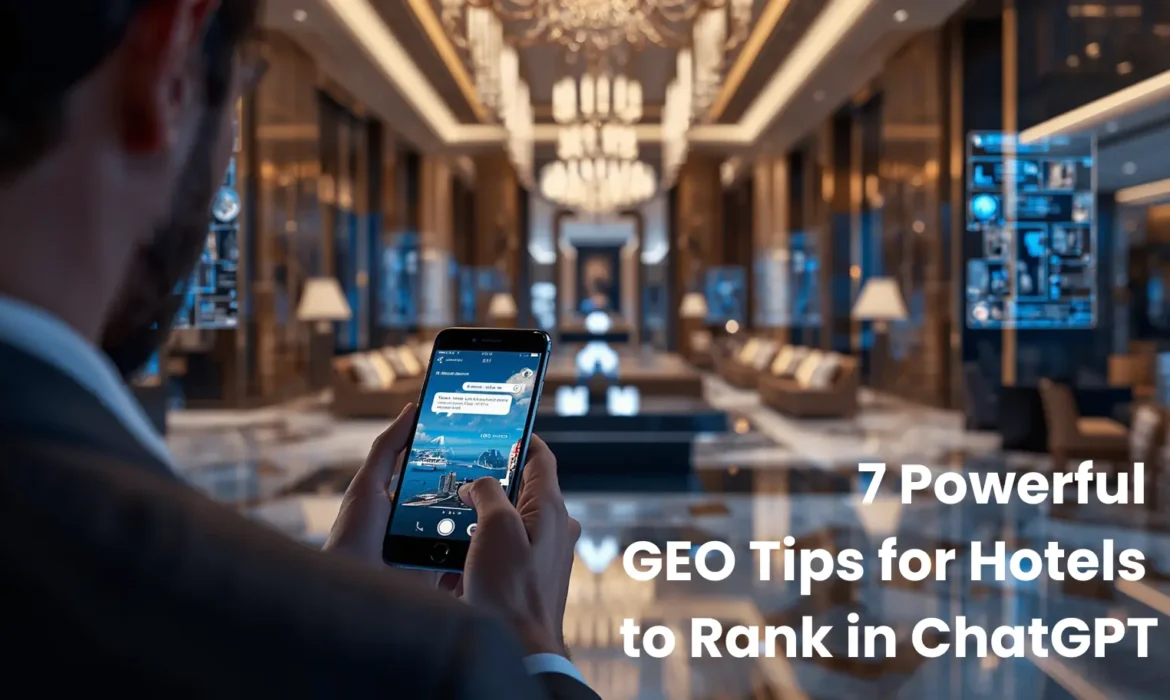
The way travelers discover and book hotels is rapidly evolving with the rise of AI-powered platforms like ChatGPT, Gemini, and Google AI Overviews. Instead of relying only on traditional search engines, users are now asking conversational questions and expecting personalized recommendations instantly. This shift is making GEO for hotels an essential part of modern hospitality marketing. Hotels that optimize their digital presence for AI-driven search can improve visibility, build stronger online authority, increase direct bookings, and reduce dependency on third-party booking platforms. By combining SEO, GEO, local SEO, content marketing, and reputation management, hospitality brands can position themselves as trusted recommendations across the next generation of search experiences.
1. Create Conversational Content

AI search engines prefer natural, human-focused content that directly answers traveler queries.
Hotels should publish:
- destination guides
- itinerary blogs
- travel tips
- family travel content
- luxury travel insights
- seasonal travel recommendations
Examples:
- “Best Time to Visit Goa for Luxury Travelers”
- “How to Choose the Right Resort for a Family Vacation”
- “Top Experiences Travelers Look for in Luxury Hotels”
This type of content helps AI systems understand your expertise and improve brand authority.
2. Add Strong FAQ Sections

FAQ sections are extremely important for GEO and AEO (Answer Engine Optimization).
AI platforms often pull answers directly from FAQ content.
Hotels ought to respond to frequently asked questions from travelers such as:
- Does the hotel provide an airport shuttle service?
- Can early check-in be done?
- Is the property suitable for pets?
- Are there workation facilities?
- Is breakfast included?
Well-structured FAQs improve:
- AI visibility
- featured snippets
- conversational search rankings
3. Strengthen Local SEO
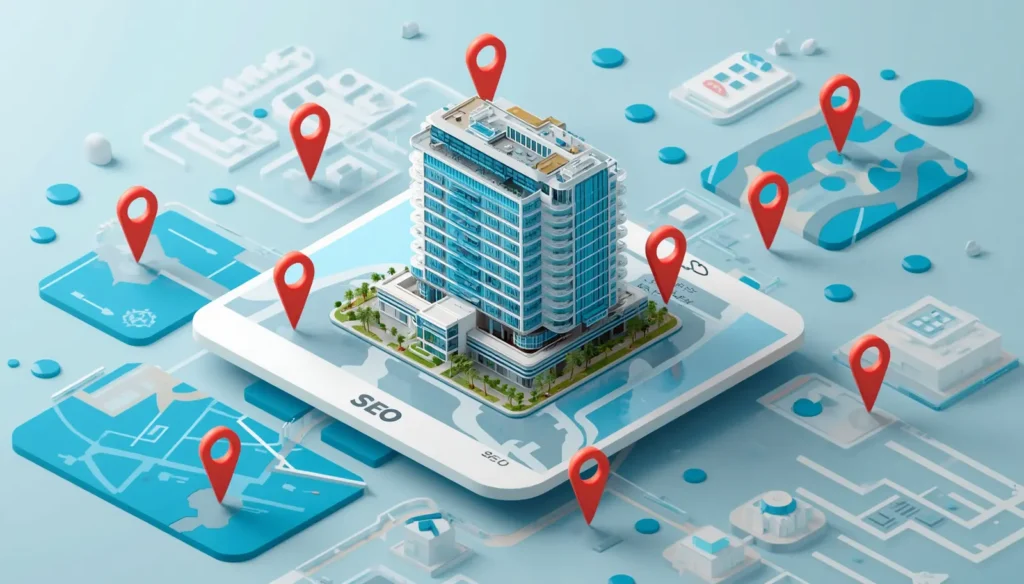
Local SEO remains a major ranking factor for AI-generated hospitality recommendations.
Hotels should optimize:
- Google Business Profile
- local keywords
- maps visibility
- guest reviews
- citations
- location pages
For example, a resort in Jaipur should optimize for:
- luxury resorts in Jaipur
- heritage hotels Jaipur
- destination wedding resorts Jaipur
- couple-friendly resorts Jaipur
AI systems rely heavily on trusted local signals when recommending hotels.
4. Create Robust Online Feedback
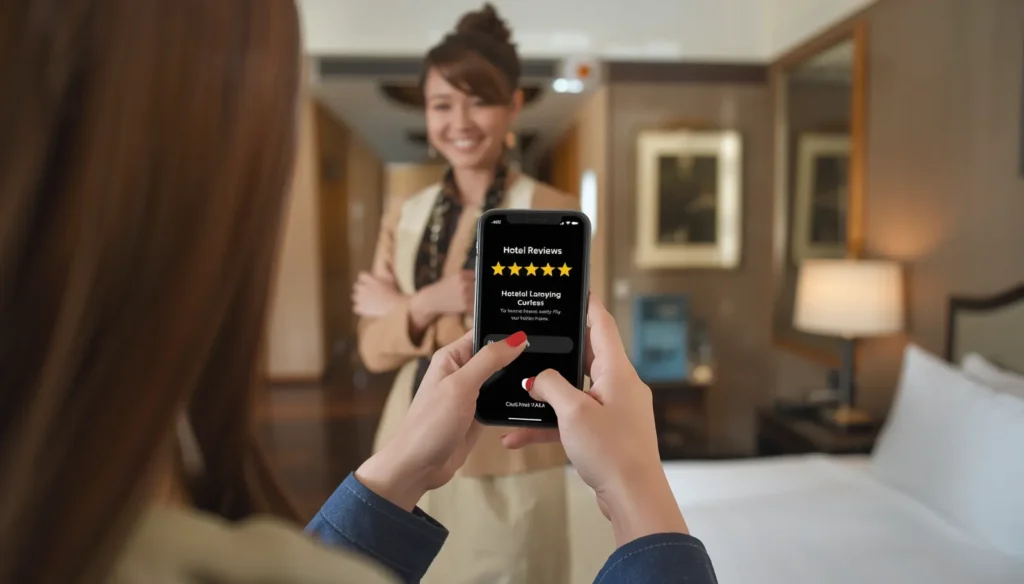
Reviews are becoming more and more significant as strong trust signals for AI-powered search.
AI platforms analyze:
- review quality
- sentiment
- consistency
- authority platforms
Hotels should encourage authentic reviews across:
- TripAdvisor
- Booking.com
- MakeMyTrip
Strong review profiles increase the chances of appearing in AI recommendations.
5. Improve Website Experience

Technical SEO still matters.
Hotels should ensure:
- fast-loading pages
- mobile-friendly design
- optimized images
- HTTPS security
- structured navigation
- internal linking
A slow website affects user contentment and AI visibility.
6. Make use of Structured Data and Schema Markup

Schema markup helps AI systems understand hospitality websites better.
Important schema types include:
- Hotel schema
- FAQ schema
- Review schema
- Local business schema
- Breadcrumb schema
Structured data improves visibility in:
- AI Overviews
- rich results
- conversational search experiences
7. Emphasize Marketing Based on Experience

Contemporary tourists seek experiences rather than simply hotel accommodations.
AI search engines comprehend emotional intentions and inquiries centered on lifestyles
Hotels should create content around:
- wellness retreats
- romantic stays
- luxury experiences
- food experiences
- cultural activities
- workations
- family vacations
Experience-driven content increases visibility across broader travel-related searches.
The Future of Hospitality Marketing is Powered by AI
The hospitality industry is getting into a digital era.
This means the hospitality industry is changing in a way.
In the coming years people who travel will use computers to help them find places to visit.
They will use these computers which’re like assistants to find out about different hotels and then decide where they want to stay.
The hospitality industry and these computers will be very important to people who travel.
The brands that adapt early will gain a major competitive advantage.
The future will not belong only to brands ranking on Google’s first page.
It will belong to brands that AI systems trust enough to recommend directly.
This is where GEO becomes critical.
Hotels that combine:
- SEO
- GEO
- AEO
- Local SEO
- content marketing
- reputation management
will build stronger long-term visibility and reduce dependency on OTAs.
The Significance of a Strong Digital Marketing Partner for Hospitality Brands
Adapting to AI-driven search requires more than traditional SEO.
Hospitality brands now need:
- Strategies for content centered on AI
- technical SEO
- local SEO optimization
- reputation management
- conversion-focused websites
- performance marketing
- GEO implementation
Morphiaas helps hospitality brands make systems that can grow and work well. They do this by using things like search engine optimization, paid media, branding and social media marketing. They also think about how people travel and make plans that will really work for hospitality brands. Morphiaas uses these things to help hospitality brands get more people to visit their websites and book their hotels. Morphiaas is about helping hospitality brands with digital growth systems like search engine optimization and social media marketing.
FAQ
Q.1 What does GEO mean in hospitality marketing?
GEO, which stands for Generative Engine Optimization is something that helps make hotel websites and digital content. This is so artificial intelligence platforms, like ChatGPT, Gemini and Google AI Overviews can suggest hotel brands when people search for things in a way. GEO is about making sure hotel websites and digital content are optimized so these artificial intelligence platforms can find them and recommend hotel brands to people who are searching for hotels and other hospitality things. This way when someone uses ChatGPT, Gemini or Google AI Overviews to search for something they can get results that include hospitality brands.
Q.2 What makes GEO significant for hotels?
GEO helps hotels get more noticed, in search results that use intelligence.
Travelers now ask questions like they would in a conversation than just typing in a few keywords.
This is where GEO comes in. It helps hotels appear often in these search results.
By doing this, hotels get more bookings directly from customers. This means they rely less on travel agencies.
GEO makes it possible for hotels to connect with travelers who are looking for a place to stay. It does this in a way through GEO.
Hotels benefit from using GEO.
Q.3 How can hotels attain high positions in ChatGPT search results?
Hotels can enhance their presence in AI search outcomes by:
- publishing conversational content
- adding FAQs
- improving local SEO
- collecting authentic reviews
- using schema markup
- building strong digital authority
Q.4 What distinguishes SEO from GEO?
SEO is about making websites do better in search engines like Google. On the other hand GEO is about making content and digital authority better for search results that are made by artificial intelligence and for platforms where people have conversations.
SEO and GEO are two things and they work in different ways. SEO is for search engines but GEO is for search results that are made by machines and for platforms where people talk to each other.
GEO is really important because it helps with search results that are made by intelligence and, with conversational search platforms. SEO and GEO are both important. They do different things.
Q.5 In what ways do reviews influence AI search rankings for hotels?
When people look at hotels and other places to stay, the computer systems that help us decide look at what people say in their reviews. They want to know if the reviews are good or bad and if people are saying the things over and over. If lots of guests say things about a hotel then the computer systems are more likely to suggest that hotel to other people. This helps people trust the suggestions that the computer systems give us. Hospitality brands are more visible when they have lots of reviews from guests.
Conclusion
The way people find hotels is changing because of intelligence.
Currently, individuals utilize tools such as ChatGPT and Google to communicate with computers and discover what they seek.
This is a change for hotels.
Hotels that only use the way of getting found online may have trouble being seen in the future.
Hotels that start using this new way of searching can get more people to book directly with them, become more well known and be found easier.
Hotels that do this will be ahead of hotels when it comes to searching online.
The future of marketing for hotels is not about being at the top of search engines.
It’s about becoming the answer travelers trust.