

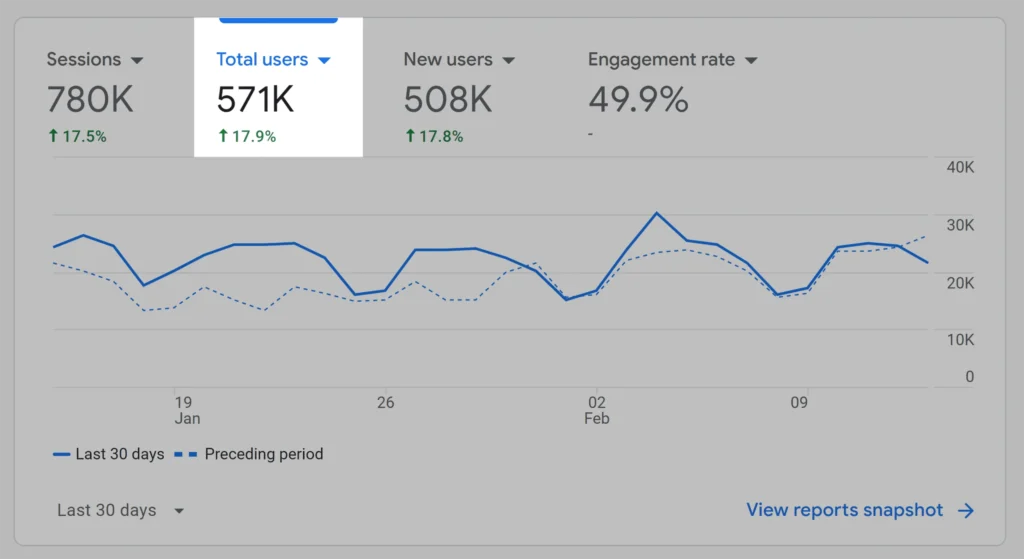
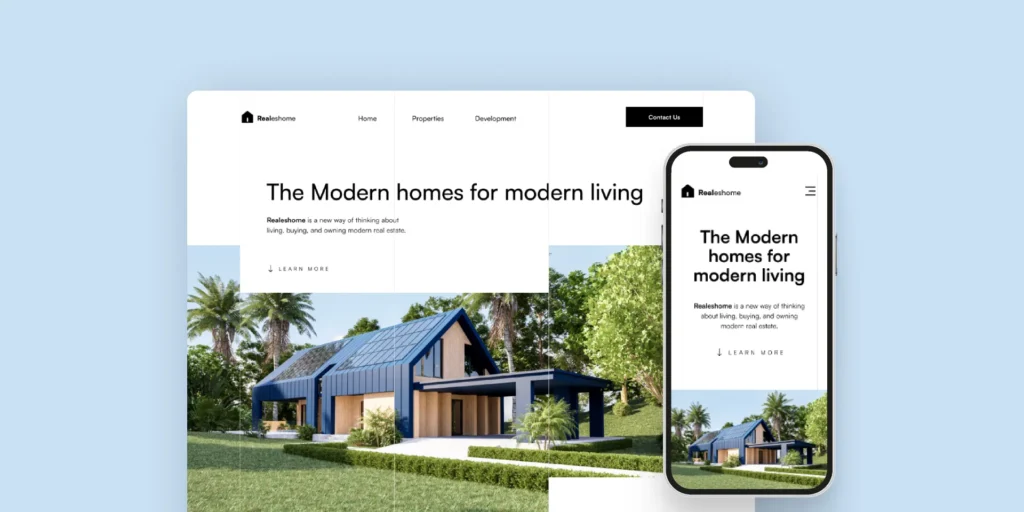

A real estate digital marketing agency helps property developers generate more site visits, qualified inquiries, and faster inventory sales through structured digital systems. The real estate business has changed a lot over the past few years. It is not like how it used to be. The real estate business was simpler then. Now it is more complicated. Things have really changed in the real estate business. It is different now.
In the past people who built houses and buildings mostly used real estate agents signs on the side of the road property shows and ads in the newspaper to find buyers. They spent a lot of money on these things. The main issue was that they could not figure out which advertisements were actually working for them. They had a problem with the advertisements and that was that they could not tell which ones were really working. You never really knew which ad made someone want to buy a house. Precision Targeting: Reaching Buyers Who Are Ready
Nowadays the way people buy houses is totally different.
Most property searches begin online. Buyers explore Google before they speak to an agent. They watch walkthrough videos on YouTube. They check social media pages to evaluate credibility. They read reviews. They compare prices. They shortlist options — all before making the first call.
If your project doesn’t appear during this research phase, you are losing potential buyers to competitors who are digitally visible.
This is where a professional real estate digital marketing agency steps in — not just to run ads, but to build a predictable lead generation system.
Let’s understand how such agencies consistently generate up to 10X more property leads.
1. Precision Targeting: Reaching Ready Buyers
Traditional marketing is about how many people you can reach.
Digital marketing on the hand is more about making your message relevant to your audience. It is really about finding people who’re interested, in what you have to offer. Traditional marketing tries to reach many people as possible. Digital marketing tries to speak to the people who care about your product or service. This makes digital marketing more targeted. It helps you get your message to the people at the right time. A billboard might be seen by thousands of people — but how many of them are actively planning to buy property?
A professional agency uses data-backed targeting methods to focus only on serious prospects. This includes:
1. Geo-targeting specific cities, sectors, and even radius areas
2. Filtering audiences based on income brackets and demographics
3. Targeting based on search behavior and interests
4. Building custom and lookalike audiences
5. Bidding on high-intent keywords
For example, when someone searches:
“2 BHK flats in Noida”
“Luxury apartments in Gurugram”
“Ready to move flats near metro”
Your project can appear at the top of search results through well-structured paid campaigns on platforms like Google Ads.
Instead of spending money on mass exposure, your budget is directed toward buyers who are already in decision mode. That’s the difference between visibility and strategic visibility.
2. Sustainable Growth Through SEO
Paid ads can get your inquiries away. Search Engine Optimization is a way to get people to your site over time.
Search Engine Optimization is very good for marketing properties because it helps people find your site without having to pay each time someone clicks on it.
A skilled agency works on:
1. Technical website improvements
2. Mobile responsiveness
3. Faster page load speed
4. Location-based keyword optimization
5. Content marketing and blog creation
6. Google Business Profile optimization
7. Backlink building strategies
Imagine your website ranking organically on Google Search for:
“Luxury apartments in Gurugram”
“Affordable flats in Noida Extension”
“Commercial office space in Mumbai”
These searches are performed by high-intent buyers. Once ranked, you receive steady inquiries daily — even when ads are paused.
SEO takes time to show results. It does not happen overnight. As time goes on SEO helps you rely less on paid ads. It also helps establish your brand as an authority in your field
3. High-Converting Landing Pages
High-Converting Landing Pages
Getting people to visit your website is important. It is really critical that you get them to do what you want them to do when they get there.
Many people who build websites spend a lot of money on advertisements. They do not get the results they want because their High-Converting Landing Pages are messy, slow to load or hard to understand.
Good design companies make High-Converting Landing Pages that are meant to get people to take action. These High-Converting Landing Pages are easy to look at and they get right to the point. They are set up in a way that makes sense.
A good High-Converting Landing Page for a property usually has:
1. A headline that really grabs your attention and tells you what is special, about the property
2. A compelling headline that highlights value
3. Clear project benefits and USPs
4. Key amenities and location advantages
5. A price range teaser
6. High-quality images or walkthrough videos
7. Trust signals like certifications or testimonials
8. Clear call-to-action buttons
9. WhatsApp click-to-chat options using WhatsApp
10. Simple lead capture forms
If you make small changes to your website like moving the call to action or reducing the number of fields people have to fill out you can get a lot more people to ask about your stuff.
For example when you make your landing page better it can get three to five times more people interested in what you have to offer and this is from the same number of visitors to your website.
4. Performance Marketing for Immediate Results
While search engine optimization builds long-term strength, performance marketing delivers momentum.
Developers can create inquiries right away with platforms, like Google Ads and Meta Platforms, which includes Facebook and Instagram.
To succeed they need to have an organized plan and execute it well.
1. Astute bidding techniques
2. Ad campaigns that are geotargeted
3. A/B testing, or creative testing
4. Optimized ad copies
5. Budget distribution based on performance
6. Continuous monitoring
The goal isn’t just more leads — it’s qualified leads at an optimized cost.
With expert campaign management, developers often see:
1. Lower cost per lead
2. Improved site visit bookings
3. Faster inventory clearance
4. Higher return on ad spend
Without strategy, ad budgets disappear quickly. With proper optimization, they turn into a reliable lead engine.
5. Retargeting: Converting Missed Opportunities
One important fact about real estate buyers — most do not convert on the first visit.
Retargeting allows your ads to show up in front of them again on sites like Google Display Network, Facebook, YouTube, and Instagram. This helps them remember your project.
CRM automation also facilitates the process by:
1. Instant messages of acknowledgement
2. WhatsApp follow-ups
3. Email nurturing sequences
4. Automated reminders for sales teams
Retargeting alone can improve overall conversion rates by 30–40%.
It bridges the gap between interest and action.
6. Building a Structured Lead Funnel
The key difference between random marketing and professional marketing lies in structure.
This is how the typical structure appears:
Advertising → Landing Page → Lead Acquisition → CRM → Sales Follow-up → Site Visit → Reservation
Each stage is monitored.
Each stage is optimized.
Each stage is measured.
With this methodical approach, marketing becomes a predictable growth mechanism rather than a wild guess.
7.Optimization Based on Data
Conventional advertising provides little feedback. Digital marketing offers measurable insights.
A professional agency tracks :
1. Cost per click
2. Cost per lead
3. Conversion rate
4. Landing page performance
5. Audience engagement
6. Lead quality
7. Sales-to-booking ratio
Based on real-time data, campaigns are adjusted regularly. High-performing ads receive more budget. Underperforming ones are paused. Audiences are refined.
This continuous optimization cycle compounds results over time.
Growth becomes calculated — not accidental.
Conclusion
In today’s competitive property market, construction alone doesn’t guarantee sales.
Visibility creates awareness.
Trust generates inquiries.
Strategy drives growth.
Precision targeting, SEO, customized landing pages, performance advertisements, retargeting, and CRM automation are all integrated into a single system in an organized digital marketing strategy.
When these factors come together, producing 10X more property leads is a quantifiable and attainable result rather than an overstated assertion.

