

In today’s digital world, your website is often the first place potential buyers interact with your brand. Before they schedule a site visit, speak to a sales representative, or request project details, they usually spend time researching online.
That’s why Real Estate Website Design has become one of the most important parts of a developer’s marketing strategy. A website is no longer just a place to showcase projects it plays a direct role in building trust, generating enquiries, and influencing buying decisions.
Whether you’re marketing luxury residences, commercial spaces, plotted developments, or integrated townships, a well-designed website can help you attract more visitors and convert them into qualified leads.
Why Real Estate Website Design Matters
When buyers land on your website, they form an opinion about your brand within seconds. If the website looks outdated, loads slowly, or is difficult to navigate, many visitors will leave before exploring your projects.
This is why investing in Website Design for Property Developers is so important.
A professionally designed website helps you:
- Create a positive first impression
- Build trust and credibility
- Improve user engagement
- Showcase projects effectively
- Generate more enquiries
- Support marketing campaigns
- Increase conversion opportunities
A strong website becomes the foundation of your digital marketing efforts and helps guide buyers through their decision-making journey.
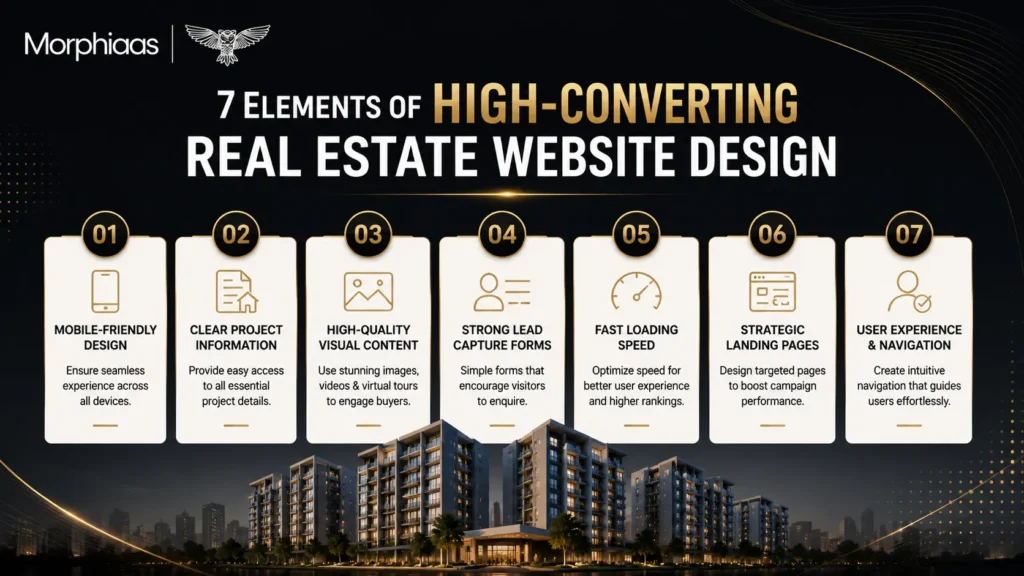
7 Proven Elements That Increase Property Enquiries
1. Mobile-Friendly Design
Today’s property buyers spend a significant amount of time browsing on their smartphones. If your website isn’t optimized for mobile devices, you could be losing valuable enquiries.
Modern Real Estate Website Development should always prioritize mobile responsiveness, ensuring visitors can browse projects, view images, and submit enquiries without any issues.
2. Clear Project Information
One of the most common reasons visitors leave a website is because they cannot quickly find the information they need.
Every project page should clearly highlight:
- Project features
- Location benefits
- Pricing information
- Amenities
- Floor plans
- Contact details
The easier it is for buyers to find answers, the more likely they are to take the next step.
3. High-Quality Visual Content
Real estate is a visual industry. Buyers want to see exactly what they’re investing in before they schedule a site visit.
Adding professional visuals such as:
- Project photography
- Drone shots
- Virtual tours
- Interactive galleries
- Walkthrough videos
can significantly improve engagement and encourage visitors to spend more time exploring your projects.
4. Strong Lead Capture Forms
A successful Real Estate Lead Generation Website should make it simple for potential buyers to connect with your team.
Lead forms should be:
- Easy to find
- Simple to complete
- Mobile-friendly
- Focused on essential information
Complicated forms often discourage users from submitting enquiries. Keeping the process simple can lead to better conversion rates.
5. Fast Loading Speed
Website speed has a direct impact on both user experience and conversions.
Visitors expect pages to load quickly. If your website takes too long to load, many users will leave before viewing your projects.
Optimizing images, improving hosting performance, and reducing unnecessary elements are important Real Estate Website Best Practices that help create a smoother browsing experience.
6. Strategic Landing Pages
Dedicated landing pages can make a major difference when running advertising campaigns or promoting specific projects.
An effective Real Estate Landing Page Design should include:
- Project highlights
- Unique selling points
- Location advantages
- Testimonials
- Clear call-to-action buttons
- Lead enquiry forms
Well-designed landing pages help keep visitors focused and improve the chances of generating enquiries.
7. User Experience and Navigation
Even the best-looking website can struggle if users find it difficult to navigate.
Strong Real Estate UX Design focuses on creating a seamless experience for visitors.
This includes:
- Easy navigation menus
- Clear page structure
- Logical content flow
- Quick access to project information
- Visible enquiry options
A smooth user experience keeps visitors engaged and makes it easier for them to move toward an enquiry or site visit.
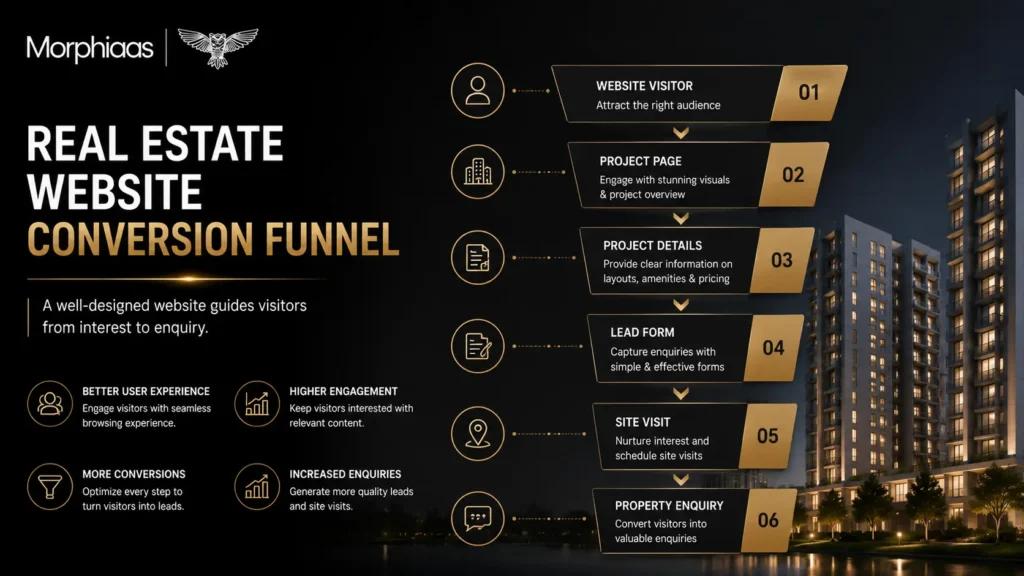
How Website Design Impacts Conversions
Great websites are built with both users and business goals in mind.
Successful Real Estate Conversion Optimization focuses on removing barriers that prevent visitors from taking action.
When buyers can easily access information, trust the brand, and submit an enquiry without friction, conversion rates naturally improve.
Small improvements in design, navigation, and user experience can often have a significant impact on lead generation.
Why Choose Morphiaas?
At Morphiaas, we create websites that do more than look good. We build digital experiences designed to support growth, generate enquiries, and improve conversions.
Our expertise includes:
- Real Estate Website Development
- SEO
- Branding
- Paid Media
- Social Media Marketing
- Conversion Optimization
- AI Search Optimization (GEO)
We help developers create websites that attract qualified buyers, improve engagement, and support long-term business growth.
Whether you’re launching a new project or upgrading an existing website, our team focuses on building solutions that deliver measurable results.
Conclusion
A website is often the first step in a buyer’s journey, which makes it one of the most valuable marketing assets for any developer.
From mobile responsiveness and visual content to lead forms and Real Estate UX Design, every element contributes to creating a better experience for potential buyers.
Investing in Real Estate Website Design helps developers improve credibility, increase engagement, and generate more property enquiries. Developers who focus on performance, user experience, and conversion-focused design are better positioned to stand out in a competitive market and achieve stronger results online.
Frequently Asked Questions
1. Why is Real Estate Website Design important for property developers?
Real Estate Website Design helps developers create a professional online presence, showcase projects effectively, improve buyer trust, and generate more property enquiries.
2. What should a Real Estate Lead Generation Website include?
A successful Real Estate Lead Generation Website should include project details, visuals, lead forms, testimonials, clear calls to action, and mobile-friendly functionality.
3. How does Real Estate UX Design improve conversions?
Real Estate UX Design improves navigation, accessibility, and user experience, making it easier for visitors to find information and submit enquiries.
4. What are the most important Real Estate Website Best Practices?
Important Real Estate Website Best Practices include fast loading speed, mobile optimization, simple navigation, SEO-friendly structure, high-quality visuals, and effective lead capture forms.
5. How does Real Estate Conversion Optimization help increase enquiries?
Real Estate Conversion Optimization focuses on improving website elements such as forms, landing pages, calls to action, and user experience to convert more visitors into qualified leads.