

Quick Answer
The most useful SEO performance metrics go beyond where a page ranks. They include organic traffic quality, click-through rate, search impressions, engagement, conversions, branded search growth, backlink quality and page experience. Tracked together, these numbers show whether your SEO brings in customers and revenue, which a rank position alone cannot tell you.
Why a Ranking Report Is Not an SEO Report
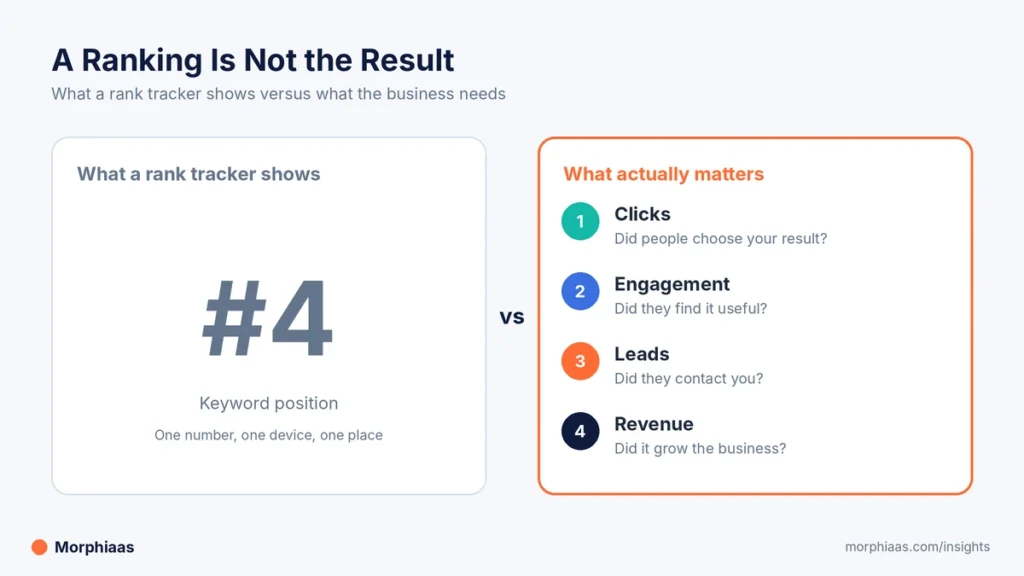
Many business owners open a rank tracker, see a keyword at position four and assume the campaign works. A ranking is only a position on a results page. It says nothing about whether anyone clicked, stayed on the page or became a customer.
This is why teams that measure success by position alone often miss what is really happening. Strong SEO performance metrics connect search activity to business outcomes, and that is the standard we use at Morphiaas. You can find more practical guidance in the Morphiaas Insights library.
What Are SEO Performance Metrics?
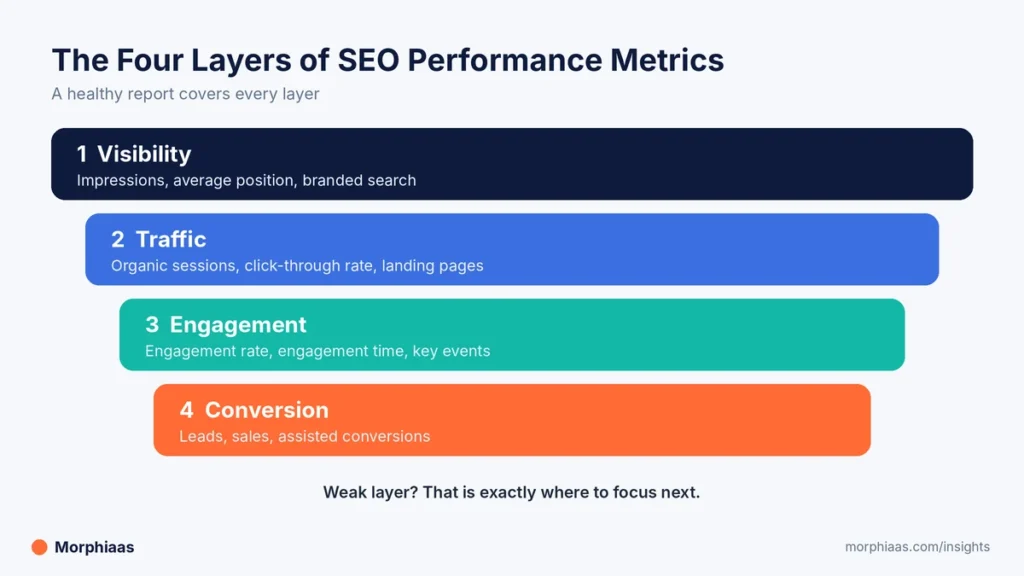
SEO performance metrics are measurable signals that show how well your website attracts, engages and converts people from organic search. They cover visibility, traffic, user behaviour, authority and revenue impact.
Think of them in four layers. Visibility metrics show whether people can find you. Traffic metrics show whether they arrive. Engagement metrics show whether they find value. Conversion metrics show whether they act. A healthy report covers all four, because a weak layer tells you exactly where to focus next.
Visibility Metrics Show Whether Google Is Showing Your Pages
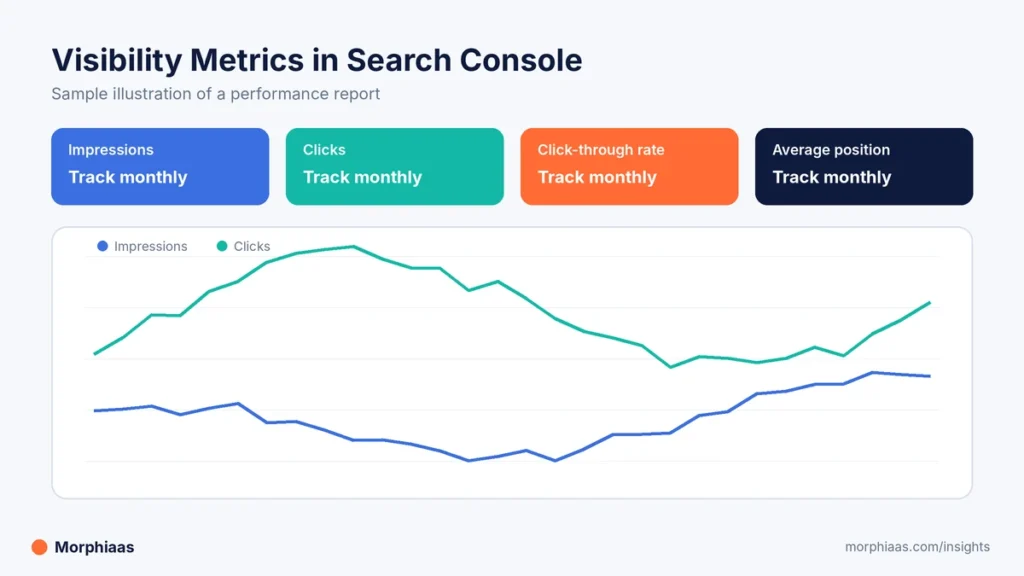
Visibility is where your measurement starts, and Google Search Console is the best free source for it. It reports data straight from Google rather than from a third-party estimate.
Search impressions
Impressions count how often your page appeared in search results. A steady rise means Google is testing your content for more queries. A sharp fall can point to an indexing problem, a penalty or a seasonal dip.
Average position by page group
Single keyword positions fluctuate daily, so group pages by topic and watch the average. This shows direction without the noise. You can learn how the report works in Google’s own Search Console Performance report guide.
Traffic Metrics Show Whether the Right People Arrive
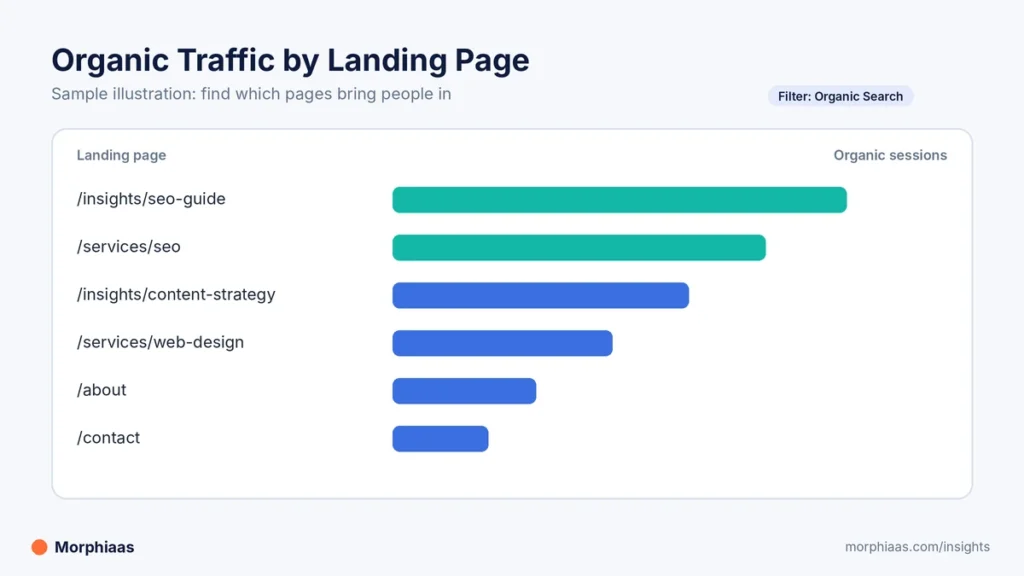
Total visits can flatter a weak campaign. Ten thousand visitors who never buy are worth less than three hundred who do.
Organic traffic by landing page
Open Google Analytics 4 and filter sessions by the organic search channel. Then view them by landing page. This shows which articles and service pages bring people in, and which ones attract no one.
Click-through rate
Click-through rate is the share of impressions that become clicks. A page with high impressions and a low rate usually needs a sharper title tag or meta description. This is one of the quickest wins in SEO, because you improve results without needing new rankings.
Engagement Metrics Show Whether Your Content Helps
Traffic only matters if people find what they came for. Google Analytics 4 replaces the old bounce rate with engagement measures that tell a clearer story.
- Engagement rate: the share of sessions that lasted longer than ten seconds, included a conversion event or had at least two page views.
- Average engagement time: how long a page held attention while it was in focus.
- Scroll depth and key events: whether readers reached your call to action, played a video or opened a contact form.
A page with strong traffic and low engagement is a signal to improve the content, not to chase more keywords. Often the fix is a clearer opening, better structure or an answer that arrives sooner.
Conversion Metrics Connect SEO to Revenue
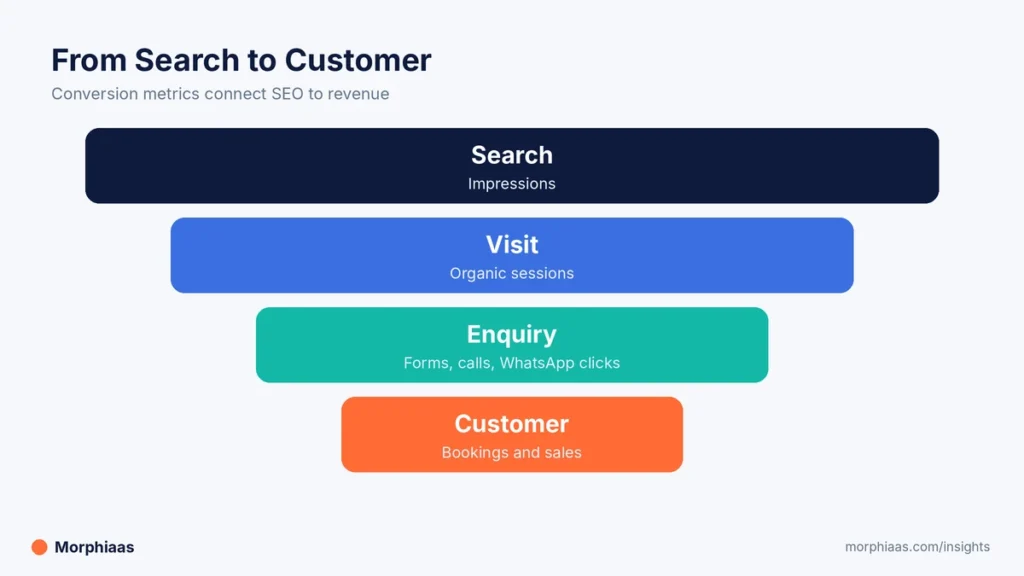
This is the layer that earns SEO a place in the budget conversation. Without it, you are reporting activity rather than results.
Organic leads and goal completions
Set up key events in Google Analytics 4 for form submissions, phone clicks, WhatsApp clicks, bookings and purchases. Then compare how many come from organic search. Google explains the setup in its Analytics key events documentation.
Assisted conversions
A buyer may first find you through a blog post, return through a social ad and finally convert through a direct visit. Last-click reports give organic search no credit in that case. Assisted conversion views reveal the role your content played earlier in the journey.
Authority Metrics Show Whether Others Trust Your Site
Search engines look for signs that other credible sites vouch for you. Quality matters far more than quantity here.
- Referring domains: the number of unique sites linking to you, which matters more than raw link counts.
- Link relevance: whether the linking site belongs to your industry or region.
- Brand mentions: unlinked references across the web that still build recognition.
Page Experience Metrics Show Whether Your Site Is Easy to Use
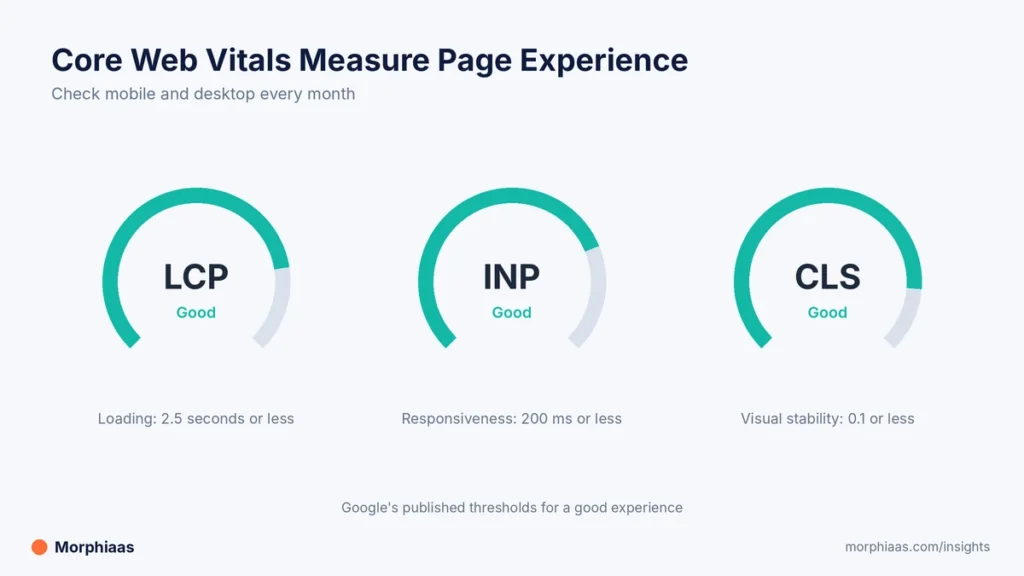
Slow or unstable pages lose visitors before the content has a chance to help. Google measures this through Core Web Vitals, which cover loading speed, responsiveness and visual stability. The web.dev guide to Core Web Vitals explains each measure and its recommended thresholds.
Check the Core Web Vitals report in Search Console every month. Mobile results deserve extra attention in India, where most searches happen on phones and connection speeds vary widely.
Topical Authority Shows Whether You Own a Subject
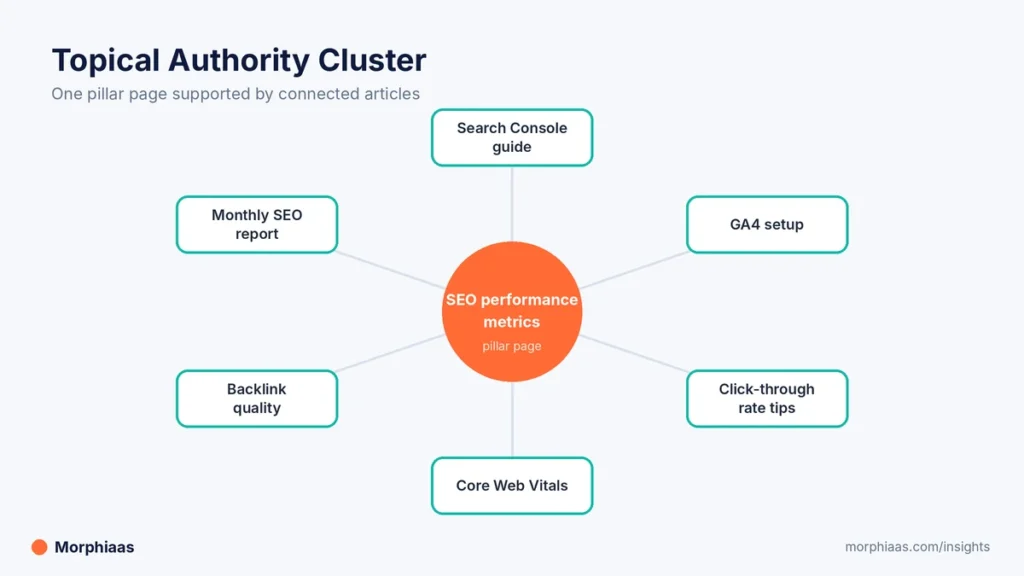
Modern SEO rewards sites that cover a subject thoroughly and connect their pages well. This is called topical authority. A cluster of related articles, all linking back to a central service page, signals depth to both readers and search engines.
To measure it, group your pages by topic and compare impressions, clicks and conversions for each group. If one cluster grows while another stalls, you know where content gaps exist. Our SEO services page shows how we build this structure for clients.
Visibility in AI Answers Is the Newest Metric
People now get answers from AI summaries and chat assistants as well as from blue links. Being cited in those answers is becoming a real measure of visibility, even though tools for tracking it are still maturing.
You can start with a simple method. Each month, ask the main questions your customers ask in several search and AI tools. Note whether your brand or pages appear, and record which competitors do. Pages that answer questions directly, name their sources and show clear authorship tend to be easier for these systems to use.
How to Build a Simple Monthly SEO Report
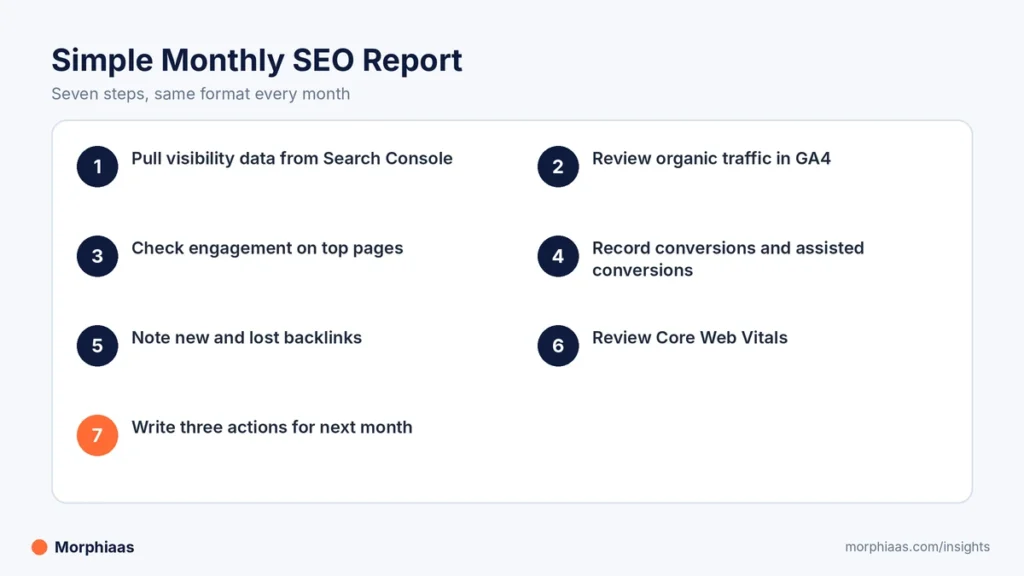
A useful report is short enough to read and specific enough to act on. Follow these steps each month.
- Pull visibility data from Search Console: impressions, clicks, click-through rate and average position by page group.
- Review organic traffic in Google Analytics 4 by landing page and device.
- Check engagement for your top ten organic pages.
- Record conversions and assisted conversions from organic search.
- Note new and lost backlinks along with any brand mentions.
- Review Core Web Vitals for mobile and desktop.
- Write three actions for next month based on what the numbers show.
Keep the same format every month so trends become obvious. Compare each month with the previous month and with the same month last year, since many Indian industries are seasonal around festivals and wedding periods.
Why Choose Morphiaas for SEO Reporting and Strategy
Morphiaas is a digital marketing agency that treats SEO as a business growth channel rather than a ranking contest. We build reports around the outcomes you care about, such as enquiries, bookings and sales.
Here is what working with us looks like.
- Outcome-focused reporting. Every report links search activity to leads and revenue, in plain language.
- Transparent tracking. We set up Search Console and Google Analytics 4 in accounts that you own, so you always keep your data.
- Topic-led content strategy. We plan clusters of connected pages that build topical authority over time.
- Local and India-focused insight. We understand regional search behaviour, mobile-first usage and seasonal demand.
- Clear next steps. Each monthly review ends with a short list of prioritised actions.
If you want a measurement framework built around your goals, explore more in the Morphiaas Insights section or speak to our team about an SEO review.
Frequently Asked Questions
What are the most important SEO performance metrics?
The most important metrics are organic traffic, search impressions, click-through rate, engagement rate, conversions, backlink quality and Core Web Vitals. Together they show visibility, audience quality and business results. Choose the few that match your goal, whether that is leads, sales or brand awareness.
How do I measure SEO success without relying on keyword rankings?
Use Google Search Console for impressions and clicks, and Google Analytics 4 for engagement and conversions. Group pages by topic and track trends over several months. This shows real progress even when individual keyword positions move up and down.
How often should I review my SEO performance?
Review your main numbers monthly and run a deeper analysis each quarter. SEO changes take weeks to appear, so daily checking creates noise rather than insight. Compare results with the previous month and with the same month last year.
Which free tools track SEO performance best?
Google Search Console and Google Analytics 4 are the best starting points, and both are free. Search Console shows how Google sees your site, while Analytics shows what visitors do after they arrive. PageSpeed Insights adds useful page experience data.
How long does it take to see results from SEO?
Small improvements such as better titles can show within weeks, while stronger rankings and conversions usually take several months. The timeline depends on your competition, site quality and content depth. Consistent tracking helps you spot early progress long before the final results arrive.
Final Thoughts
Rankings are a starting signal and never the full picture. Businesses that grow through search track visibility, traffic quality, engagement, conversions and authority together, then act on what they learn each month. Start with the free tools above, build a simple report and keep it consistent. If you would like expert support, the Morphiaas team is ready to help you turn search data into growth. Visit Morphiaas Insights to continue learning, or contact us today for an SEO performance review.