


Sloan Co Design
An Instagram‑only studio became Orange County's #1 search result.
Sloan & Co Design had 2,000 followers and no website. Morphiaas built the brand, the site and the search strategy from a blank page. It ranked for 88 keywords the week it went live and now holds the top position for "Orange County interior designer".
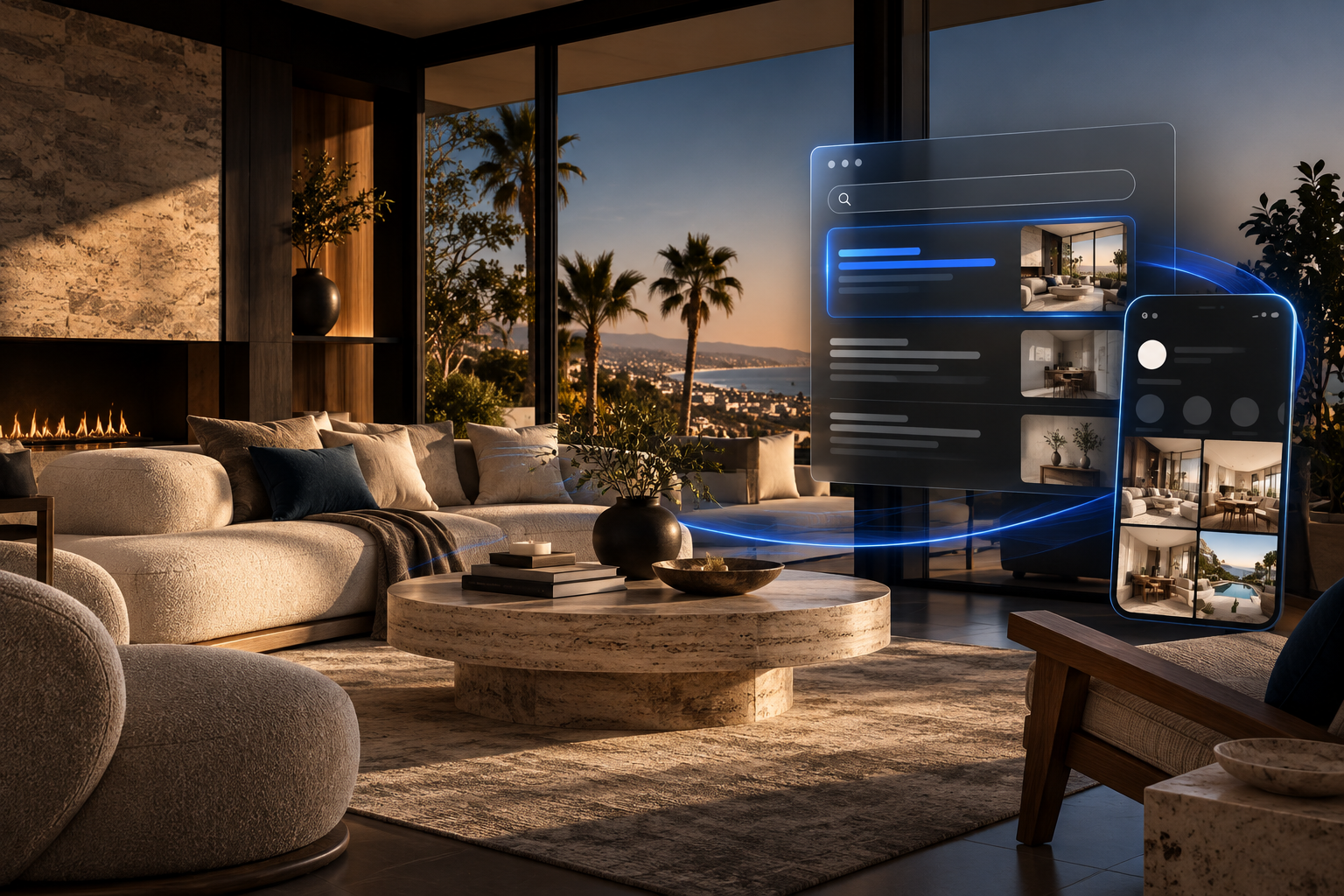 The site we shipped
Keywords ranked in the first week after launch, from a standing start of zero.
Google position for "Orange County interior designer", the term that brings homeowners with a budget.
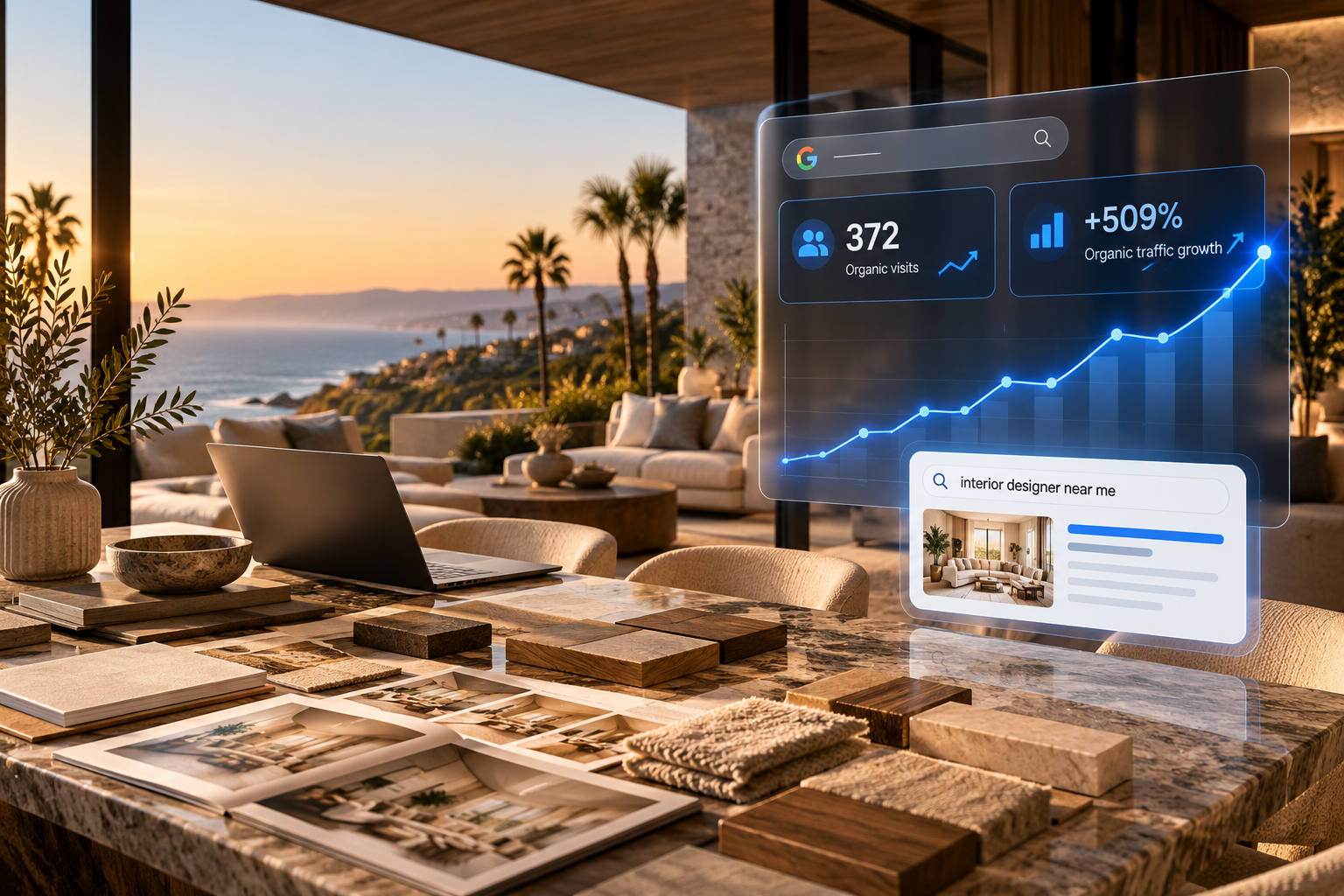
Organic traffic growth across year one, measured against the launch quarter.
Organic visits in year one. Every one of them a homeowner searching, not scrolling.
A studio with taste, a following, and no front door.
Sloan & Co Design is a residential interior design studio in Orange County. Their work earned a loyal Instagram community of 2,000 followers and a steady trickle of referral clients. What they did not have was a website. Every homeowner who typed "interior designer near me" into Google found a competitor, because Sloan & Co did not exist where the buying decision actually starts.
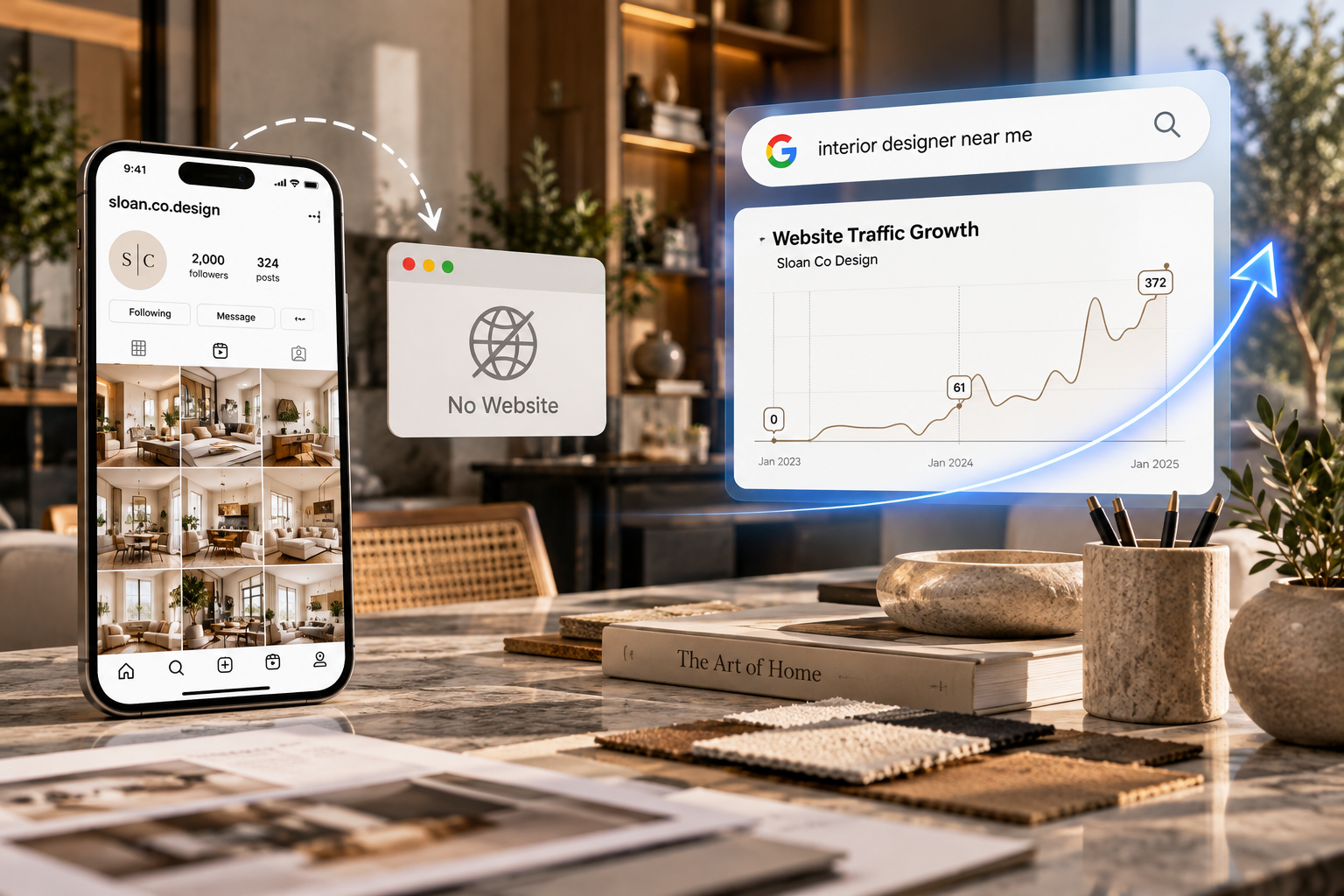
Two thousand people watching. Nobody searching could find them.
Absent from Google entirely
Interior design is a high-consideration purchase. Homeowners research on Google before they follow anyone on Instagram. With no website, Sloan & Co had no page to rank, no local listing to strengthen, and no way to be found by a buyer with intent and a budget.
A portfolio living on borrowed land
Every project photo, every testimonial, every enquiry lived inside a feed the studio did not control. The algorithm decided who saw the work. Growth was capped at whatever Instagram chose to show that week, and the studio owned none of the audience it had built.
Nowhere to send a serious client
A referred homeowner asking "do you have a website?" got a link to Instagram. No services page, no process, no proof beyond square photos. Credibility leaked at the exact moment a prospect was deciding whether to book a consultation.
Brand first. Site second. Search from day one.
Complete brand identity
Before a single page was wireframed, we defined what Sloan & Co stands for: a calm, editorial visual system, a refined wordmark, a palette drawn from their own interiors, and a tone of voice that speaks to Orange County homeowners the way the studio speaks in a first consultation. The brand became the brief for everything that followed.
Website architecture and design
We planned the visual structure around the two things a homeowner needs to see in ten seconds: the quality of the work and how to start. A portfolio-led homepage, a services page that explains the process without jargon, project case pages that show the transformation, and one clear path to "Get Started" on every screen. Built in close partnership with their design team so the site feels like an extension of the studio, not an agency template.
Content written for buyers and for search
Every page was written twice over: once for the homeowner deciding whether to call, and once for the search engine deciding whether to rank it. Service copy, project narratives, location pages and an About story that turns two thousand followers' trust into something a stranger can feel on first visit.
SEO engineered before launch
Keyword mapping built around local intent ("Orange County interior designer", neighbourhood and service variations), clean technical foundations, schema for the business and its services, fast image delivery, and indexing prepared so the site did not spend its first months waiting to be discovered. The result of that sequence: 88 ranking keywords in launch week, not launch year.
Same studio. Same work. A completely different pipeline.
Toggle between where Sloan & Co started and where the new site took them in year one.
Ranking keywords
First week after launch"Orange County interior designer"
Google organic positionOrganic visits
Year oneOrganic traffic growth
Year one vs launch quarter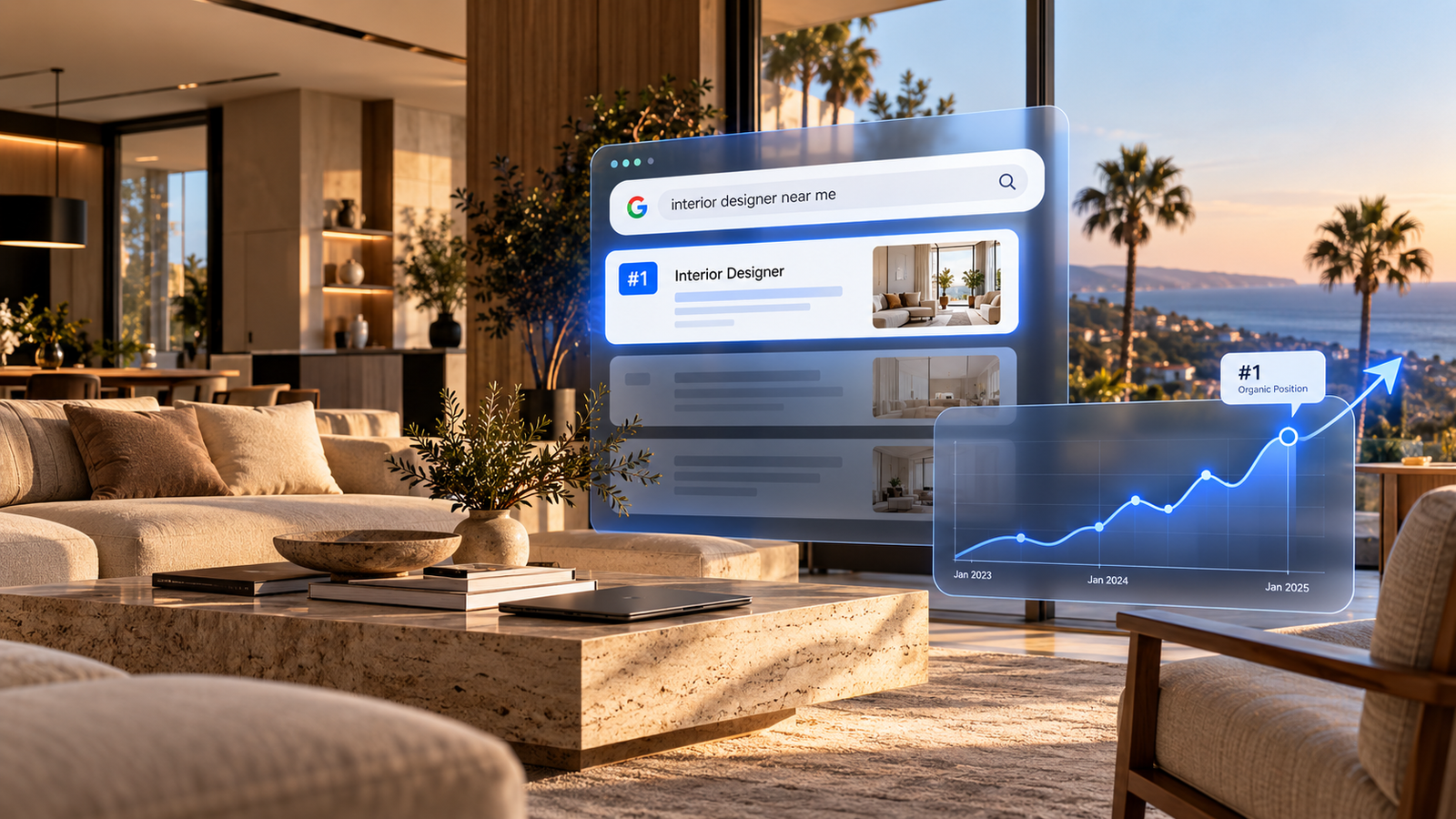
Your best work is on Instagram. Your next client is on Google.
Morphiaas builds the brand, the website and the search engine presence that turns a following into a pipeline. Bring us your studio. We will show you, with your market's numbers, exactly what you are leaving to competitors.

Moore House Design
A surname that was buried. A brand that now owns the search.
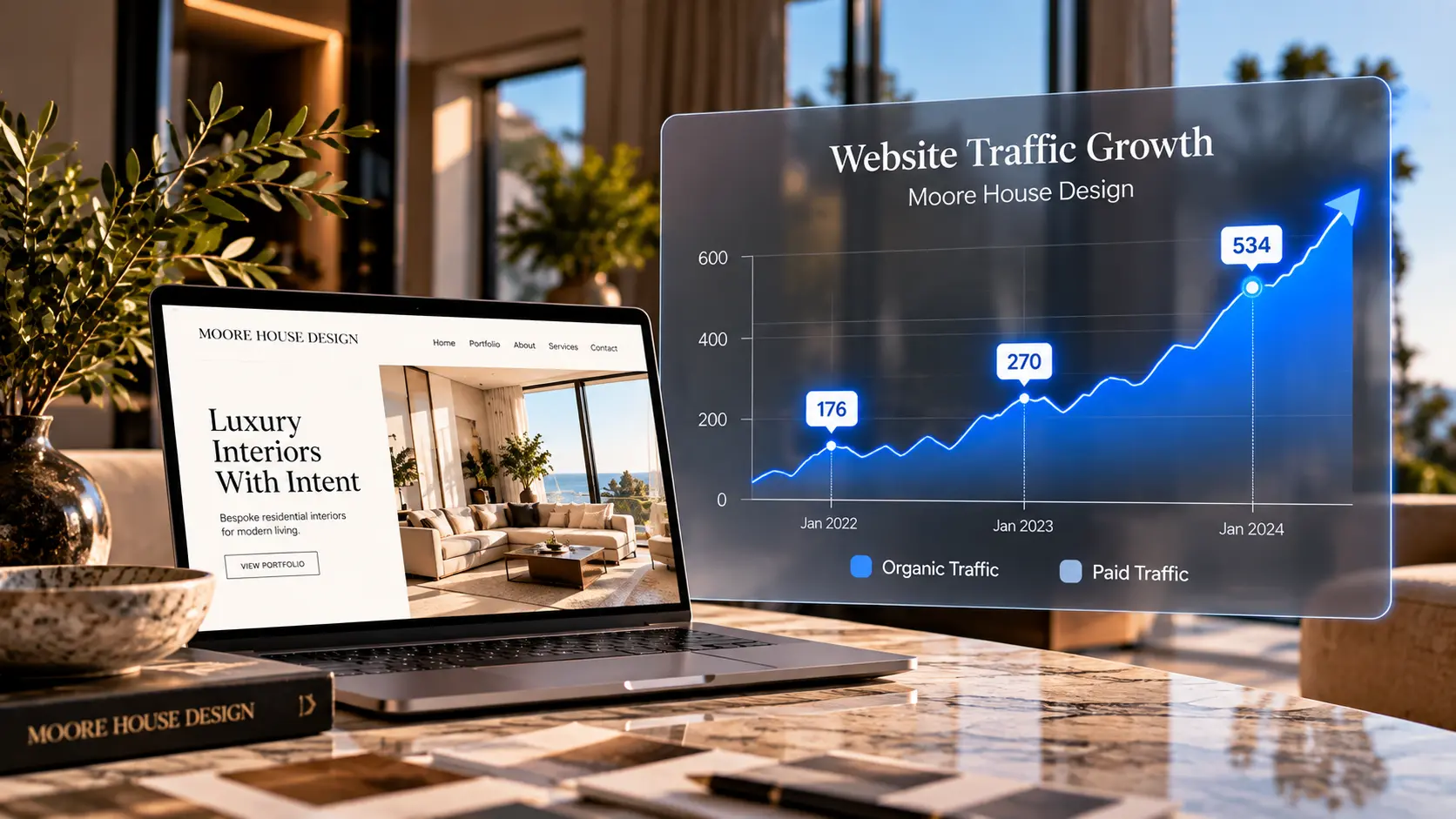
Moore House Design is a luxury interior design studio with a name that thousands of other people share. Google could not tell them apart. Morphiaas fixed the technical foundation, put the studio on the map, and rewrote the content it already had. No rebuild. 422 ranking keywords, 97% more organic traffic and a 3x return on SEO.
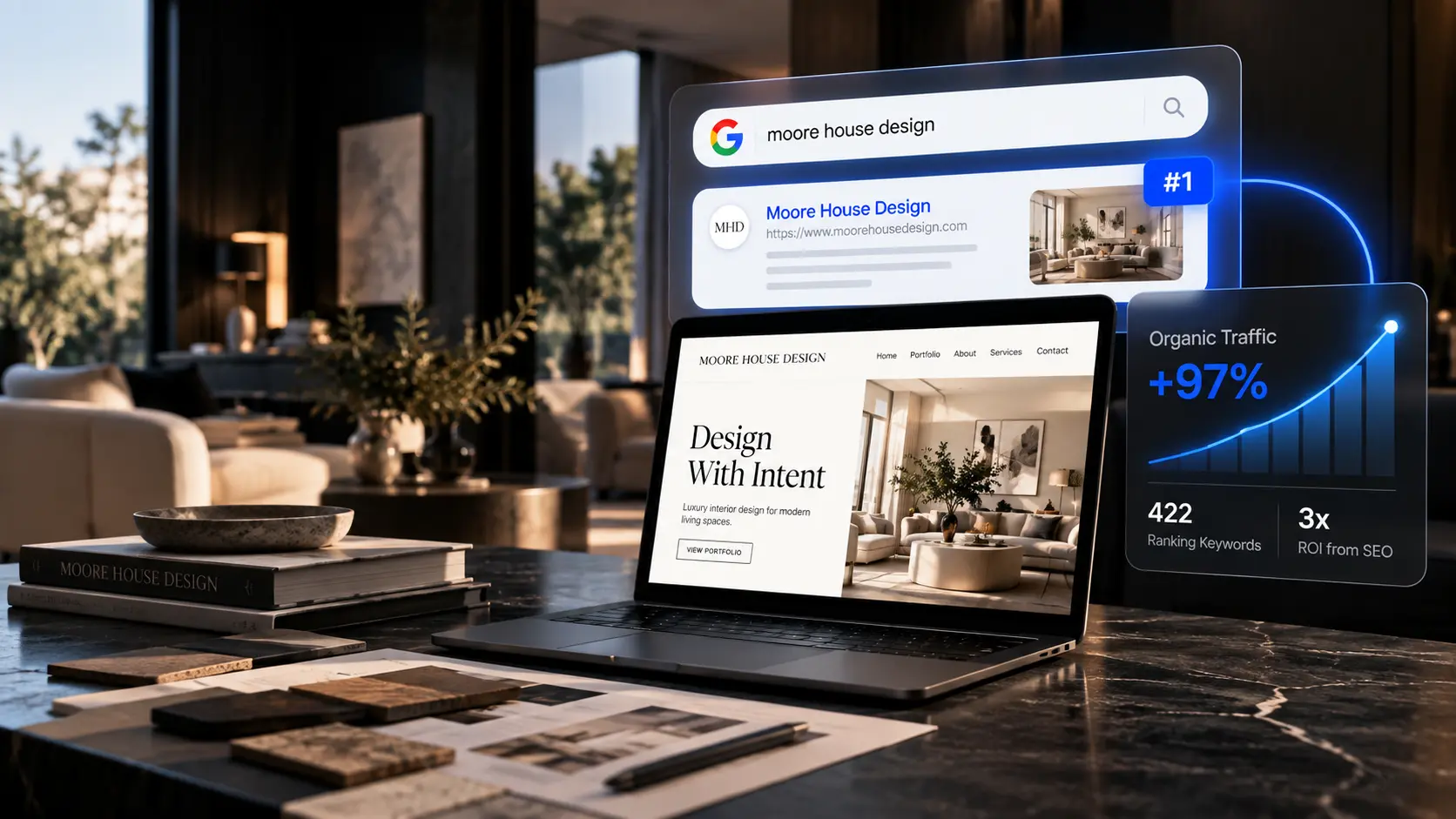 The site we ranked
Exceptional work. Invisible to the people who could afford it.
Moore House Design creates bespoke residential interiors for high-net-worth clients. The portfolio was strong and the referrals were warm. The problem was the front door: anyone searching the studio's name on Google landed on strangers, and anyone searching for luxury interior design landed on competitors with deeper digital footprints.
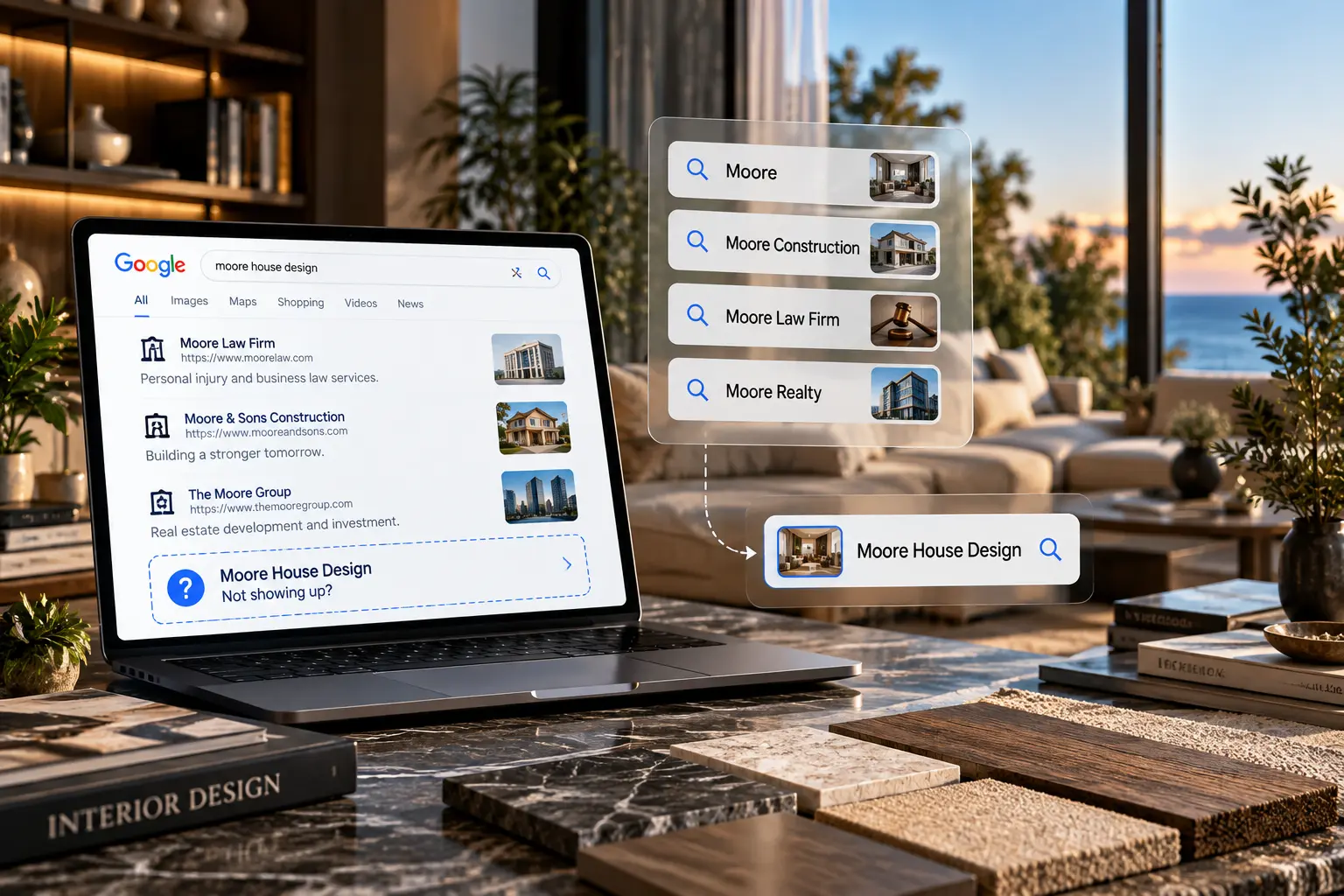
A common name is not a branding problem. It is an indexing problem.
Google could not tell the studio apart from the surname
"Moore" belongs to millions of people and hundreds of businesses. Without clear entity signals, brand searches for Moore House Design surfaced unrelated individuals and companies, and the studio's own site sat below them.
Competitors had built the footprint first
Rival studios with larger content libraries, more backlinks and mature local profiles held the top positions for luxury interior design queries. Every high-intent search was being answered by someone else.
The site was working against itself
Slow load times, weak mobile responsiveness and crawlability gaps meant search engines were not reliably reading the pages that did exist. Good work that Google cannot index does not exist to Google.
No rebuild. No content factory. Just the fixes, in the right order.
The instinct with a page-two brand is to start over. We chose the opposite: maximise what Moore House Design already had, and remove every reason Google had to ignore it.
Technical SEO foundation
We went behind the scenes first. Site speed, mobile responsiveness and crawlability were audited and repaired so every page could be indexed cleanly. Before a single keyword was touched, the site became something search engines could actually read.
Google Maps and local presence
We established the studio's Google Business Profile and Maps listing, anchoring a physical address to the digital brand. This gave Google a verified entity to attach the name to, and gave local luxury clients a direct route to the studio.
Existing content, sharper intent
Instead of writing new pages, we refined the ones already live. Keywords were mapped to how affluent homeowners actually search for interior designers, then woven into the existing copy without flattening the studio's voice. Authenticity stayed. Relevance went up.
Brand consistency across every touchpoint
Complete branding work aligned the visual identity and messaging across the site, the Maps listing and search results, so that when the right client finally found Moore House Design, every surface said the same thing: high-end, considered, worth the call.
Visibility became enquiries. Enquiries became booked projects.
Measured across the first year of the engagement, 2023 to 2024.
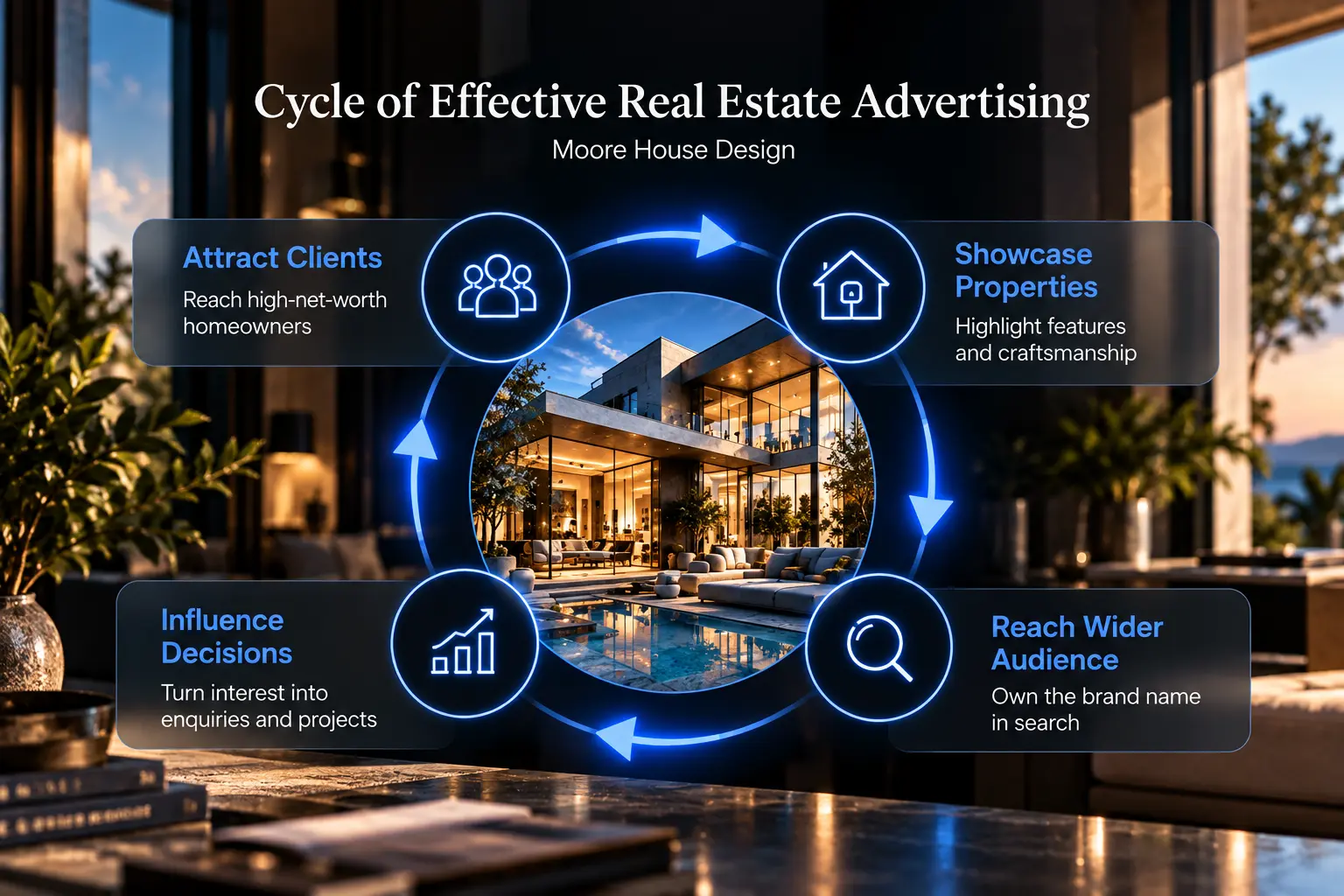
Your work is exceptional. Is Google saying so?
We audit the technical, local and content layers of your search presence, show you exactly where the right clients are losing you, and fix it in order. Most luxury brands do not need a rebuild. They need the buried parts found.

Sansa
Six abandoned tactics became one system that ranks.
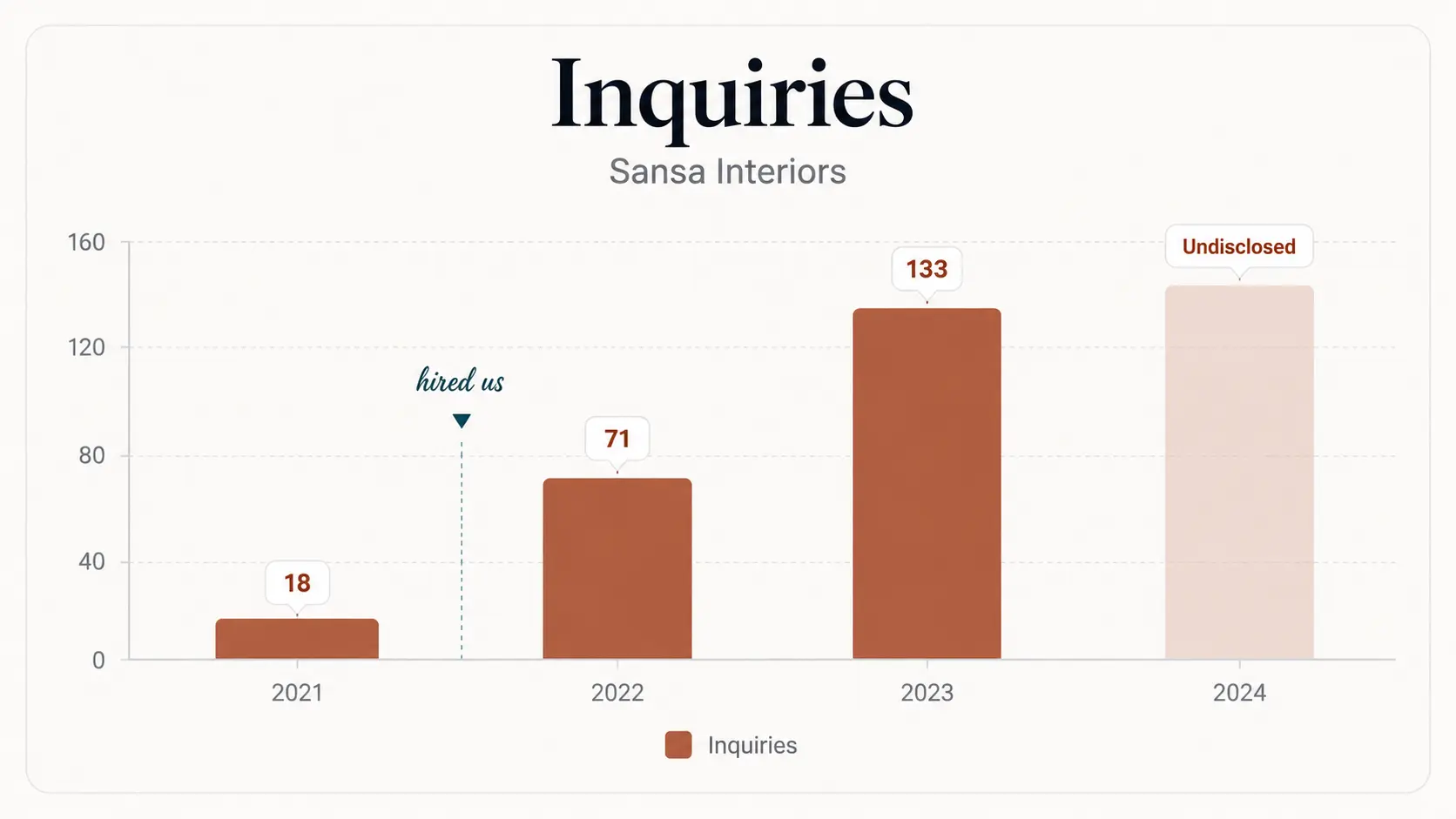
Sansa Interiors had tried everything and kept nothing. Morphiaas replaced the churn with a twelve‑month program: strategy, tracking, content, press and ads in that order. Inquiries went from 18 a year to 133.
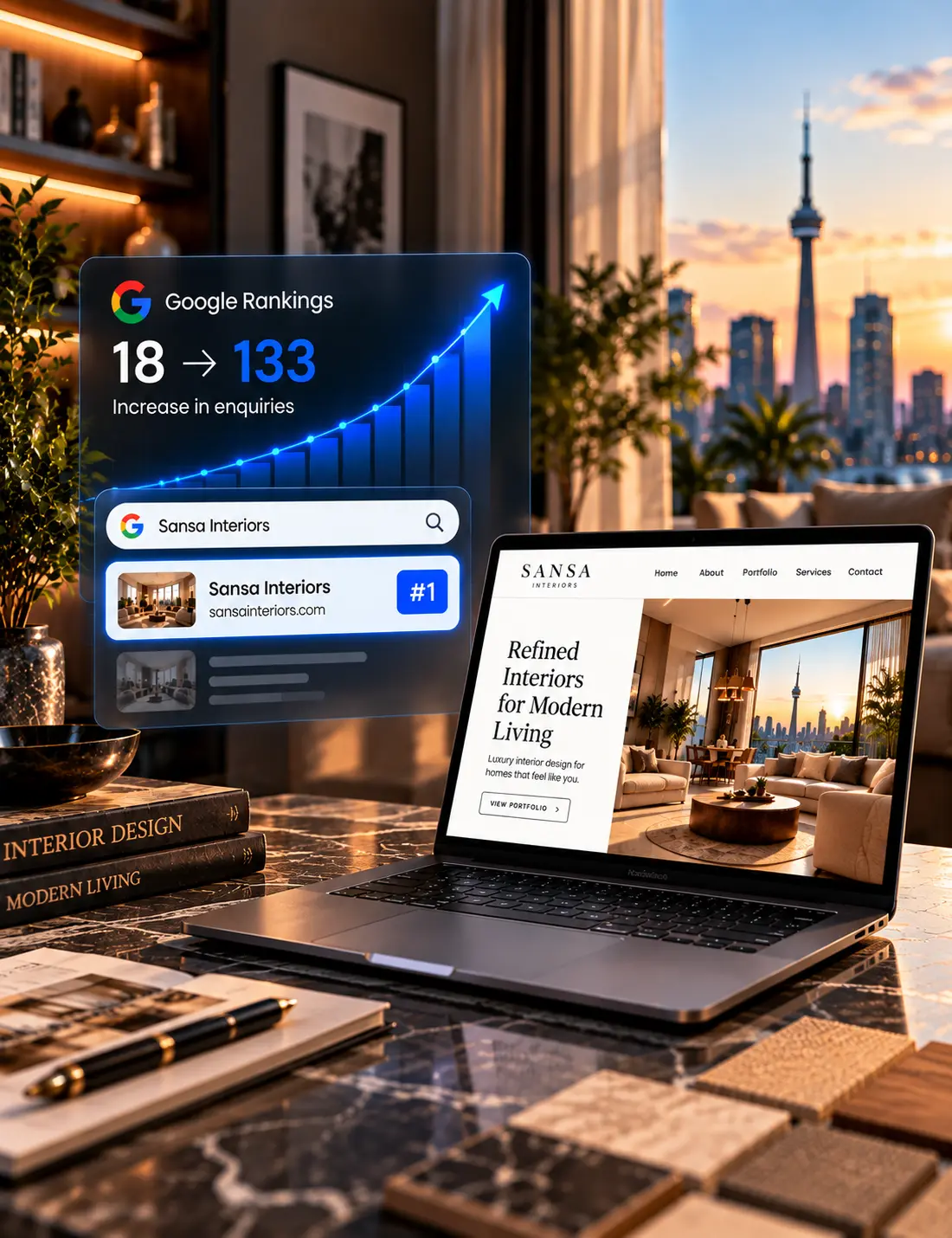 The site we ranked
Inquiries in the first year of the program, from 18 the year before.
Inquiries in 2023, the second year, with the same system still running.
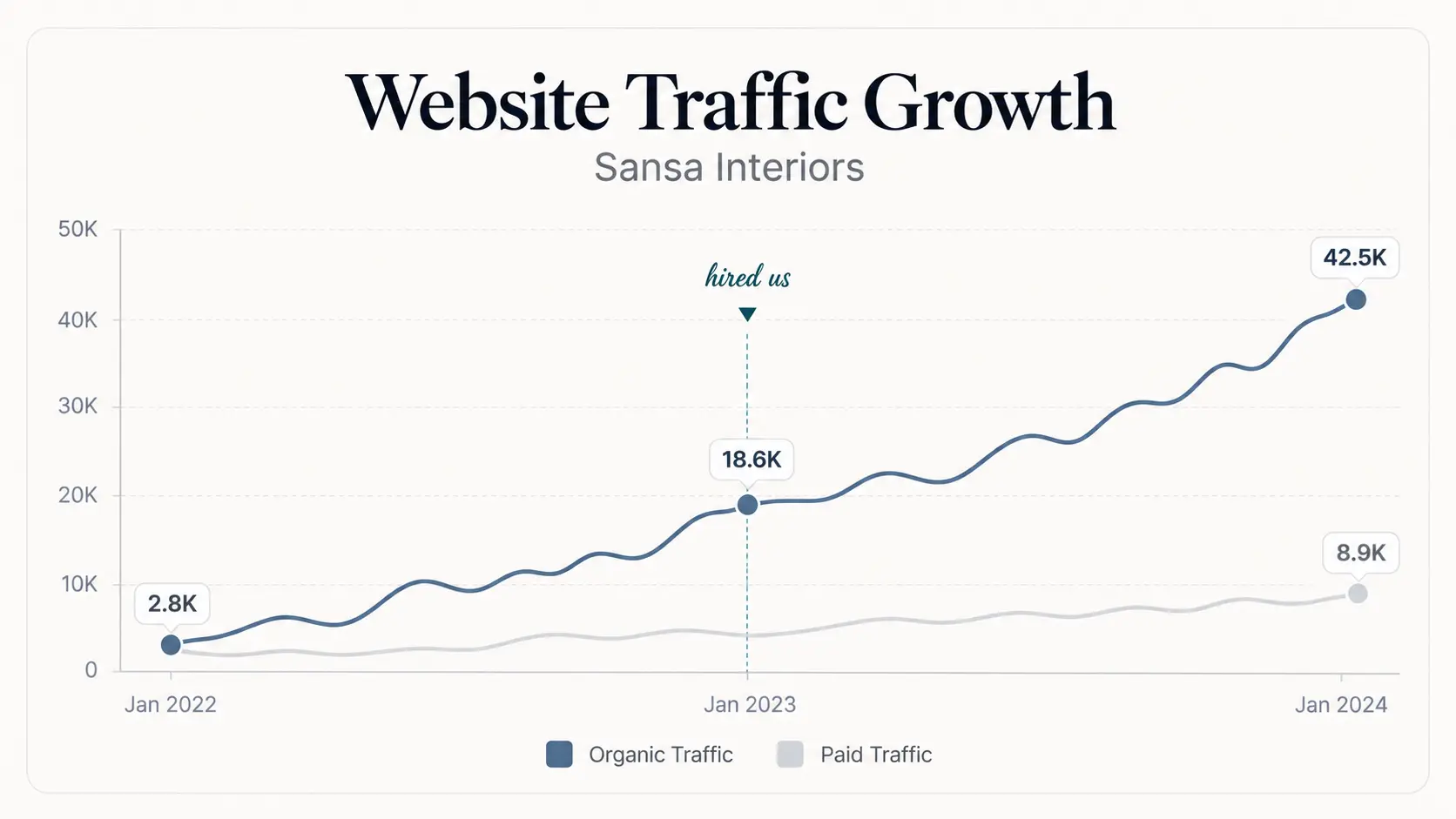
Organic traffic growth from 2022 to 2023.
Return on the marketing investment across the engagement.
Good work, no pipeline. The usual story for a young studio.
Sansa Interiors is a Toronto interior design studio working on residential projects and hospitality venues, with a particular strength in cafes. When Morphiaas came on board the firm was still early: strong design, a thin marketing presence, and no repeatable way of turning either into booked projects.
Social media, YouTube, Google Ads, blog posts, direct mail flyers and billboard advertising, each tested briefly and dropped before it could compound.
Homeowners planning full renovations, and cafe and restaurant owners fitting out hospitality spaces across Toronto.
Toronto for residential work; restaurant and hospitality design searched for across Canada.
A consistent inbound flow of qualified inquiries and a firm the design press would recognise by name.
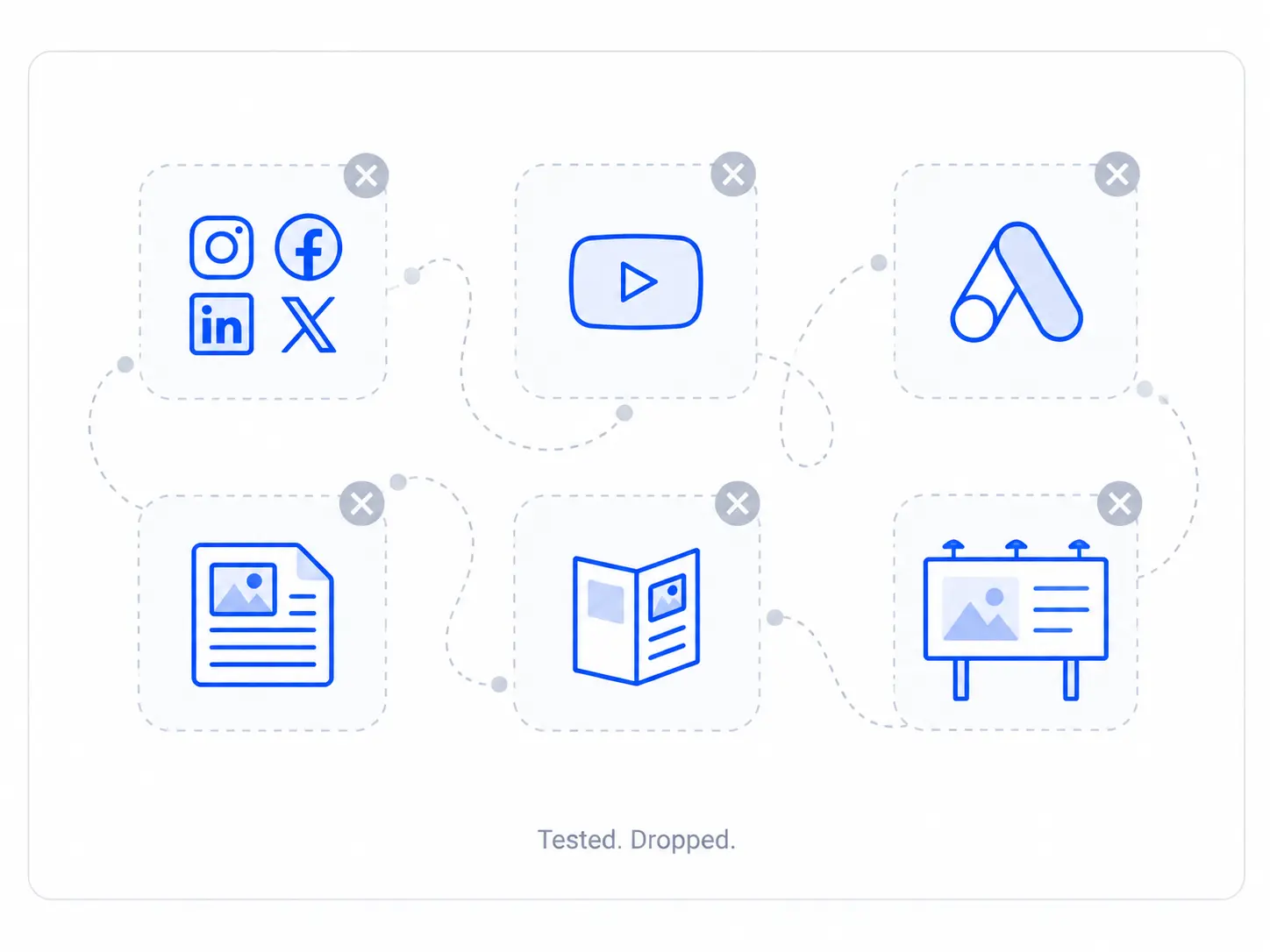
Nothing was failing. Nothing was given time to work.
Six channels, zero system
Every tactic ran in isolation. There was no strategy tying social, search, content and print to a single goal, so none of them could be judged, improved or dropped on evidence.
Quit before compounding
Each method got a short trial, produced slow early results, and was abandoned. SEO and press are slow by design. The studio kept leaving right before the curve bent.
No KPIs, no CRM, no proof
Inquiries arrived without a source attached. With nothing tracking where leads came from or what they were worth, discouragement filled the gap where data should have been.
Foundation in month one. Then a steady stream, not bursts.
Strategy, KPIs and tracking before any spend
The first month of the twelve‑month program went into a tailored strategy that narrowed the focus to the two things Sansa could win: Toronto residential and Canadian hospitality design. We set measurable KPIs, revamped the critical landing pages, and implemented a CRM with sales tracking so every inquiry from that point carried a source and a value.
SEO content published on a schedule, not a whim
With the pages rebuilt, we rolled out a continuous flow of SEO‑optimised content targeting "Toronto interior designer", "restaurant interior design" and the searches around them. Consistency was the deliverable. The content kept shipping through the quiet months when the old approach would have quit.
Pitched the work to the design press
We took Sansa's portfolio to leading design magazines and podcasts. The features landed: DesignMilk, Casa Vogue, Elle and Chic Haus. Each placement did double duty, building brand recognition with high‑net‑worth clients and passing authority back to the site the content was ranking.
Targeted ads to accelerate what was already working
Only once the organic engine and the press were live did we launch targeted ad campaigns. Ads pointed at the revamped landing pages, tracked through the CRM, and were judged on booked projects rather than clicks. Paid became the accelerator, never the foundation.
Top three in Canada within a year. Seven times the inquiries within two.
Same studio, same portfolio. The only change was a system that was allowed to run.
Top 3 for "Toronto interior designer"
Featured in DesignMilk, Casa Vogue, Elle, Chic Haus
Your studio has the work. Let's build the pipeline.
Forty‑five minutes on your search visibility, your inquiry sources and the one channel you gave up on too early.

Boy Smells
Case Study · Performance Marketing
One Black Friday. Sixty percent more sales.
Boy Smells sells luxury candles and fine fragrance to people who already know what they like. The holiday problem was never demand. It was reaching the buyers they had not met yet, and keeping the ones they had. Morphiaas took the Shopify store into the Black Friday window with a performance and conversion plan built for exactly that.
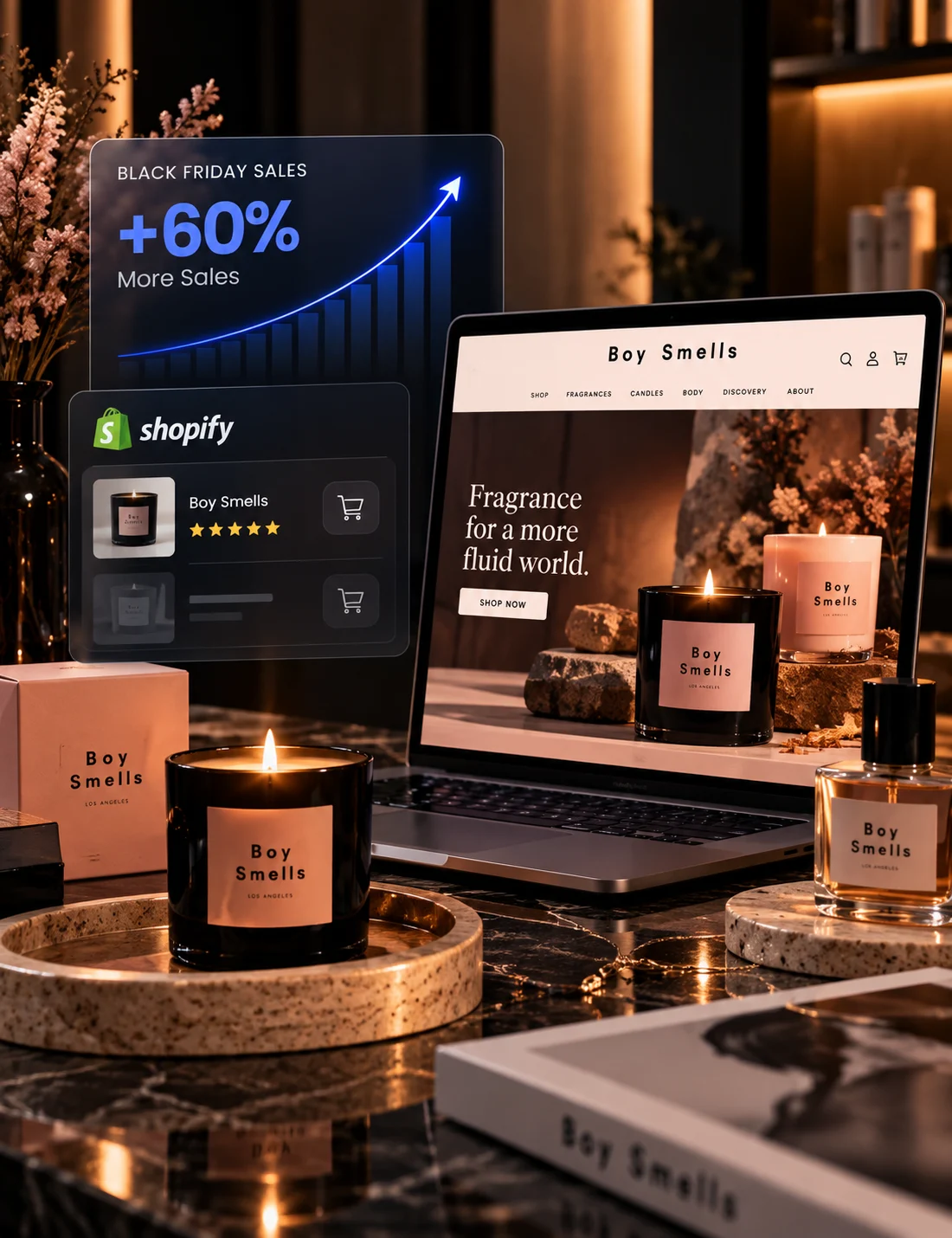 The store we scaled
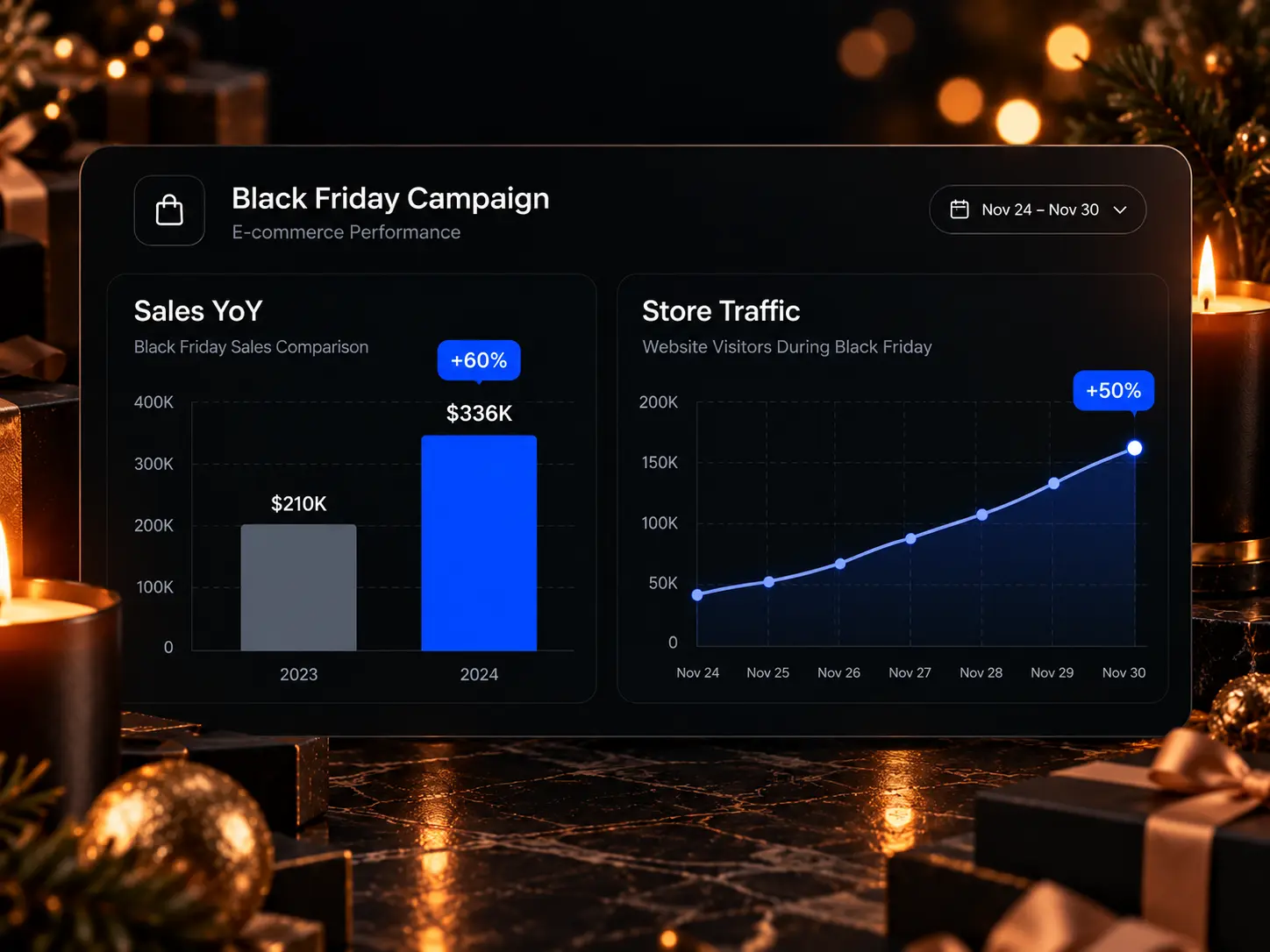
Year on year sales growth across the Black Friday window.
Growth in store traffic against the prior holiday season.
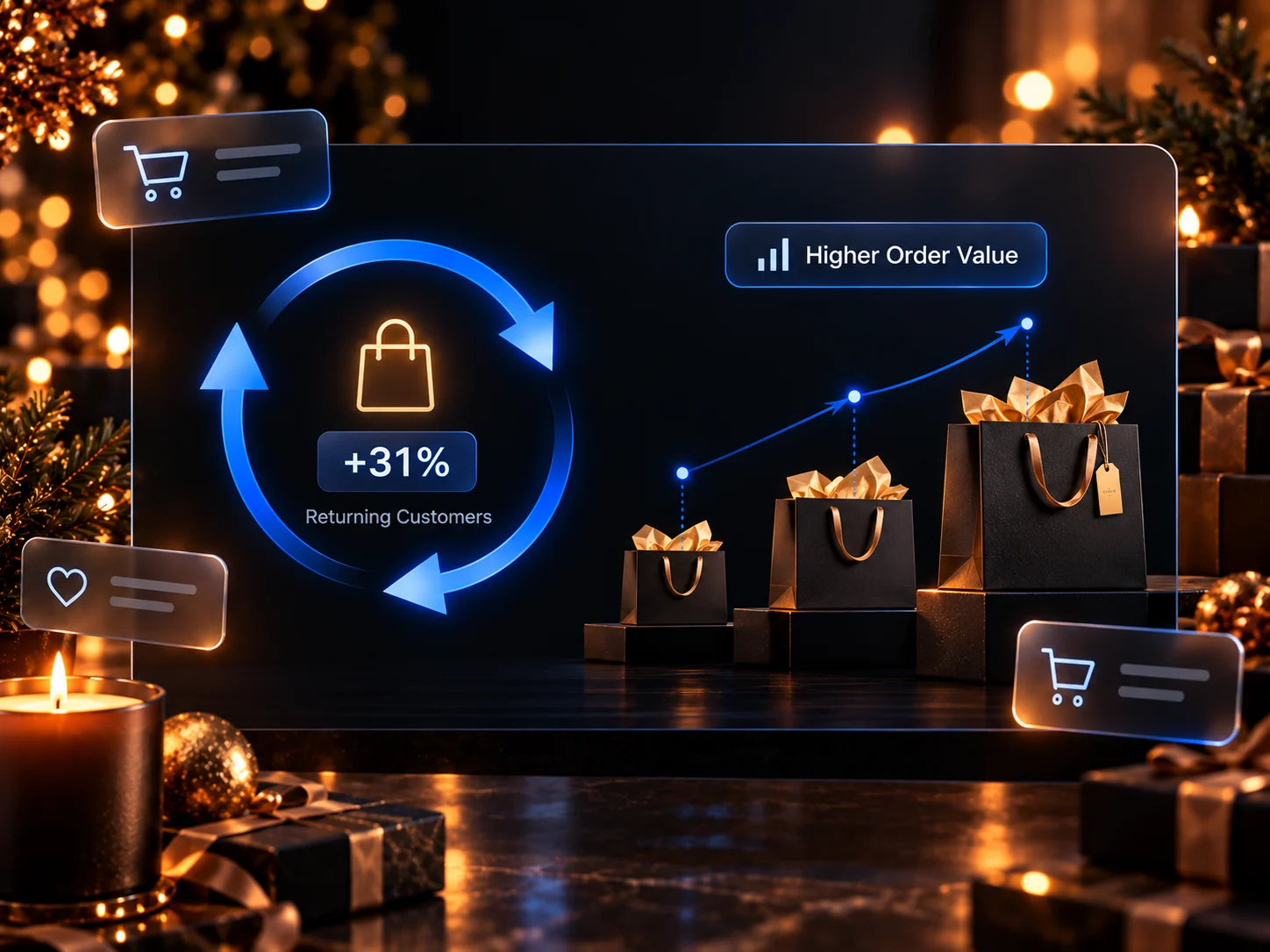
More returning customers, lifting revenue and average order value together.
The Client
A cult fragrance house with a holiday ceiling.
Boy Smells is a US luxury candle and fragrance label with a loyal following and a Shopify store that carries the whole business. Prior Black Fridays had performed fairly. Fair is not the standard in a category where every competitor discounts on the same four days, and the brand wanted a season that reached new audiences and turned first orders into second ones.

The Challenge
Black Friday punishes brands that only talk to their fans.
The next buyer had never heard the name
Boy Smells had built a following, and the following was buying. The audiences that would decide the season, gift shoppers and luxury browsers who had never seen the brand, were still outside the funnel when the holiday started.
Every competitor discounts on the same day
In luxury fragrance the Black Friday feed is a wall of offers. A fair campaign gets fair results. Standing out needed sharper creative, tighter targeting and a store that converted the click it paid for.
First orders were not becoming second orders
Holiday traffic is expensive and most of it buys once. The store had no structured way to hold a new customer through the season, so revenue depended on paying for the same buyer twice.
What Morphiaas Built
Conversion first. Reach second. Retention throughout.
Fixed the store before buying the traffic
We started with conversion performance, not spend. Ahead of the sale we refined the Shopify purchase path and the on-site experience so every incremental visit in the holiday window had a higher chance of becoming an order.
Embedded customer experience tooling in the CMS
Morphiaas integrated its customer interaction toolkit directly into the Boy Smells CMS. The brand could manage on-site experiences, offers and follow-ups with certainty during the busiest days of the year instead of reacting to them.
Opened new audiences with performance media
With the store ready, paid media went after the buyers Boy Smells had not met. Prospecting targeted luxury gift and fragrance intent, and the creative was built to hold attention in a feed full of discounts.
Turned first orders into repeat orders
Retention ran alongside acquisition. New customers were brought back within the season, which is where the 31% rise in returning buyers came from, and why revenue and average order value moved together rather than one at the cost of the other.
The Results
A record season in a market built to stop one.
Black Friday delivered on all three fronts: more visits, more conversions, more revenue per customer.
Your next Black Friday should not be fair.
Bring us the store and the last season's numbers. We will show you where the conversion is leaking, which audiences you are not reaching, and what a record window looks like in revenue.
200 degrees
A coffee chain outgrew its store. We rebuilt it around four buyers.
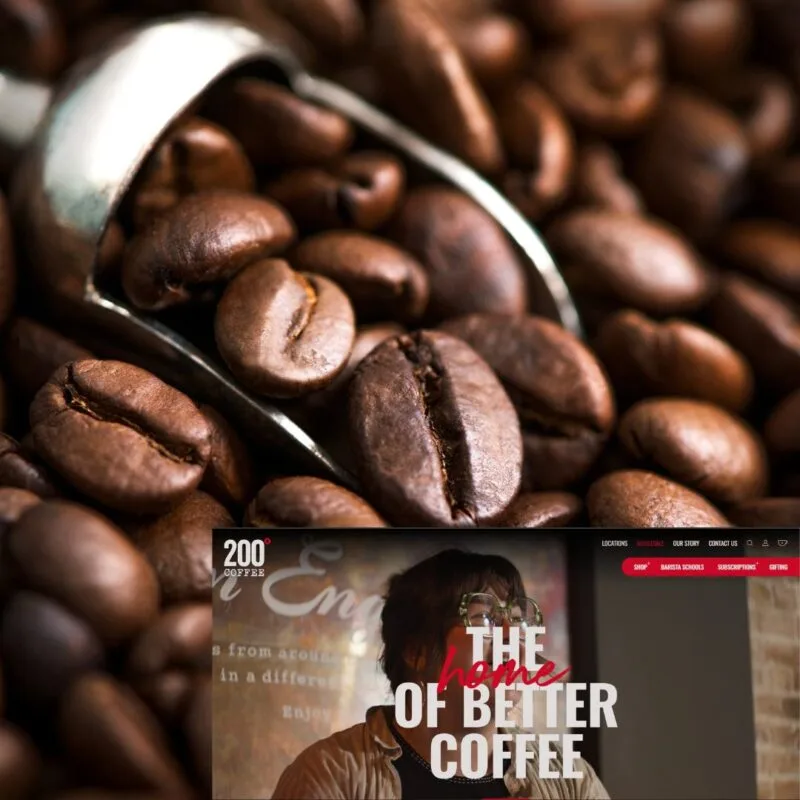
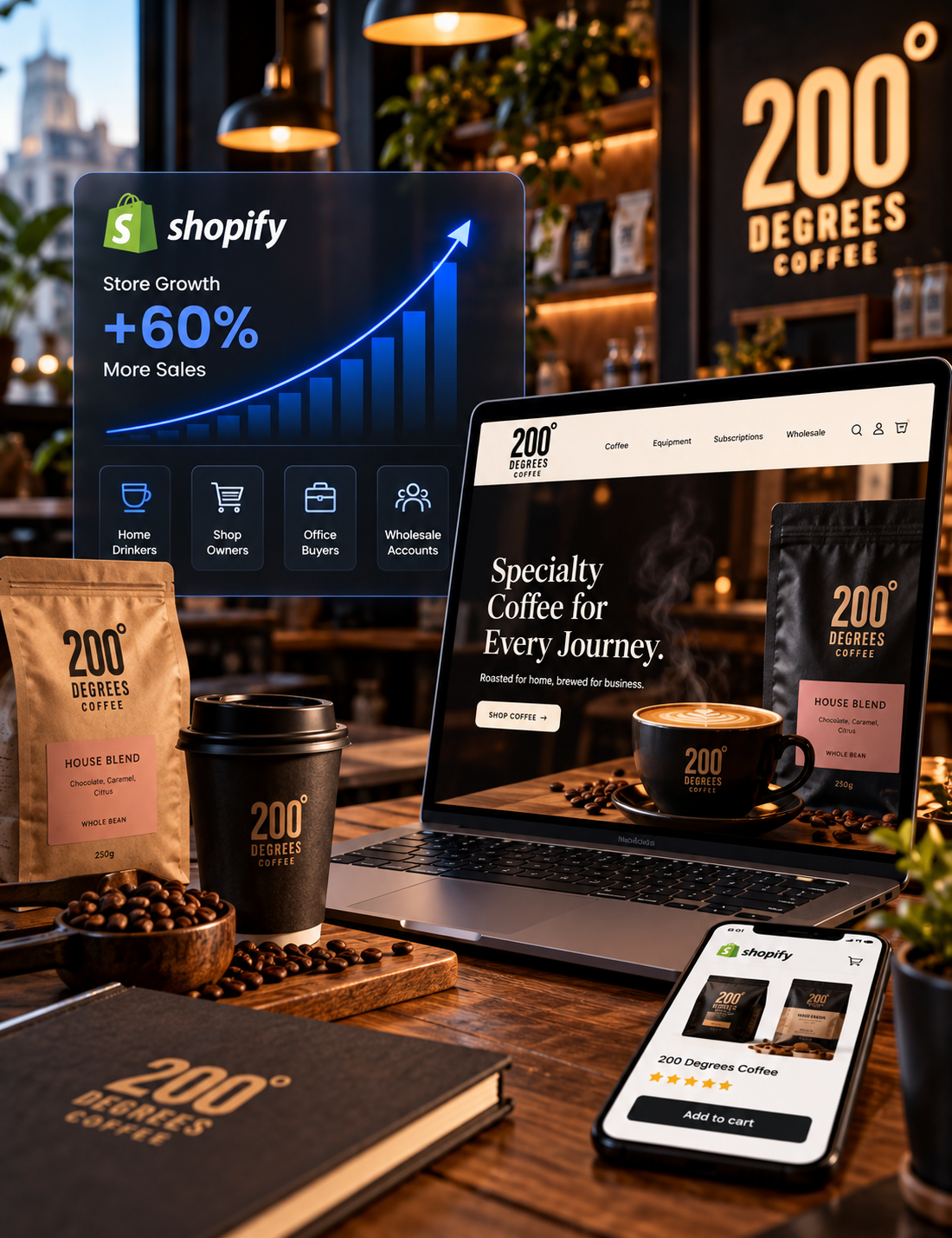
200 Degrees was expanding faster than its Shopify site could carry. One storefront was serving home drinkers, shop owners, office buyers and wholesale accounts the same way. Morphiaas mapped the four journeys, redesigned the store mobile first, and measured the change year on year.
 The store we shipped
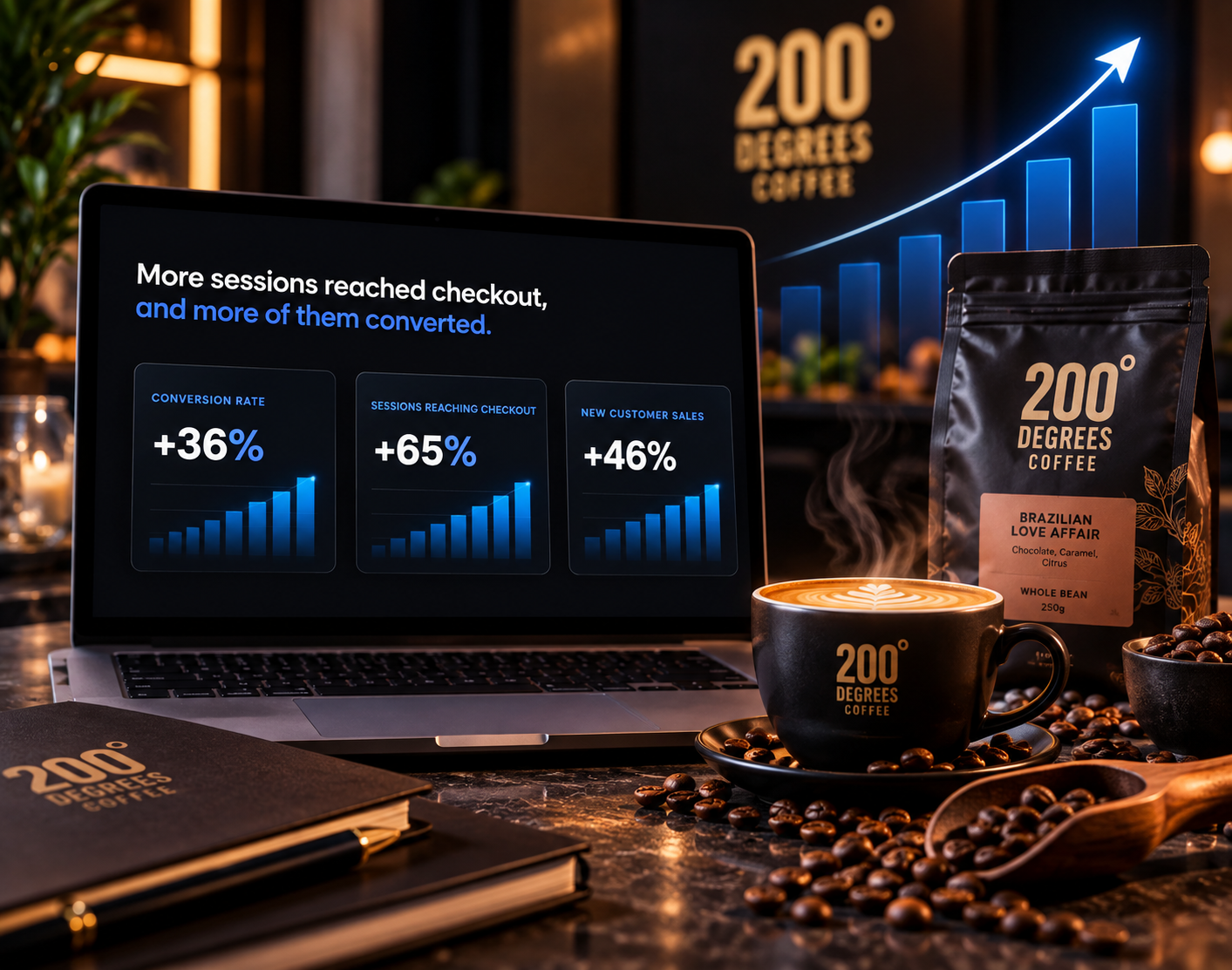
Year on year increase in conversion rate after the redesign went live.
Year on year increase in sessions reaching checkout.
Year on year increase in new customer sales.
A roaster with shops, schools and trade accounts, and one website for all of them.
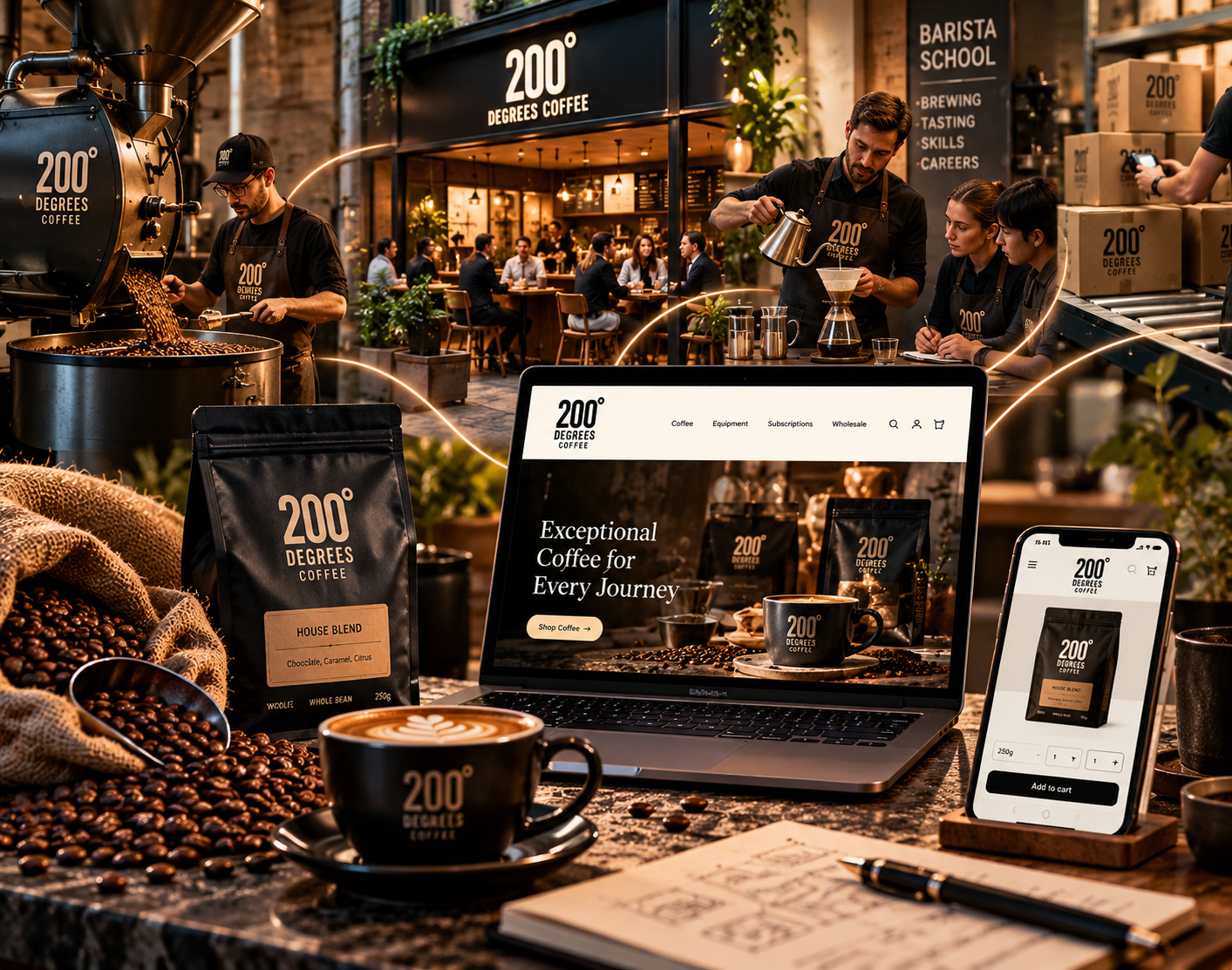
200 Degrees is a rapidly expanding coffee chain from Nottingham: its own roast, a growing estate of coffee shops, barista schools and a wholesale arm supplying other businesses. The brand had grown into four businesses. The Shopify store still behaved like one, and it needed to keep pace with the operation behind it.
A Shopify store that had fallen behind the brand's growth and eCommerce ambitions, with no tailored path for any customer type.
Coffee enthusiasts buying at home, store owners, office administrators and bulk purchasers, all arriving at the same pages.
Shopify, extended with multiple apps for subscriptions, product listing and segment specific journeys.
A striking, high performing store that reflects the in-store brand and converts each segment on its own terms.

A store built for one buyer cannot convert four.
Four segments, one journey
A home drinker buying a 250g bag and an office manager ordering for a floor of staff need different pages, different prompts and different checkouts. The old store gave them the same route and lost the ones it was not built for.
The shops felt like 200 Degrees. The site did not.
Packaging, shop windows and in-store design carried a strong identity. Online, none of it came through, so the brand equity built in the shops did nothing for the store's conversion rate.
Growth was outrunning the build
New locations, barista schools and wholesale accounts kept arriving. Every one of them added traffic to a store that had not been designed to hold it, with mobile usage surging and the experience still desktop first.
Segments first. Wireframes second. Brand in every pixel.
A two day discovery workshop that named the four buyers
Morphiaas and 200 Degrees worked through the business together and pinned down four user segments: eCommerce, Shops, Barista Schools and Wholesale. A customised customer journey was written for each. A competitor analysis ran alongside it to find the design features that would set 200 Degrees apart rather than match the category.
Wireframes shaped by the journeys, tuned for conversion
Journey mapping fed directly into wireframes, so every page had a job for a known segment before it had a layout. UX decisions were made with conversion rate optimisation as the brief, not as a later pass, and the whole flow was designed mobile first from the earliest wireframe to the final screen.
A three week design sprint that brought the shops online
Product packaging colours were carried into the product listing pages. Standout elements from the shop window designs were adapted for the site. The result closes the gap between the in-store and online experience, so a customer who knows the shops recognises the store instantly.
Shopify apps and bespoke features for each segment
Multiple Shopify apps were integrated to serve the broader audience. Interactive coffee origin maps give enthusiasts a reason to explore. Bespoke subscription pages give repeat buyers a clean path. Streamlined PLP layouts make browsing and buying quick for trade and bulk purchasers, with data driven insights personalising the journey throughout.
More sessions reached checkout, and more of them converted.
Every figure below is a year on year comparison against the previous store.
Your store has more than one customer. Does it know that?
We will map who actually buys from you, where each of them drops off, and what a store built around them would return. You leave with the data whether or not we work together.

Juniper Outdoors
Case Study · Web Development + SEO
A Wix site nobody could find became India's rank‑one outdoor brand in 20 days.
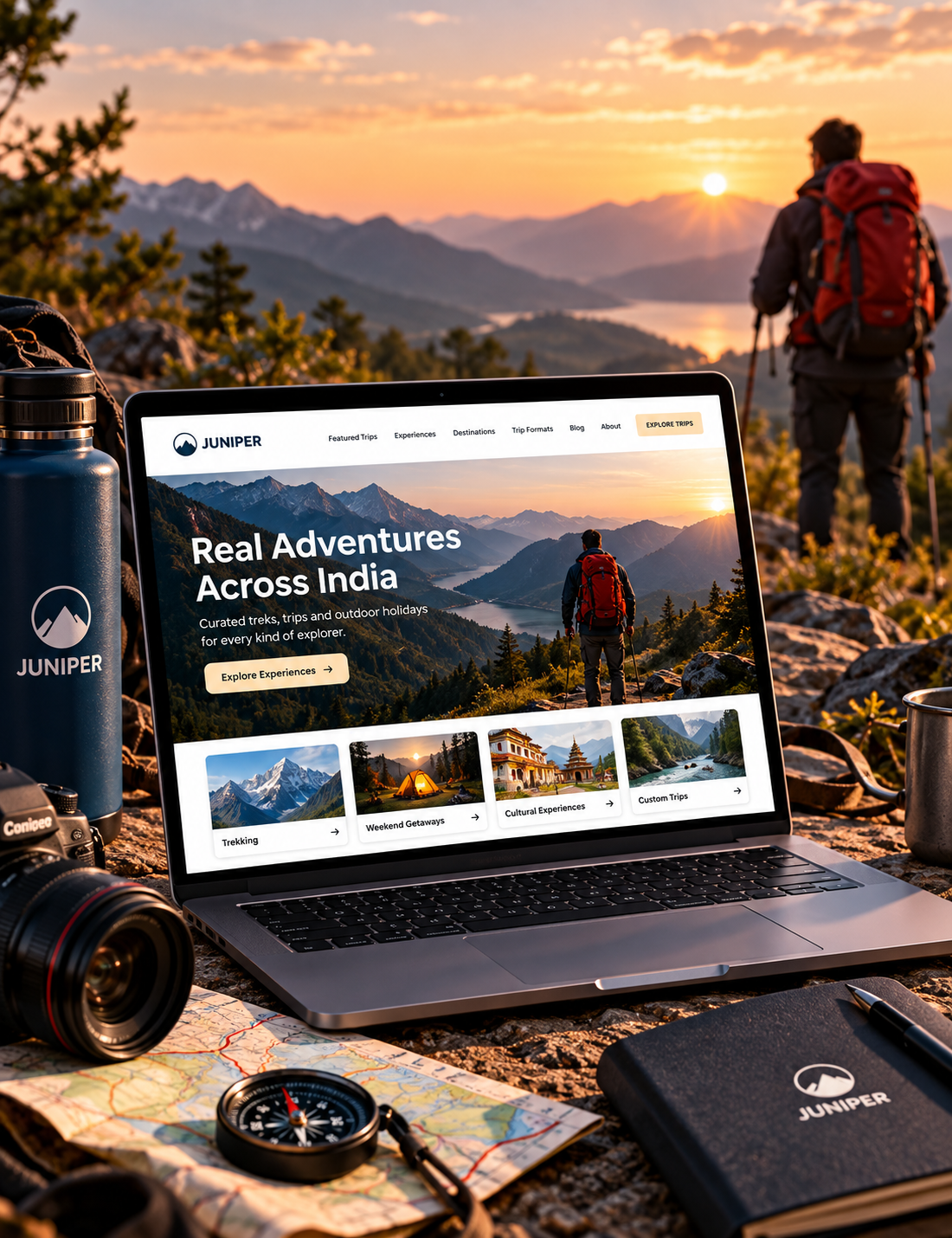
Juniper Outdoor sells curated treks and outdoor holidays across India. Its Wix website could not be customised, could not be sped up, and could not rank. Morphiaas moved it to Webflow, rebuilt the experience, and ran the SEO in the same sprint. The site hit position one for its target keywords within 20 days of launch.
 The site we ranked
The client
A good outdoor business stuck on a platform built for hobby sites.
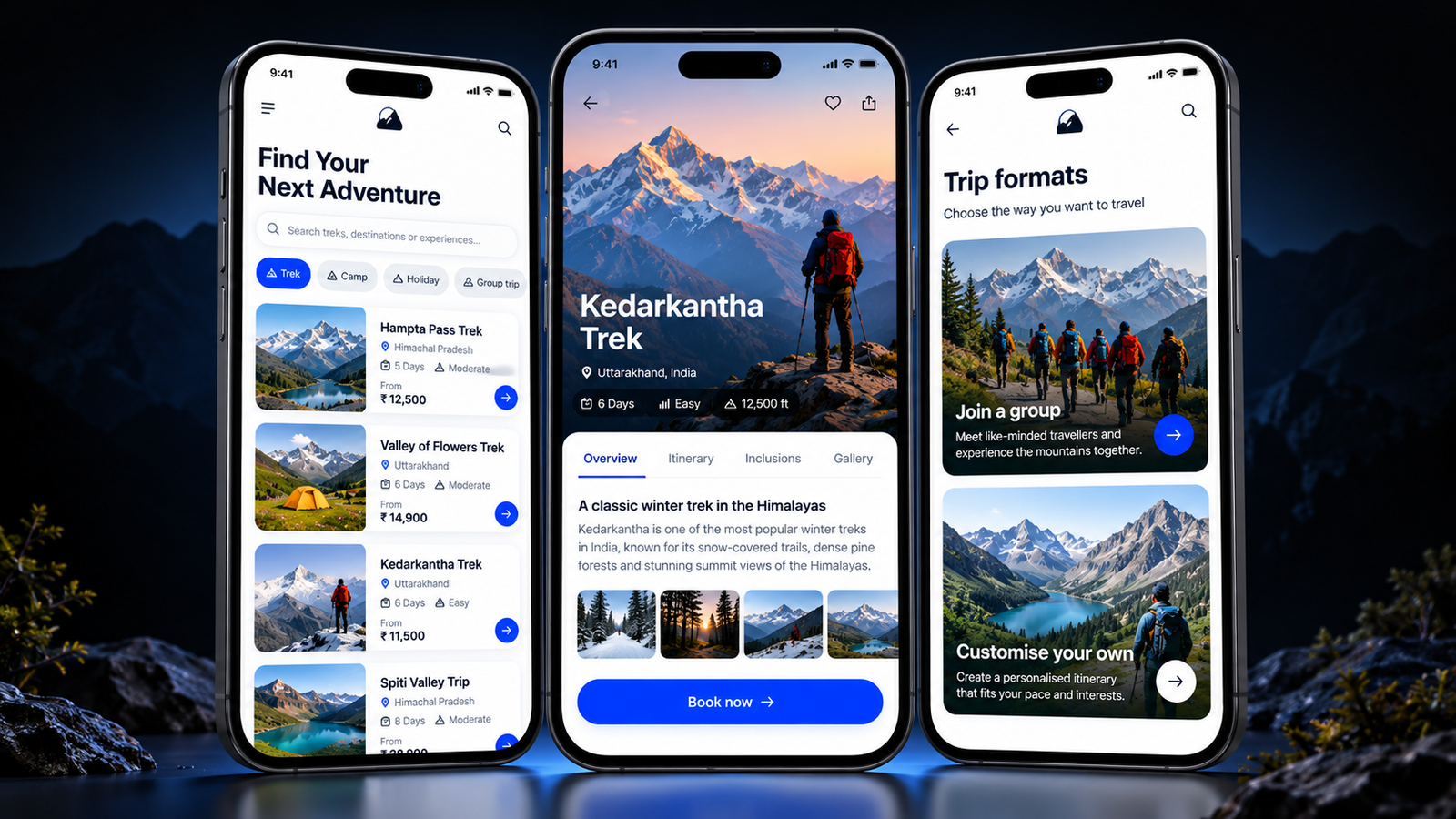
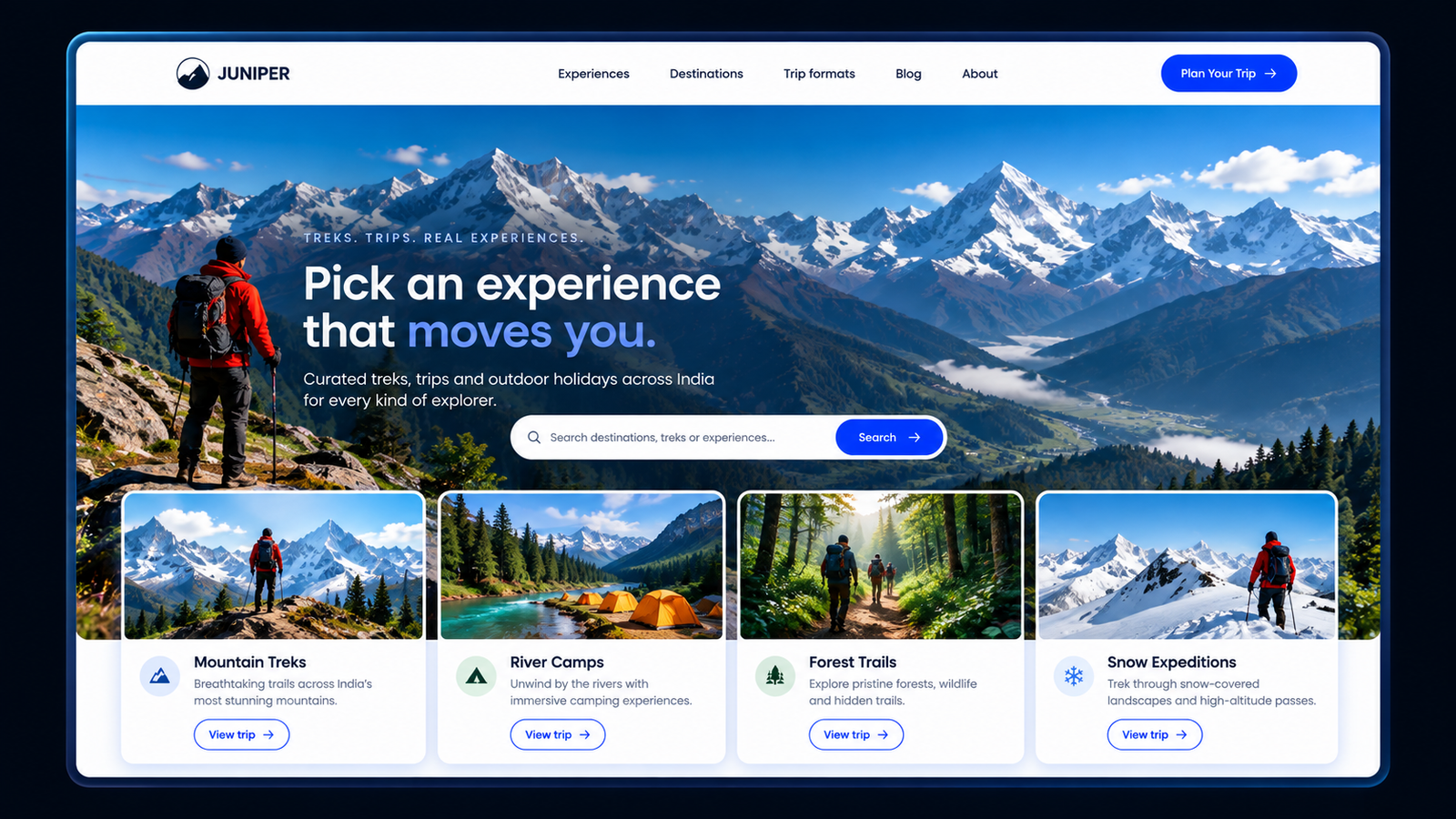
Juniper Outdoor runs curated treks, trips and holidays for outdoor enthusiasts across India, with join-a-group and customise-your-own formats. The product was strong. The website was on Wix, and Wix set the ceiling: limited design control, slow pages, thin SEO tooling, and no realistic route to competing with established travel players in search.
 The experience we shipped
The challenge
The site was not the problem. The platform underneath it was.
Nowhere on the results page
Wix limited what could be done with metadata, structure and speed. Potential customers searching for outdoor gear and trips in India never saw Juniper. Competitors with weaker products took the clicks.
Design that could not move
Every layout decision hit a template wall. The brand had an identity and the site could not express it. Navigation, page speed and the mobile experience all sat below what an adventure buyer expects.
Performance nobody could fix
Loading speed, mobile-friendliness and crawlability were all constrained by the platform, not by the team. No amount of on-page work would rank a site Google struggled to crawl and users waited on.
What Morphiaas built
Move the foundation first. Then rank on it.
Wix to Webflow migration
Morphiaas recommended and executed a full migration to Webflow. Every page, trip and content asset moved across to a platform with real design control, faster delivery and proper SEO tooling. Webflow gave the team a foundation it could actually build on.
A mobile-first experience that reflects the brand
A new Webflow site designed around how people actually book outdoor trips: clear trip discovery, faster navigation, and a mobile-first layout. The visual identity finally matched the quality of the experiences Juniper sells.
On-page optimisation for the Indian market
Product descriptions, blog posts and meta descriptions rewritten around the keywords Indian outdoor travellers use. Engaging language for the reader, precise targeting for the search engine, and a content structure built to hold rankings once earned.
Technical SEO underneath it all
Site speed, mobile-friendliness, sitemap creation and crawlability fixed at the platform level. The result was a site that Google could crawl and index cleanly, which is what turned 20 days of work into a position-one result.
The results
Twenty days from launch to the top of the page.
Rankings, traffic and revenue moved together once the platform stopped holding the brand back.
Your platform might be the reason you do not rank.
Book a growth audit. We will tell you whether your site needs SEO, a rebuild, or both, and in which order.

The Majestic Meadows
A 10‑acre farm project in the Aravallis, sold out in 60 days.
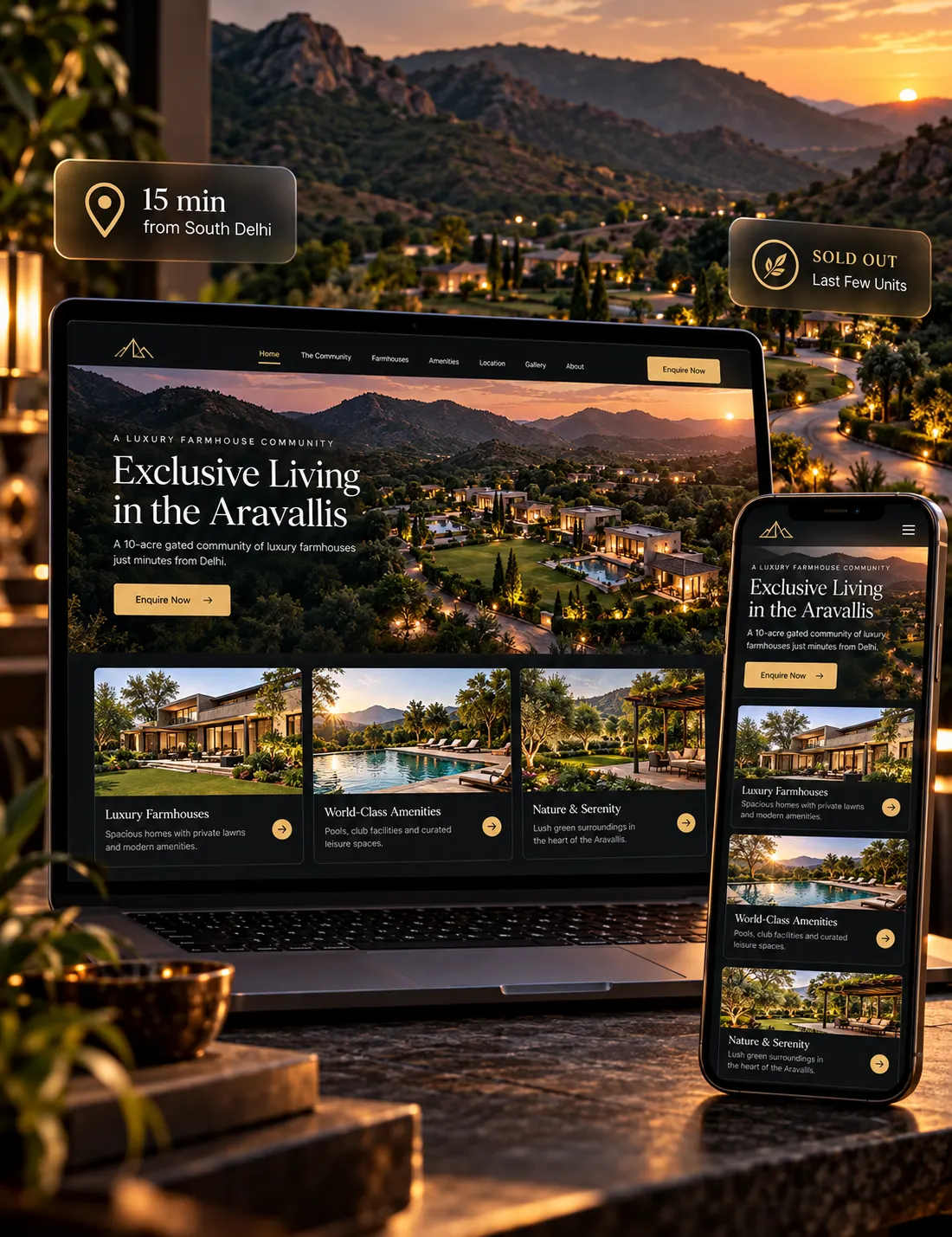
The Majestic Meadows Farms had land, a location fifteen minutes from South Delhi, and no way to reach the buyers who could afford it. Morphiaas built the brand from zero, put it in front of Delhi NCR's high‑net‑worth families on Meta, and closed the inventory in two months.
 The site we shipped
Farms sold from a standing start of zero brand presence.
From launch to a fully sold project.
Qualified UHNI enquiries generated by the Meta campaign.
Ten acres of Aravalli land, and a ticket size above one crore.
The Majestic Meadows Farms is a gated farmhouse project in the Aravalli Hills, fifteen minutes from South Delhi. Plots start at 1,290 sq yd, the buyer builds their own farmhouse, and the entry price sits above ₹1 Cr. That is a small, specific audience: families who already own a city home and want a second one within a short drive. Traditional channels could not find them.

The buyers existed. The project did not, as far as they knew.
No brand to trust with a crore
A farmhouse plot is a discretionary purchase at a price that demands confidence. With no identity, no profiles and no visual language, Majestic Meadows had nothing to signal that it belonged in the same conversation as the established Chattarpur and Surajkund farm addresses.
A narrow audience, wrong channels
The buyer pool is HNI and UHNI households in Delhi NCR. Broadcast and listing-portal marketing spread spend across everyone, reached few of the right people, and pulled in enquiries who could not afford the entry price.
A launch window that would not wait
Inventory needed to move at launch, while inaugural pricing and buyer attention were both at their peak. Slow, lead-by-lead selling would have cost months of holding and diluted the project's exclusivity.
Brand first. Audience second. Then the spend.
Complete branding for a project that had none
We built the identity from the ground up: name treatment, logo, colour and type system, and a visual direction that reads as an Aravalli retreat rather than a plotted development. Everything downstream, from the website to every ad frame, came out of this one system so the project looked established on day one.
A website and social presence built to sell a lifestyle
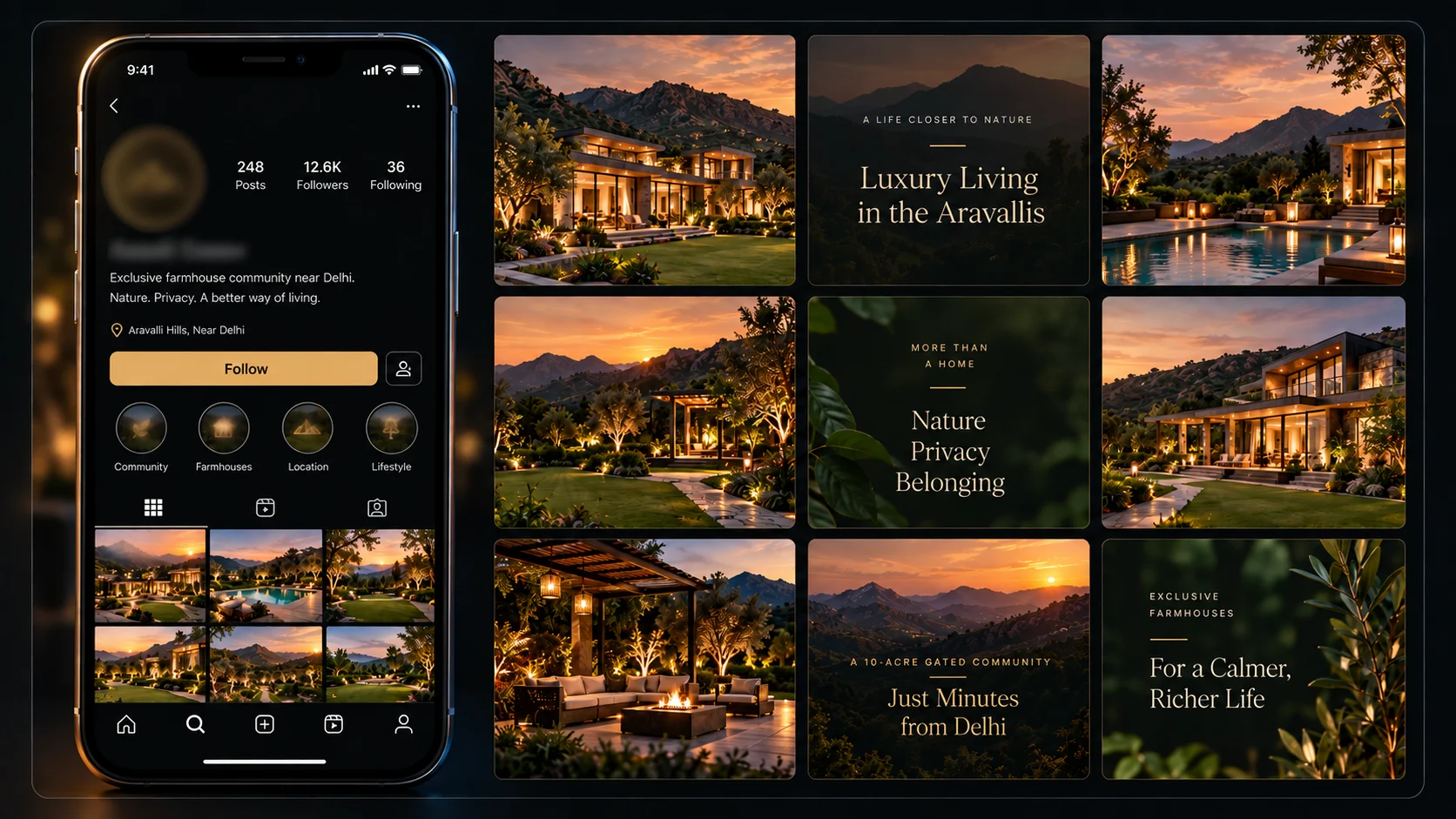
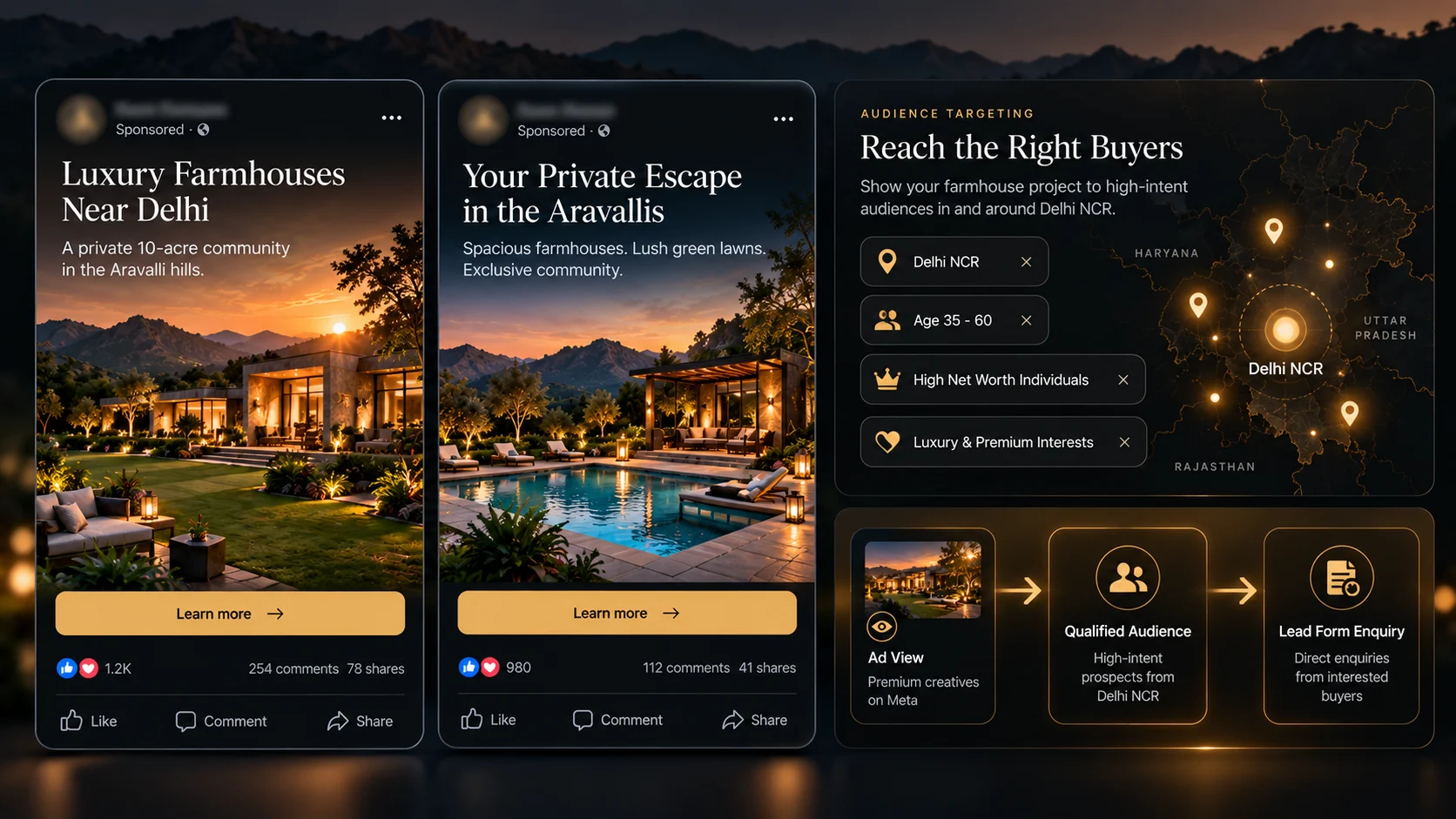
We shipped the project site and set up Instagram, Facebook and LinkedIn as three distinct front doors. Instagram carried the architecture, the views and the farm-to-table story. Facebook carried the lifestyle: private celebrations, weekends fifteen minutes from South Delhi, land you design yourself. LinkedIn positioned Majestic Meadows as a prestige developer in front of founders and senior professionals.
Meta ads aimed only at buyers who could sign
Campaigns on Instagram and Facebook were targeted to HNI and UHNI segments across Delhi NCR, with creative that led on exclusivity and proximity rather than price. The objective was not reach. It was a small number of enquiries from people who could close above ₹1 Cr.
Lead handling paced to the launch window
Enquiries were qualified as they arrived and passed to the sales team with the campaign context attached, so conversations started warm. With inaugural offers live, the pipeline converted quickly enough to clear the full inventory inside sixty days.
Forty‑plus farms, sold in two months.
The campaign did the one thing a luxury launch has to do: it put the right people in front of the project before the window closed.
Launching a project that needs to sell out, not trickle out?
Bring the inventory, the location and the price point. We will show you exactly which buyers to reach and what it will take to close them before the window shuts.

Challani jewelry
Case Study · Branding & Video Production
A Chennai jewellery house, rebuilt as a digital brand.
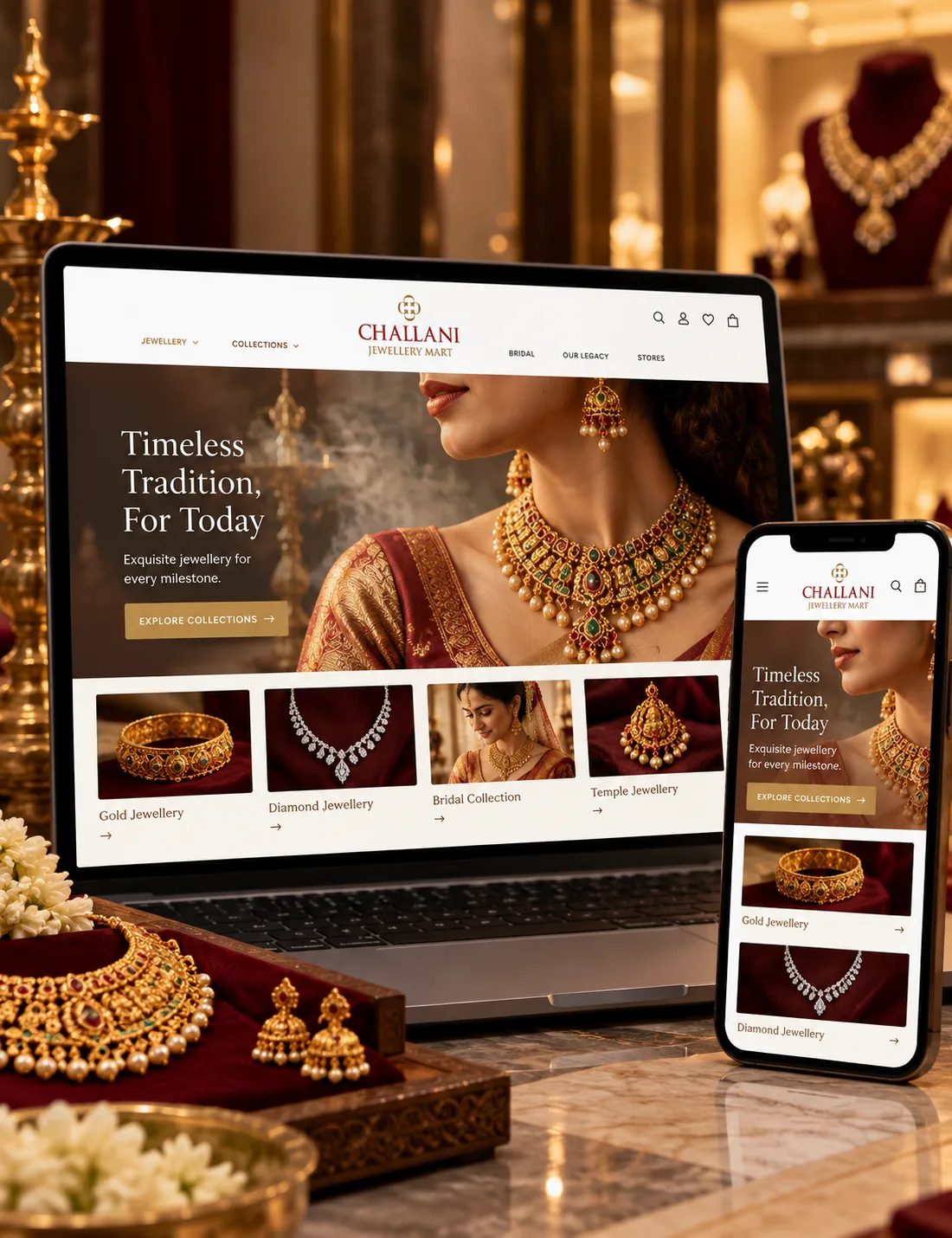
Challani Jewellery Mart had fifty years of craft and a loyal walk‑in clientele. What it did not have was a story that travelled beyond T. Nagar. Morphiaas wrote that story, filmed it, and put it in front of a new generation of buyers.
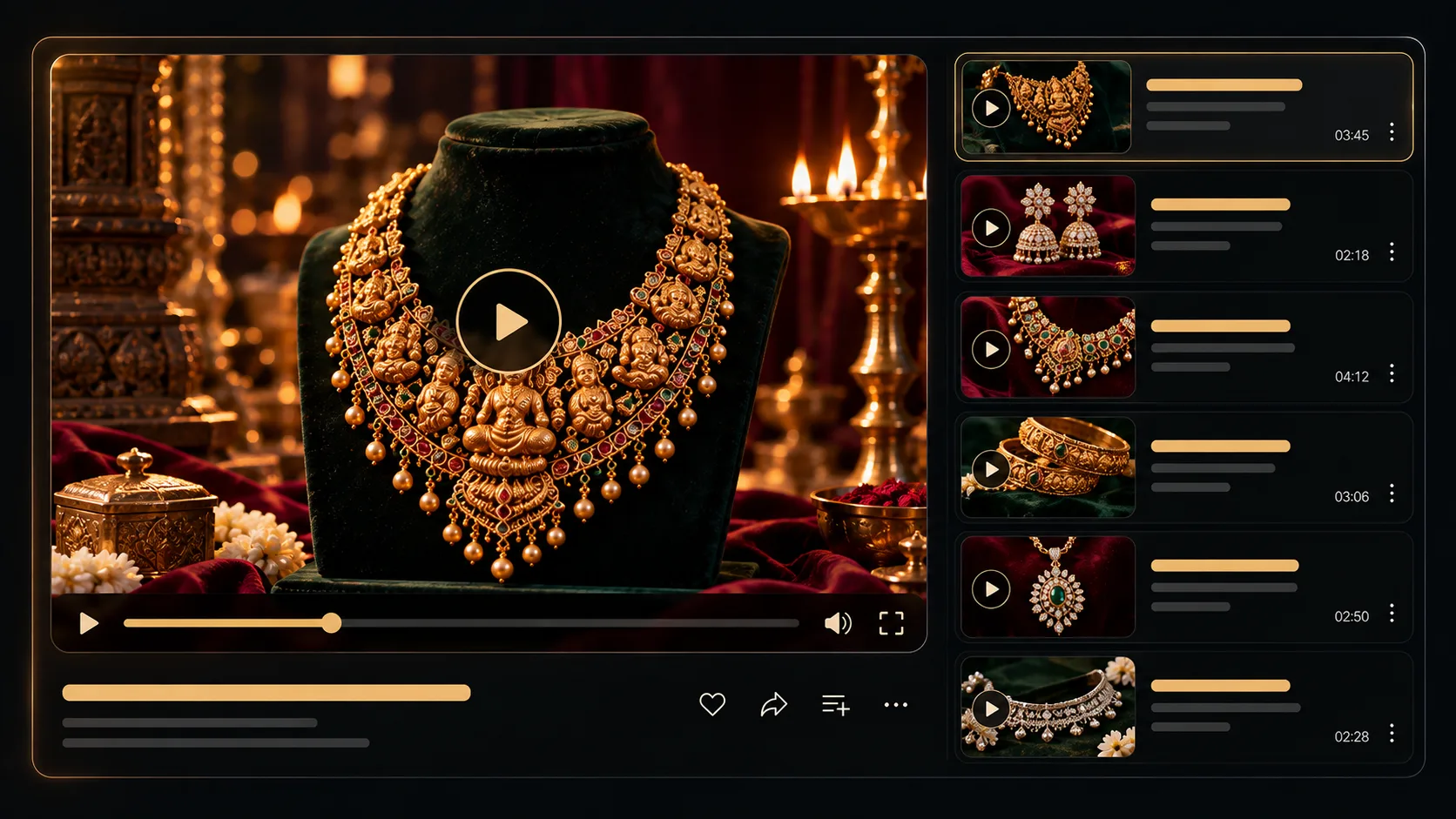
 The brand we filmed
Return on investment across the branding and video programme.
Website traffic once the brand story videos went into distribution.
Month on month growth in website sessions through the campaign.
The client
A legacy everyone in Chennai knew, and nobody online could find.
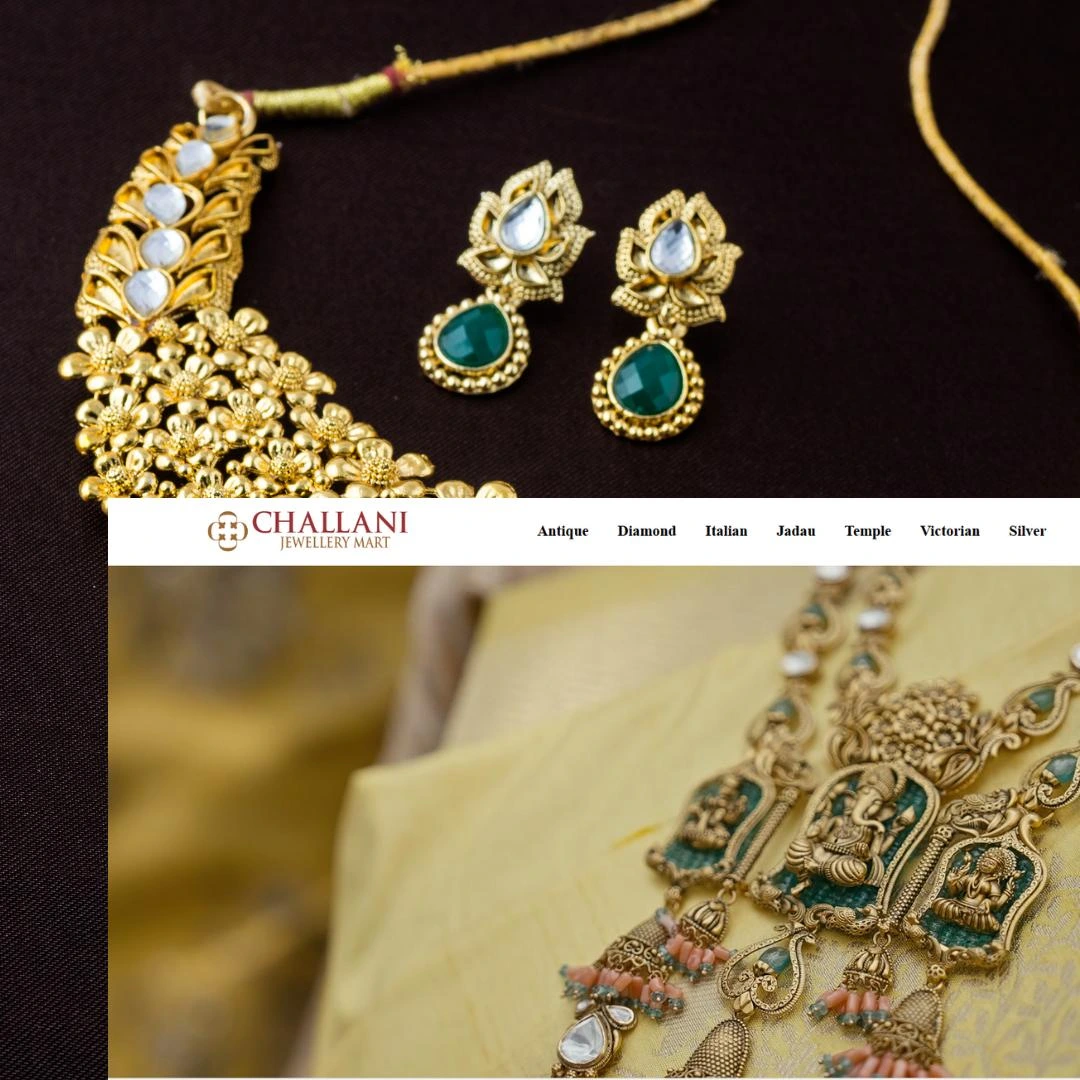
Challani Jewellery Mart is a unit of the Jayantilal Challani Group, a family business that began in gold trading and grew into one of the best known jewellery destinations in Chennai. Diamond, jadau, polki, antique, temple and Italian collections, sold from the jewellery hub of T. Nagar. The reputation was earned over decades. The digital footprint was a fraction of it.
The challenge
Fifty years of trust does not transfer to a feed on its own.
The product was never the problem. The problem was that the brand only existed inside the store, and the next generation of buyers was not walking in.
The name carried no weight online
Ask anyone in Chennai and they knew Challani. Search for it and the brand looked like a local shop, not a luxury house. The legacy was real, but nothing online was proving it.
The image belonged to the last generation
Jadau, polki and temple jewellery are aspirational categories. The visuals presented them as inventory. Younger buyers with real budgets were choosing brands that looked like they understood them.
Reach stopped at the city limits
Growth depended on footfall and word of mouth. There was no content engine, no distribution plan, and no way to reach regional buyers who would never pass the store.
What Morphiaas built
Story first. Film second. Distribution always.
A jewellery brand is bought on trust and desire. We built both in order: define what Challani stands for, film it so it is felt, then put it everywhere the buyer already spends time.
Brand guidelines and messaging
We documented the Challani brand from the ground up: positioning, tone, visual language and a messaging framework that connected fifty years of craft to a modern buyer. Every piece of content that followed was built on this, so the brand looked and sounded like one house across every channel.
Brand story film
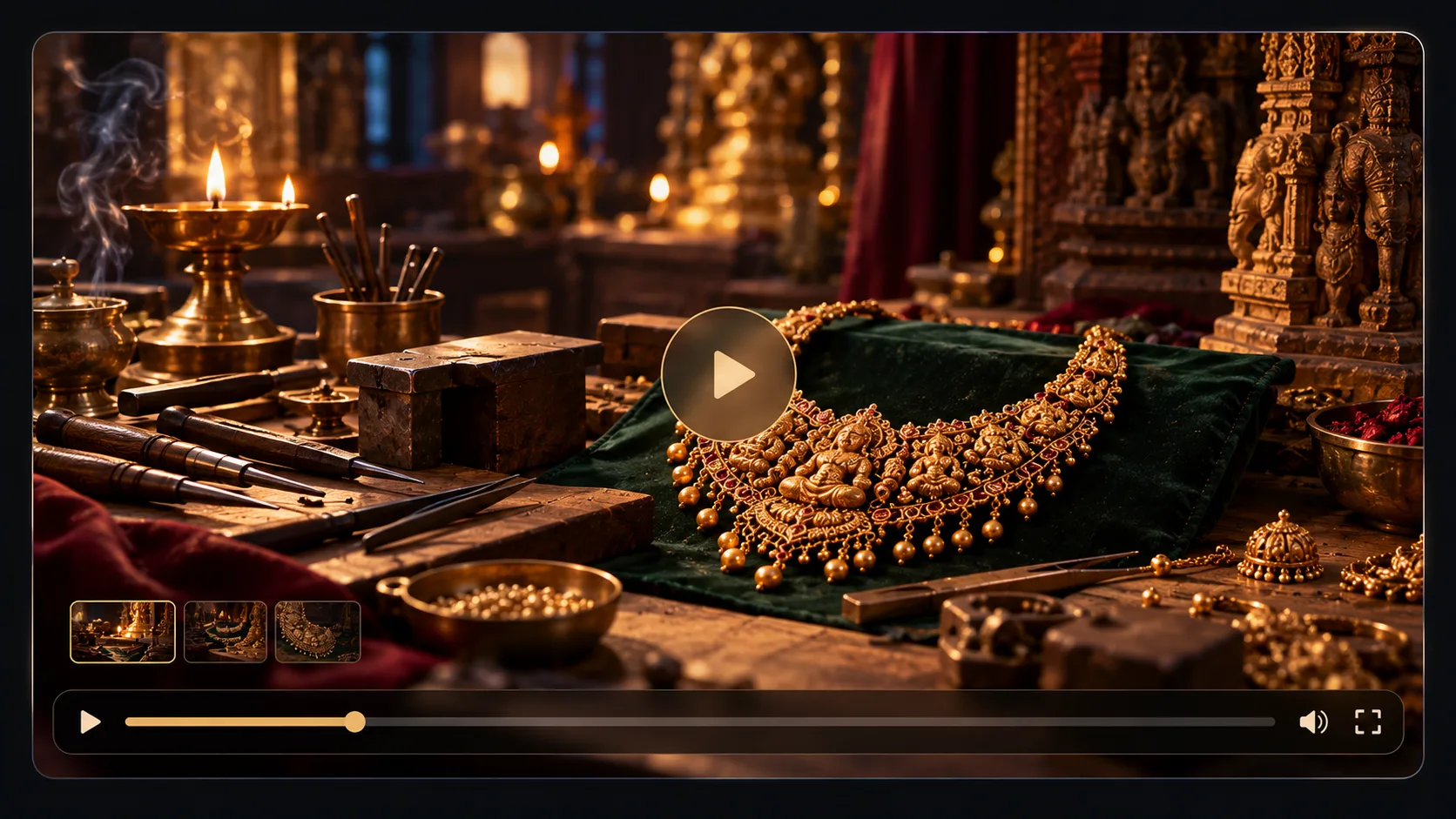
The centrepiece was a brand story video that told the Challani journey, from gold trading to a multi-category jewellery destination, in the voice of the family and the craftsmen behind it. This became the flagship asset for the website, social channels and paid media.
Product showcase and behind the scenes
We produced a library of product showcase films for the diamond, jadau, antique and temple collections, alongside behind the scenes content that showed the craftsmanship and the people. Product films sold the piece; the behind the scenes films sold the reason to trust the house.
Distribution across social, web and paid
Content only works when it is seen. We integrated the films into the website, ran them as organic social programming across Instagram, Facebook and YouTube, and backed the strongest cuts with paid advertising targeted at both existing Challani customers and new luxury buyers across the region.
The results
The brand image moved first. The traffic followed.
Challani went from a store people already knew to a brand people were discovering, and the website numbers tracked the shift month by month.
Brand story film
Product showcase series
Your brand has a story. Is anyone seeing it?
Bring us your numbers and your positioning. We will show you where the brand is leaking attention, and what a content and distribution engine would do to it.